

Target
Treatment / Non-Surgical
Skin Anti-Aging
A focused treatment page built around indication, mechanism, expected experience and realistic limits.
Individual assessment
Indication first
Realistic expectations
Clinical focus
Treat the right mechanism — not simply the visible sign.
Treatment snapshot
Primary goalIndividual indication
AppointmentVaries by treatment
DowntimeDepends on method and area
SessionsPersonalized plan
ResultsTreatment-specific timeline
These are orientation points, not promises. Timing and suitability depend on the treatment, anatomy and individual response.
Mechanism
Which method matches the underlying issue?
Plan
What intensity, timing and follow-up make sense?
“When should I start anti-aging?” is one of the questions I find hardest to answer with an age.
A number does not tell me what the skin is doing.
Two people can be the same age and have very different degrees of sun damage, pigmentation, dryness, facial movement, volume change and tissue descent. One may benefit mainly from better photoprotection and a more disciplined skincare routine. Another may have a specific expression pattern worth treating. Another may have no meaningful reason for a procedure at all.
This is why I do not think of anti-aging as a treatment that begins at thirty, forty or fifty.
I think of it as managing the processes that make a face and its skin change over time — without turning normal ageing into a disease and without treating changes that have not happened yet.
The goal is not to stop ageing. That is not biologically available to us.
The more useful goal is to reduce avoidable damage, treat defined changes when they become meaningful, and preserve enough restraint that the treatment itself does not become another source of ageing-looking change.
Ageing is normal. Accelerated damage is not always inevitable.
Skin changes with time even in the absence of external damage.
Cell turnover, collagen organisation, elasticity, hydration and other biological functions gradually change. This is intrinsic ageing, and it belongs to normal human biology.
But the skin we see on the face is also strongly influenced by accumulated exposure.
Ultraviolet radiation is one of the most important drivers of photoaging. Repeated exposure contributes to collagen degradation, uneven pigmentation, roughness, loss of elasticity and the development of both fine and coarse wrinkles. Pollution, smoking and other environmental or behavioural factors can add further biological stress. :contentReference[oaicite:8]{index=8}
This distinction matters because intrinsic ageing and preventable damage should not be discussed as though they are the same thing.
I cannot stop chronological time. I can help a patient reduce some of the cumulative damage that makes exposed skin age faster than it needs to.
The most effective anti-aging intervention is often the least dramatic one
Procedures receive most of the attention because their before-and-after photographs are easier to market.
But long-term skin ageing is cumulative, and prevention works cumulatively too.
Regular photoprotection is not exciting. It does not create an immediate transformation in the mirror. What it does is reduce an important ongoing source of damage every day the skin is exposed.
That gives sunscreen a very different role from an aesthetic procedure. A procedure attempts to improve an existing change. Photoprotection reduces the amount of additional photoaging being created afterwards.
For me, this makes daily sun protection part of the treatment architecture rather than an aftercare footnote.
It makes little sense to repeatedly repair photoaged skin while continuing to expose it to the same preventable injury without protection.
Skincare should have a job, not simply an ingredient trend
The skincare market can become as confusing as the injectable market.
Patients often arrive with ten products and no clear explanation of why each one is being used. Strong acids, retinoids, vitamin C, exfoliants and barrier products are layered together because every ingredient has individually been described as beneficial.
More biological activity does not automatically mean healthier skin.
A useful skincare routine should be tolerable enough to continue and specific enough that each component has a reason to be there. Photoprotection and barrier support form a basic foundation. Evidence-based actives can then be considered according to the patient’s skin, concern and tolerance.
Topical retinoids, for example, have substantial evidence in photoaged skin and can improve several visible features over time. They can also irritate the skin, especially when introduced too aggressively or combined indiscriminately with other active products. Recent comparative evidence continues to support retinoid activity in photoaging while also showing that efficacy and tolerability differ between agents. :contentReference[oaicite:9]{index=9}
The treatment is not the ingredient list. The treatment is a routine the patient’s skin can actually sustain.
I separate skin ageing from facial ageing
This is one of the most important distinctions in an anti-aging consultation.
A face can look older because its skin has become rougher, more pigmented or less elastic. But it can also look older with excellent skin.
Repeated muscle movement can create expression lines. Fat compartments and skeletal support change with time, altering facial volume and shadow. Soft tissues can gradually descend, changing the jawline and other contours.
These processes occur in different anatomical layers.
A skincare treatment cannot replace lost structural support. Filler cannot correct every pigment problem. Botulinum toxin does not restore skin hydration. An energy device cannot become a facelift simply because the patient wants a non-surgical option.
When these mechanisms are confused, anti-aging becomes a collection of procedures rather than a coherent medical plan.
A line on the face does not automatically mean Botox
Expression lines are a good example of why classification matters.
A line that appears only when a muscle contracts is primarily dynamic. Over time, repeated folding can contribute to a line that remains visible even when the face is relaxed. At that point muscle activity and skin change are both part of the picture.
Botulinum toxin can reduce selected muscle activity. It cannot reverse every structural change that has already developed in the skin.
There is also no clinical obligation to treat every dynamic line before it becomes static.
The phrase “preventive Botox” can be useful when it describes a carefully selected treatment for a strong movement pattern that is already producing a meaningful concern. It becomes much less useful when it convinces a young patient that normal facial movement itself is a future defect that must be suppressed.
I would rather treat a defined mechanism than treat fear of getting older.
Volume loss should not become permission to keep adding volume
Facial ageing can include changes in deep fat compartments, bone and soft-tissue support. These changes can create hollowing, flattening and new shadows.
Filler can be useful when a defined loss of support or projection is actually part of the problem.
But there is a trap in long-term anti-aging treatment.
If every sign of ageing is interpreted as volume loss, filler begins to accumulate in places where tissue has actually descended, changed texture or simply changed with normal ageing. The face becomes larger while the original ageing mechanism remains.
This is one reason patients can look simultaneously fuller and older after years of indiscriminate treatment.
Replacing something that has genuinely been lost is different from adding volume every time the face changes.
Maintenance therefore has to include the possibility that no further filler is needed.
Tissue descent is where non-surgical anti-aging eventually reaches a boundary
Skin tightening devices and other non-surgical treatments can be useful when laxity is relatively early and the magnitude of change required is modest.
But facial tissues also change position with age.
As descent becomes more significant, a treatment that improves collagen or tissue firmness cannot necessarily put those structures back where they were.
This is where I think anti-aging language has to remain particularly honest.
A patient may prefer non-surgical treatment, and that preference is completely legitimate. But preference does not alter mechanics. If the result they want requires meaningful repositioning or removal of excess skin, repeating increasingly intensive non-surgical treatments may eventually create more cost and treatment burden than useful change.
Sometimes surgery becomes the more coherent option.
Sometimes the patient does not want surgery, in which case accepting a smaller non-surgical improvement is also a valid decision.
Those are better choices than pretending the two categories can produce identical endpoints.
Anti-aging treatment should not erase the signs that make a face alive
There is an important difference between looking older and looking expressive.
Smile lines, movement around the eyes and changing forehead position are part of communication. Removing every visible sign of facial movement does not necessarily create a younger-looking face. It can create a less animated one.
The same is true of facial volume. Natural faces have concavities as well as convexities. Temples do not need to become perfectly full. Every under-eye shadow does not need to disappear. Every cheek does not need additional projection.
Ageing well is not the same as continuously moving the face toward a smoother, fuller and more immobile state.
I want enough treatment to improve the feature that genuinely bothers the patient while preserving the anatomical variation that still makes the face recognisable.
There is no universal age at which procedures should begin
Chronological age is useful context, but I do not use it as an indication.
A patient in their late twenties with substantial sun exposure and a specific pigment concern may need a skin strategy. Another person in their forties may have very little procedural indication. A patient in their fifties may be more interested in one structural correction than in a long list of small maintenance treatments.
This is why phrases such as “start Botox at 25” or “you need collagen treatments after 30” are not how I want to practise medicine.
The face should show me the indication.
If there is nothing meaningful to treat, the absence of a procedure is not falling behind.
Starting earlier is useful only when what we start is appropriate
There is a reasonable idea hidden inside the phrase preventive aesthetics.
It is usually easier to maintain healthy skin than to correct decades of accumulated photodamage. It can be easier to manage an early defined problem with a modest intervention than to wait until a larger correction is required.
But that logic does not justify beginning every available procedure at a younger age.
Starting inappropriate treatment earlier simply creates more years in which it can accumulate.
Long-term planning therefore has to distinguish between prevention and premature intervention.
Sun protection, sensible skincare, avoiding smoking and other basic measures can begin without waiting for visible ageing. Injectables and procedures need an actual clinical target.
I prefer anti-aging plans that can stop at every stage
The aesthetic industry often encourages maintenance as an endless calendar.
Botox every few months. Filler every year. Skin treatment every season. Another device because it is time.
I prefer to reassess.
If muscle activity has returned and the patient still benefits from reducing it, repeat treatment may make sense. If the face retains enough filler from previous treatment, adding more may not. If the skin is stable and responding well to home care, another procedure may add very little.
A long-term plan should become more intelligent as we accumulate information about the patient.
It should not become more automatic.
Maintenance is not repeating the past treatment.
It is asking again what the face needs now.
Over-treatment is itself an ageing problem
This is one of the paradoxes of aesthetic medicine.
A patient can pursue anti-aging treatments so intensively that the treatments begin to make the face look less youthful.
Excessive filler can increase heaviness and blur natural contours. Excessive neuromodulation can reduce animation. Repeated aggressive resurfacing can leave skin persistently irritated. Closely stacked energy procedures can create unnecessary inflammatory burden or unwanted changes in soft tissue.
The solution is not to reject treatment.
It is to preserve dose discipline.
The treatment should improve a defined mechanism and then give us enough time to see what happened. The ability to add later is one of the strongest arguments for not doing everything at the first appointment.
Skin anti-aging and skin rejuvenation are not quite the same conversation
I use anti-aging primarily as a long-horizon concept.
It includes reducing preventable damage, maintaining skin function, recognising changes early and intervening proportionately when a defined problem develops.
Rejuvenation is more often a treatment conversation about changes that are already visible and that the patient actively wants to improve.
The two naturally overlap, but the emphasis is different.
A good anti-aging plan may contain surprisingly little procedural treatment. A patient using consistent photoprotection, evidence-based skincare and occasional targeted intervention may be following a far more effective long-term strategy than someone cycling through every new “rejuvenation” technology.
The skin does not know how much a treatment costs or how fashionable it is
Biology responds to mechanism.
A relatively inexpensive sunscreen used consistently can have more long-term relevance to photoaging than an expensive procedure performed occasionally while chronic ultraviolet exposure continues.
A simple retinoid-based strategy may be more rational for one patient than a clinic package.
Another patient may genuinely benefit from microneedling, RF, a pigment-specific treatment or another procedural approach because a problem has developed that home care cannot adequately address.
The hierarchy should come from what the skin needs, not from how technologically impressive the treatment sounds.
What I consider a successful long-term anti-aging strategy
I do not measure success by making a patient look permanently twenty-five.
I look for skin that remains healthy and well protected, expression that remains recognisable, facial volume that has not been unnecessarily accumulated and structural treatment that stays proportional to the degree of ageing present.
Over years, the plan should evolve.
The skin at forty is not the skin at fifty. A treatment that made sense at one stage may become unnecessary later, while another mechanism gradually becomes more important.
This means an anti-aging plan cannot be written once and followed forever.
It has to remain responsive to the patient.
When anti-aging treatment makes sense to me
I recommend intervention when there is something identifiable to improve and when the size of the treatment matches the size of the problem.
Sometimes that is disciplined skincare and photoprotection.
Sometimes it is treatment of a specific pigment or texture concern. Sometimes selected botulinum toxin, filler or an energy-based procedure is appropriate. At another stage, surgery may offer a more honest structural answer than continuing to stack non-surgical treatments.
And sometimes, after assessment, the answer is that the patient is ageing normally, looks well and does not need anything procedural at the moment.
I think that answer belongs in anti-aging medicine too.
The objective is not to keep a face permanently under treatment.
It is to help it age with as little avoidable damage, distortion and unnecessary intervention as possible.
Frequently asked questions
At what age should I start anti-aging treatments?
There is no universal age. Preventive skin habits can begin early, but procedural treatment should have a defined indication rather than being triggered by a birthday.
What is the most important thing I can do to prevent premature skin ageing?
Consistent photoprotection is one of the most important modifiable measures because chronic ultraviolet exposure is a major driver of photoaging. It should be considered a long-term foundation rather than an optional extra after procedures.
Do retinoids really help with anti-aging?
Topical retinoids have substantial evidence for improving several features of photoaged skin, including fine wrinkling and pigmentation. Product choice, tolerance and the rest of the skincare routine still matter because irritation can undermine consistency. :contentReference[oaicite:10]{index=10}
Should I start preventive Botox before I have wrinkles?
I would not recommend botulinum toxin simply because a person has reached a particular age. It may make sense when a strong movement pattern is already creating a defined concern, but normal facial movement itself is not a disease that has to be prevented.
Does filler prevent facial ageing?
No. Filler can correct selected volume or projection deficiencies. It does not stop the biological processes of ageing, and unnecessary repeated volume can eventually make the face heavier rather than younger-looking.
Which treatment is best for anti-aging?
There is no single best treatment because skin damage, expression, volume change and structural descent are different mechanisms. The most useful treatment is the one matched to the dominant problem — and sometimes that treatment is skincare rather than a procedure.
Can non-surgical treatment prevent me from ever needing a facelift?
I would not make that promise. Good skin care and conservative treatments can improve selected components of ageing, but significant tissue descent is a structural process that non-surgical treatments cannot always correct.
Is it better to start treatments early?
It is better to start appropriate prevention early. It is not automatically better to start every procedure early. Premature intervention can simply create a longer period of unnecessary treatment.
How do I avoid looking overfilled or frozen as I age?
By reassessing the mechanism at every stage rather than automatically repeating the previous treatment. Conservative dosing, staged decisions and the willingness to stop are as important as choosing the correct procedure.
How often should I have anti-aging procedures?
I do not use one maintenance calendar for every face. The interval should depend on what was treated, how the patient responded and whether the indication still exists when they return.
Can lifestyle really affect skin ageing?
Yes. Ultraviolet exposure, smoking and other environmental or behavioural factors contribute to extrinsic ageing. Procedures can improve selected effects, but they do not make those ongoing influences irrelevant. :contentReference[oaicite:11]{index=11}
When would you tell someone they do not need anti-aging treatment?
When there is no meaningful procedural indication, when the patient’s concern is better addressed through prevention or skincare, or when the proposed intervention would create more treatment burden than useful improvement. Age alone is not enough reason to perform a procedure.
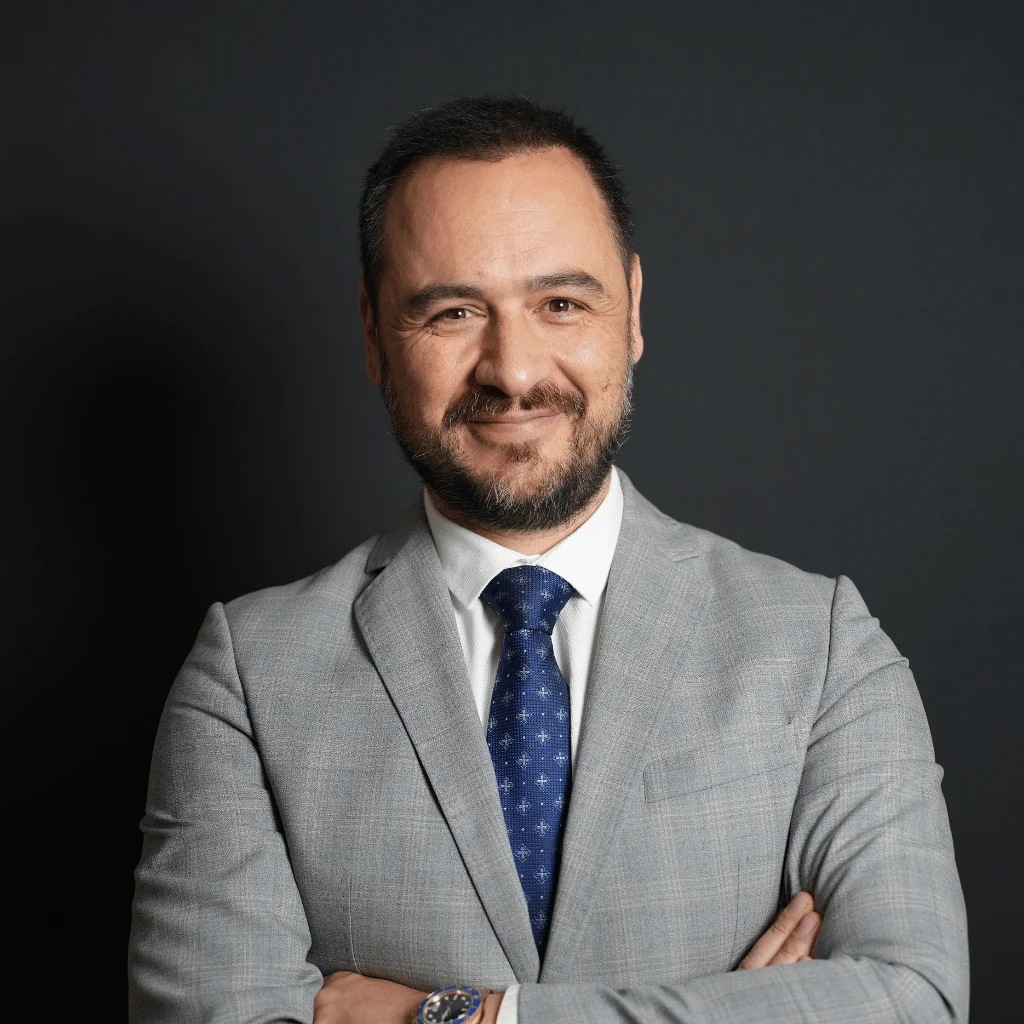
Dr. Mert Demirel
Plastic, Reconstructive & Aesthetic Surgery
Anatomy first. Proportion over excess. Decisions built to remain coherent over time.
Next step
The best treatment is the one that matches the right indication.
You do not need to choose a device, injectable or technique before asking the question. Start with what you would like to improve.
Private consultation
Let’s start with your question.
Leave your number first. We can then continue privately on WhatsApp.


