

“My buttocks are too large” can describe several different things: excessive fat volume, strong muscular projection, a broad pelvic frame, low-set tissue that makes the buttock look heavier, or a combination of these. The visible size is real, but the structure creating that size determines whether surgery can reduce it safely and whether reduction will actually improve proportion.
Large volume is not always excess fat
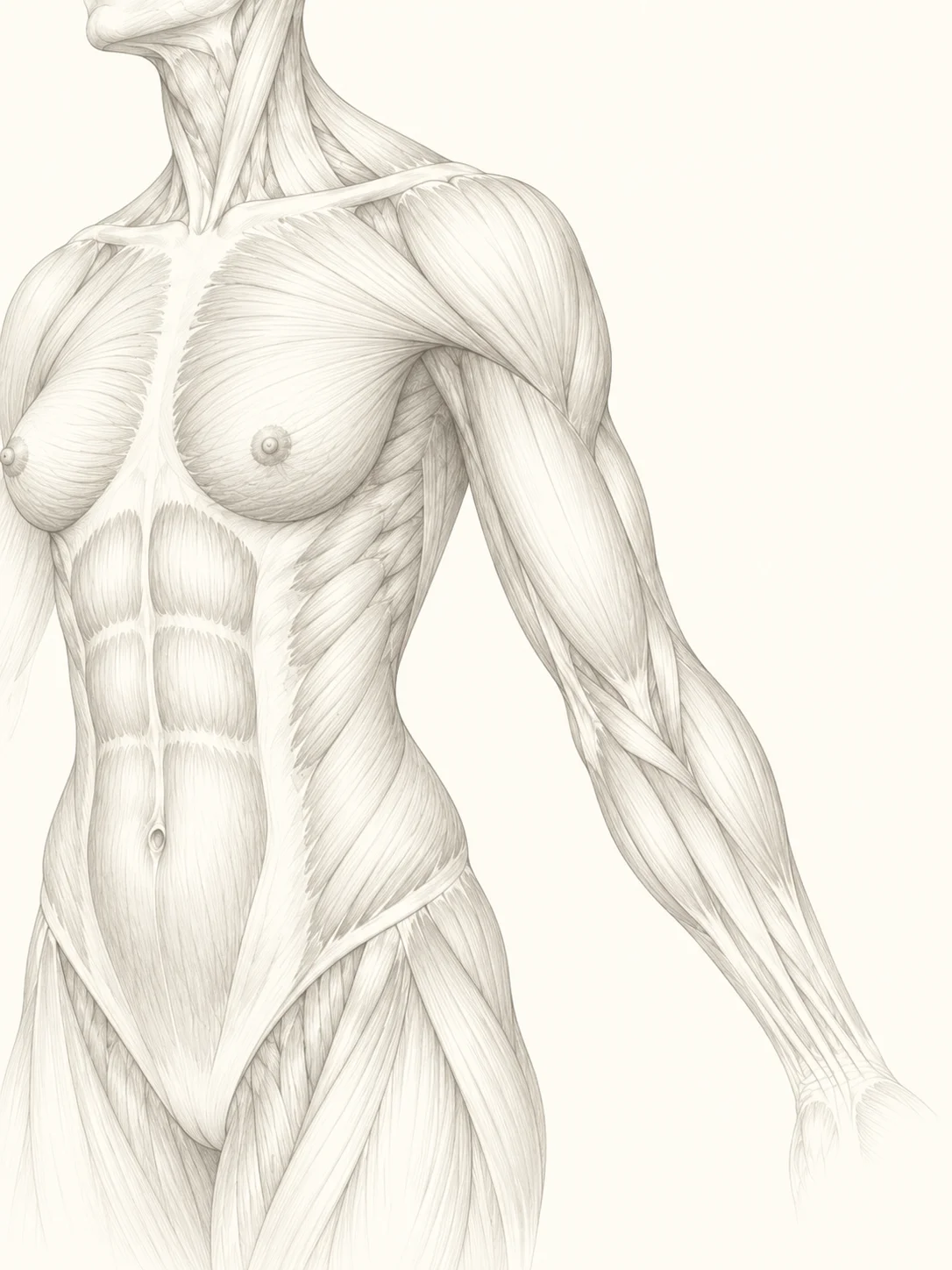
The gluteal region contains skin, subcutaneous fat, muscle and the skeletal frame beneath them. A patient with strong gluteal musculature can have substantial projection without carrying much removable fat. Another can have a broad pelvis that makes the buttocks look wide from the front and back even when the soft-tissue layer is moderate.
I separate width from projection and fat from muscle before discussing reduction. Liposuction only changes selected subcutaneous fat. It does not narrow the pelvis or reduce muscle bulk in the way a patient may imagine from a photograph.
Two large buttocks can have opposite contour problems
One patient has a high, projected buttock with local fat excess but good skin support. Another has similar volume but the tissue sits lower and the lower fold is long. Reducing both in the same way would not create the same result.
In the first patient, careful volume reduction may improve proportion. In the second, aggressive deflation can make the buttock look flatter and more droopy because the skin envelope already lacks support.
Width and projection should be analysed separately
A buttock can look large from the back because it is wide, while the side profile is relatively flat. Another can look narrow from behind but project strongly in profile. Patients often use one word — “big” — for both.
This distinction matters because contour reduction should target the dimension that actually dominates. Removing posterior volume from a wide but flat buttock can worsen shape without meaningfully reducing the width that concerns the patient.
The waist and hips can make the buttocks appear larger without changing them
Body proportion is relational. A narrow waist can make the gluteal region look larger. A broad pelvis can do the same. Conversely, reducing the waist or improving flank contour can sometimes change the way the buttocks are perceived without directly reducing the buttocks themselves.
I step back from the gluteal region before planning. The aim is not to make one anatomical area smaller in isolation; it is to create a silhouette that feels more coherent as a whole.
Gluteal liposuction has a narrower indication than “large buttocks” suggests
Gluteal liposuction can reduce selected subcutaneous fat when fat is the dominant contributor and skin quality is sufficient to adapt. The objective is controlled contour reduction rather than maximal deflation.
Over-reduction can flatten projection, expose irregularities or worsen skin laxity. I want to preserve enough soft tissue for the buttock to retain a natural three-dimensional shape.
The lower buttock crease can become more visible after volume reduction
When tissue is already low or the skin envelope is stretched, removing volume can make the lower fold look longer or heavier. That does not mean the operation failed technically; it means the patient’s original problem included position as well as volume.
This is why I assess the inferior gluteal fold, skin quality and the way the buttock sits on the posterior thigh before deciding how much reduction is sensible.
Weight loss and gluteal reduction are not interchangeable
Some patients have a generally high body-fat level and experience the buttocks as one of several large regions. Others remain disproportionately gluteal even at a stable lower weight.
The first situation may change substantially with broader weight management. The second may remain a local contour concern. Surgery is more coherent when the disproportion has persisted at a reasonably stable body composition.
Previous augmentation changes the diagnosis
A buttock can look too large after previous augmentation because of added volume, weight change, altered fat distribution, implant position or the interaction between augmentation and the surrounding hips and waist. That is a revision problem, not the same as a naturally large buttock.
The current anatomy should be re-read from the beginning. Reversing one previous manoeuvre is not automatically enough if the surrounding soft tissues have changed as well.
Skin quality places a ceiling on reduction
Firm elastic skin can tolerate moderate volume change better than thin, stretched or post-weight-loss skin. When the envelope is loose, more reduction can create more sagging.
In those patients, the conversation may shift from “how much can we remove?” to whether the problem now belongs partly to lifting or skin excision. The visible size can be reduced only as far as the envelope can support a credible shape.
What I consider a successful reduction
I want the buttocks to feel less dominant while preserving enough projection and softness to remain proportionate to the pelvis, thighs and waist. The result should not look deflated, hollowed or surgically flattened.
The useful endpoint is usually smaller in the dimension that was genuinely excessive, not smaller in every dimension at once.
What I assess before recommending reduction
I examine pelvic width, gluteal muscle, subcutaneous fat thickness, posterior projection, lateral width, skin quality, lower-fold position, thigh transition, waist and flank proportion, weight stability and any previous gluteal surgery.
That tells us whether the concern is truly fat-dominant, structurally broad, muscular, position-related or mixed. Only the first of those is a straightforward liposuction problem.