

What changes here?
The visible appearance of a body area is usually the result of several tissue layers changing together, not one isolated feature.
Anatomical lens
The visible appearance of a body area is usually the result of several tissue layers changing together, not one isolated feature.
Shape, proportion, laxity, volume, asymmetry and skin quality may contribute in different combinations.
Anatomy, tissue quality, function, proportions, previous procedures and the change you actually want to achieve.
BODY AREA
Facial surgery should begin with the face — not with the name of an operation.
The face changes in layers.
Skin becomes less elastic. Fat compartments change in volume and position. Ligaments loosen. Deeper tissues descend. Bone structure and facial proportions influence how all of these changes are perceived. Around the eyes, cheeks, jawline and neck, these processes occur at different rates and in different combinations.
This is why two people of the same age can require very different approaches.
A facelift may be appropriate for one person with lower-face descent, while another may benefit more from eyelid surgery, restoration of facial volume, treatment of the neck, or simply no surgery at all.
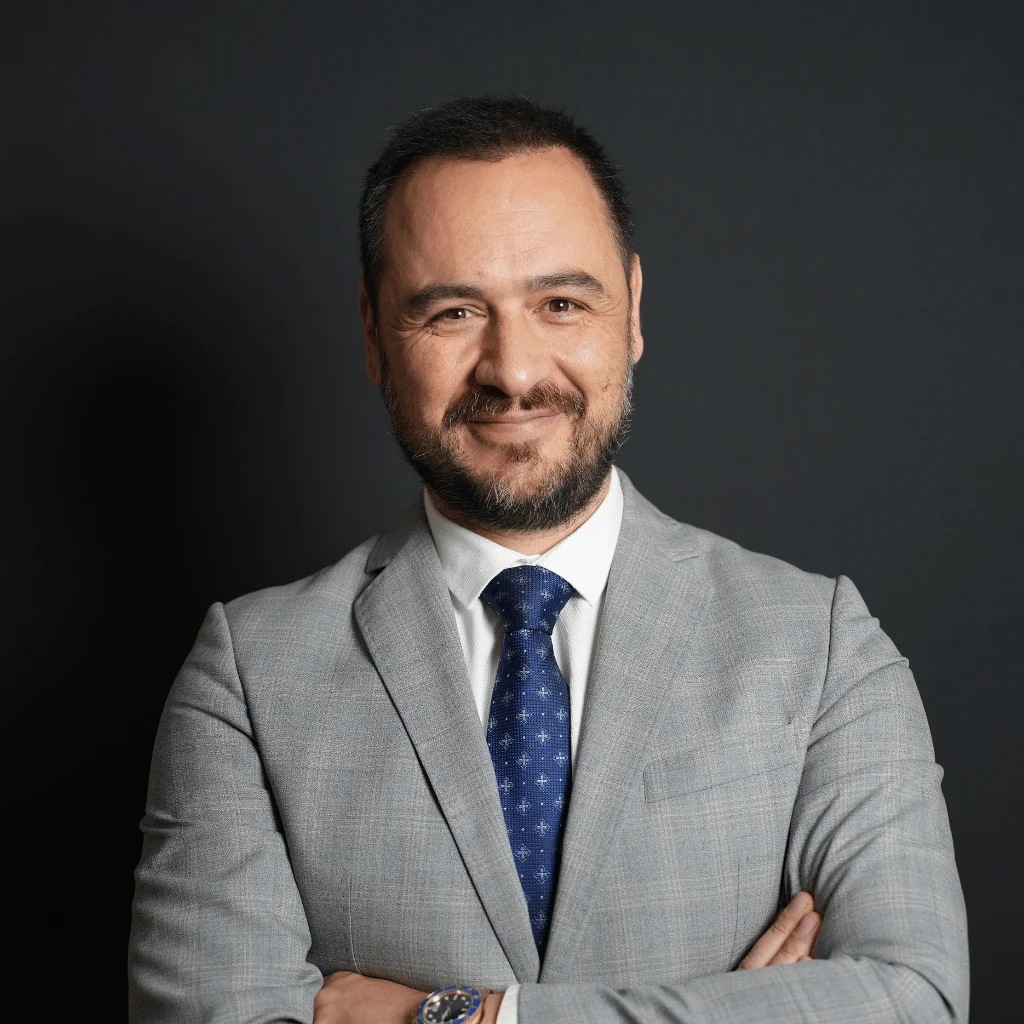
For Dr. Mert Demirel, facial aesthetic surgery begins by identifying which anatomical structures are responsible for the change that the patient sees.
The procedure comes afterwards.
Facial ageing is often described as though it were simply a problem of loose skin.
It is not.
The appearance of an ageing face is the combined result of changes in several anatomical layers.
Over time, the skin may become thinner, less elastic and less able to adapt to changes beneath it.
Fine lines, texture changes and surface quality belong primarily to this layer.
Surgery can reposition excess skin where appropriate, but it cannot make skin biologically younger.
That distinction matters.
Facial fat is not one continuous layer. It exists in separate compartments across the cheeks, temples, eyelids and lower face.
Some areas may lose volume while others descend or become relatively heavier.
This is why ageing can create both hollowness and heaviness at the same time.
Simply adding volume everywhere can therefore make the face look fuller without restoring its proportions.
The deeper tissues of the face are supported by ligaments and fascial structures.
As these structures change, the cheek, jawline and lower face may gradually descend.
This is one of the reasons why pulling only the skin cannot reliably correct deeper facial ageing.
The underlying skeleton provides the framework of the face.
Chin projection, cheek structure, jaw shape, orbital anatomy and facial width all affect how soft-tissue ageing appears.
A treatment plan that ignores this framework may correct an isolated feature while leaving the overall facial balance unchanged.
Skin · Facial fat · Support structures · Bone
Patients naturally notice individual features.
“The eyes look tired.”
“The jawline has disappeared.”
“The cheeks look lower.”
“The neck feels loose.”
But these areas are anatomically connected.
Treating one region without understanding the neighbouring structures can create an incomplete result.
For this reason, facial assessment usually considers the face in several related zones.
Changes in brow position and forehead anatomy can influence the appearance of the upper eyelids and eyes.
A low or descended brow may create heaviness above the eye that cannot always be corrected by removing upper-eyelid skin alone.
Depending on the anatomy, treatment might involve upper blepharoplasty, brow lift, or a more conservative approach.
The important point is determining where the apparent heaviness actually originates.
The eyelid area contains some of the most delicate anatomy in facial surgery.
Ageing may involve:
Not every “eye bag” is simply excess fat, and not every hollow should automatically be filled.
A successful eyelid treatment should preserve the identity and expression of the eyes rather than making them look operated.
The cheek is one of the central structural regions of the face.
Changes in cheek volume and position can alter:
In some patients, the problem is primarily volume loss.
In others, it is tissue descent.
Frequently it is a combination.
These are not necessarily treated in the same way.
Adding large amounts of volume to descended tissue, for example, may increase facial heaviness rather than restore youthful structure.
Upper face · Midface · Lower face · Neck
Loss of jawline definition is one of the most common reasons patients begin considering facial surgery.
However, a blurred jawline may result from several different anatomical factors:
This is why “jawline surgery” is not one operation.
For some patients, lower-face lifting is the important element. For others, neck treatment may contribute more.
Occasionally chin proportions or localised fat distribution are part of the picture.
The correct solution depends on the cause.
The face and neck should rarely be evaluated completely independently.
Changes beneath the chin and along the neck can influence the apparent definition of the entire lower face.
A neck lift may sometimes be performed alone, but in patients with significant lower-face ageing, the relationship between the face and neck becomes particularly important.
Treating one while ignoring the other can leave an obvious transition.
One of the most important distinctions in facial aesthetics is the difference between tissue descent and volume loss.
They can look similar.
A hollow temple, flattened cheek or deeper transition beneath the eye may result partly from loss of volume rather than loose tissue.
In selected patients, facial fat transfer may therefore form part of a broader rejuvenation plan.
But volume should not be used to camouflage every sign of ageing.
Excessive filling can distort proportions, particularly when the underlying problem is tissue descent rather than true deficiency.
A facelift is generally considered when ageing has affected deeper tissues of the lower face and jawline rather than the skin alone.
Depending on the patient’s anatomy and the surgical technique, treatment may address:
The purpose should not be to create a tighter-looking face.
A well-planned facelift aims to restore more coherent anatomical relationships while preserving facial identity.
Different facelift techniques exist, including approaches that work at different anatomical planes.
The name of the technique, however, is less important than whether it appropriately addresses the patient’s anatomy.
Not every concern visible in the mirror has a surgical solution.
Sometimes the most appropriate surgical decision is to wait.
That is still a clinical decision.
One of the difficulties of facial aesthetic surgery is that the face is highly recognisable.
Small changes in eyelid shape, cheek volume, brow position or facial tension can significantly alter how a person looks.
The objective should therefore not be to remove every sign of ageing.
Expressions, natural asymmetries and individual facial characteristics should remain recognisable.
This requires a degree of restraint.
More lifting does not necessarily create a better facelift.
More fat does not necessarily create a younger face.
More skin removal does not necessarily create a better eyelid.
Depending on anatomy and the concern being treated, facial surgery may include:
For selected patients with lower-face and facial soft-tissue descent.
For ageing affecting the neck, jawline or deeper neck structures.
For appropriate cases of upper-eyelid skin excess or heaviness.
For selected lower-eyelid bags, laxity or eyelid–cheek changes.
For appropriate changes in brow position and upper-face anatomy.
For selected areas of genuine facial volume deficiency.
Where chin proportions meaningfully affect facial balance or the appearance of the jawline.
In selected patients with localised facial or submental fat where skin quality and deeper anatomy are appropriate.
The consultation is not designed to identify the maximum number of procedures that can be performed.
It is intended to identify the smallest coherent treatment plan capable of addressing the patient’s actual anatomical concerns.
How the upper, middle and lower thirds of the face relate to one another.
Where soft tissues have changed position and whether lifting would meaningfully improve them.
Where volume has genuinely been lost and where apparent volume loss may instead be caused by descent.
What surgery can improve — and what it cannot.
Whether apparent eyelid ageing originates from the eyelid itself, brow position or both.
Whether these areas should be considered independently or as one anatomical unit.
Which characteristics make the patient’s face recognisably their own and should therefore be preserved.
The aim is not to design a different face. It is to make a precise decision about the existing one.
Dr. Mert Demirel · Consultation / anatomical evaluation
Patients frequently arrive at consultation with the name of a procedure already in mind.
That can be a useful starting point, but it should not determine the operation.
Someone considering a facelift may actually be most concerned by the eyelids.
Someone asking for fat transfer may have primarily descended tissues.
Someone considering neck liposuction may have skin or muscular changes that liposuction cannot correct.
The consultation should therefore answer a more useful question:
What anatomical change is responsible for what you are seeing?
Only then does the procedure become relevant.
EXPLORE BY CONCERN
Understand how skin, volume and deeper tissues change over time.
Explore the difference between skin laxity and deeper tissue descent.
Understand why the lower face changes and which structures may be responsible.
Explore eyelid, brow and volume-related causes.
Understand when volume restoration may — and may not — be useful.
Explore skin, fat and platysma-related changes of the neck.
Facial aesthetic surgery is often discussed through procedure names.
Facelift. Blepharoplasty. Brow lift. Fat transfer.
But the decision should begin before any of those labels.
It begins with anatomy.
Understanding what has changed, what has not changed, and what should be left alone is what allows a surgical plan to remain proportionate to the individual face.
CONSIDERING FACIAL SURGERY?
A consultation with Dr. Mert Demirel begins with an anatomical assessment and a discussion of what surgery can realistically change — and what it should preserve.
Request a consultation
Dr. Mert Demirel
Anatomy first. Proportion over excess. Decisions built to remain coherent over time.
Next step
If this area is what concerns you, you do not need to decide on a treatment first. Leave your number and we can start with an individual assessment.
Number saved first · WhatsApp next
Private consultation
We'll save your enquiry first, then continue on WhatsApp.


