


Target
Treatment / Non-Surgical
Microneedling
A focused treatment page built around indication, mechanism, expected experience and realistic limits.
Individual assessment
Indication first
Realistic expectations
Clinical focus
Treat the right mechanism — not simply the visible sign.
Treatment snapshot
Primary goalIndividual indication
AppointmentVaries by treatment
DowntimeDepends on method and area
SessionsPersonalized plan
ResultsTreatment-specific timeline
These are orientation points, not promises. Timing and suitability depend on the treatment, anatomy and individual response.
Mechanism
Which method matches the underlying issue?
Plan
What intensity, timing and follow-up make sense?
Microneedling is often introduced as “collagen induction”.
That is biologically correct, but it can make the treatment sound gentler and more predictable than it really is.
What we actually do is create thousands of small controlled injuries in the skin. The treatment works because the skin responds to those injuries through inflammation, repair and later remodelling. Collagen change is part of that process; it is not something the device simply deposits into the skin.
This changes the most important question. I am not trying to create as much injury as the skin can tolerate. I am trying to create enough injury to produce useful remodelling without creating more inflammation than the problem justifies.
That balance — rather than the number of needles or the deepest possible setting — is where good microneedling planning begins.
Controlled injury only makes sense when the skin has something useful to remodel
Patients often describe the indication as “bad texture”. I think that term is too broad to plan treatment from.
Uneven light reflection from a rough surface, shallow acne scars, visible pores, fine lines and pigment irregularity can all make skin look texturally uneven. But they do not arise from the same mechanism. Red, reactive skin may also look rough even though the problem is inflammation rather than a shortage of collagen.
Microneedling becomes useful when wound-healing and dermal remodelling are relevant to the problem. That can be true for selected acne scars and certain texture concerns. It becomes much less logical when the dominant problem is active inflammation, an unstable pigment disorder or a structural scar that needs physical release.
The treatment is technically simple. The selection is not.
The first clinical decision is sometimes not to needle
I place a high value on the condition of the skin barrier before treatment.
If the skin is already red, burning, peeling or unusually reactive because of dermatitis, over-exfoliation, aggressive skincare or recent procedures, adding controlled injury can turn a manageable problem into a prolonged inflammatory one. The fact that microneedling is minimally invasive does not make an unstable barrier irrelevant.
This is particularly important in patients who have been trying to improve their skin by continuously adding treatments. Strong retinoids, acids, peels, lasers and needling may all be reasonable tools in the right context, but skin does not become healthier simply because more biologically active things are happening to it.
There are times when the skin does not need another stimulus.
It needs time to become normal enough that a stimulus can produce repair instead of further irritation.
Waiting in that situation is not inactivity. It is part of the treatment plan.
Active acne and acne scars belong to different phases of treatment
Microneedling is widely associated with acne-scar treatment, which sometimes leads patients to assume that it also treats active acne.
I separate those two problems.
Active inflammatory acne means the skin is still producing new lesions and potentially new scars. If the field contains inflamed papules, pustules or more significant inflammatory disease, my priority is to control that process. Needling the skin while active inflammation continues does not solve the reason new scars are developing.
Once acne is stable, the remaining scars can be evaluated as a separate structural problem. That is when microneedling may become useful — but even then, the word “scar” is still too broad to decide the entire plan.
Not every acne scar can be remodelled in the same way
Acne scars differ in architecture.
Some are broad and relatively shallow. In these scars, dermal remodelling may soften the transition and reduce the shadow that makes the depression visible.
Other scars are tethered downward by fibrous attachments. In those cases, producing collagen above the tether does not necessarily release the structure pulling the scar inward. A patient can undergo repeated microneedling and obtain only limited improvement because the primary mechanical problem has never been addressed.
Very narrow or deep scars also behave differently from broad rolling scars. Sometimes a scar plan therefore needs more than one mechanism: release for tethering, resurfacing for selected edges, remodelling for dermal quality, or volume support where genuine volume deficiency contributes to the contour.
Microneedling can be one useful component without needing to pretend it is the entire answer.
Depth is a treatment dose, not a measure of courage
There is a very persistent assumption that deeper microneedling must be more effective.
I think of depth differently. Depth determines how much tissue is injured. More depth generally means more inflammation, more recovery and more biological uncertainty. Beyond the useful treatment range, that additional injury does not guarantee proportionally more collagen or a better scar result.
The other problem is anatomy. Facial skin is not uniformly thick. The forehead, cheeks and perioral region are different tissues sitting over different structures. A single depth used mechanically across the whole face may make a treatment protocol easy to standardise, but it does not respect those differences.
I would rather vary the stimulus according to the target and tissue than make every part of the face conform to one machine setting.
Depth is not an achievement.
It is one of the variables I use to control how much injury the skin receives.
Skin that pigments easily changes the benefit–risk calculation
Microneedling is sometimes presented as universally safe for darker skin because it does not rely on the same surface heat mechanism as many lasers.
I think that statement needs qualification.
Any treatment that creates inflammation can influence pigmentation. In skin that develops post-inflammatory hyperpigmentation easily, excessive injury can exchange one visible problem for another.
This does not automatically exclude microneedling. It means that intensity, preparation, aftercare and sun exposure matter more. It also means I want to be sure that the indication is strong enough to justify creating inflammation in the first place.
Melasma deserves particular caution because it is not simply a texture problem with extra pigment. It is biologically complex and can be reactive. If pigmentation is unstable, making the skin more inflamed may move the patient in the wrong direction even if the procedure is technically performed well.
Pores can look better without ever “closing”
Enlarged-looking pores are another common reason patients request microneedling.
Pores are normal anatomical structures. Their visibility is influenced by sebaceous activity, genetics, the architecture of surrounding skin and the way light hits the surface. They do not behave like doors that can be permanently opened or closed.
If microneedling improves dermal quality around a pore, the surface may look more even and the pore may become less conspicuous. That can be a worthwhile cosmetic improvement.
But I would rather promise improved appearance than an anatomically impossible endpoint. The treatment does not become less valuable because we describe the result accurately.
The redness after treatment is not the result
Immediately after microneedling, the skin may be red, warm and slightly swollen. Depending on treatment intensity, there may also be pinpoint bleeding or temporary sensitivity.
These are signs that tissue has been injured. They are not evidence that the treatment has “worked better”.
A very red face does not prove that more collagen will eventually be produced. Likewise, the early plump appearance that some patients like may partly reflect temporary swelling rather than meaningful remodelling.
The result we are actually interested in develops later, as tissue repair progresses and collagen organisation changes over the following weeks and months.
This is why before-and-after photographs taken immediately around treatment can tell a very misleading story.
Collagen remodelling is slow, and sometimes it reaches a ceiling
The gradual timeline is one of the most important things to establish before the first session.
Microneedling does not produce a completed result in a few days. Some patients begin noticing texture improvement relatively early, while others require staged treatments before the difference becomes meaningful.
There is also a point that is discussed much less often: some patients plateau.
The tissue may respond well to the first sessions and then show progressively smaller gains. At that stage, continuing the same treatment because it produced improvement in the past is not automatically rational. The remaining problem may require another mechanism, or the skin may simply have reached the amount of improvement that needling can provide.
Recognising diminishing returns is part of treating conservatively. It prevents maintenance from becoming repeated injury without a clear additional benefit.
A treatment series should contain decision points
Microneedling is often performed as a series, and there is a biological logic to spacing controlled injuries and allowing remodelling to occur.
But the next session should not be treated as inevitable.
I want the skin to have recovered. I want to know whether pigmentation remained stable. I want to see whether the scar or texture is actually changing. I also want to know whether the previous treatment intensity was appropriate or whether recovery was unnecessarily difficult.
Those observations should change the next session. Sometimes the depth remains conservative. Sometimes a specific region may justify a different approach. Sometimes the interval needs to be longer. And sometimes the correct decision is to stop needling and choose another treatment.
A protocol should adapt to biology rather than make biology adapt to the protocol.
Adding another product through the channels does not automatically improve microneedling
The microchannels created during treatment make combination protocols attractive. PRP, exosome-based preparations and various topical substances are often discussed as additions.
I do not think the existence of an open channel is by itself an indication to put something through it.
The first question is what added problem the additional product solves. The second is whether the product is suitable for use in that context. The third is whether there is credible evidence that the combination provides enough extra benefit to justify another variable.
This matters particularly because the skin barrier has deliberately been disrupted. Product quality, sterility and irritation potential become more important, not less.
I would rather perform one coherent treatment than convert a straightforward controlled injury into a package of ingredients whose individual contribution cannot later be understood.
Microneedling does not become a lifting procedure because collagen is involved
Collagen is important to skin quality, but the word collagen is sometimes used to connect microneedling with claims that belong to a much larger category of treatment.
Selected fine lines and dermal quality can improve with remodelling. That is different from repositioning descended tissue or removing significant skin excess.
If the main complaint is jowling, neck laxity or a meaningful loss of structural support, ordinary microneedling may improve the surface while leaving the actual problem largely unchanged.
This is another example of why the treatment has to follow the layer in which the problem exists.
Previously over-treated skin deserves a lower treatment tempo
I pay particular attention to patients who arrive after repeated peels, lasers, home devices, strong active skincare and previous needling.
The instinct is often to search for the next stronger intervention because the skin still does not look the way the patient wants. But the reason may not be insufficient treatment. The barrier may be chronically disturbed, pigment may have become reactive, or persistent low-level inflammation may itself be reducing skin quality.
In these cases, I often prefer less activity for a period rather than more.
If the baseline is unstable, I cannot reliably tell whether the next treatment is improving the original problem or merely adding another recovery cycle.
What a good microneedling result means to me
I expect refinement.
A shallow scar may cast less shadow. The skin surface may become more even. Fine lines may soften. Light may reflect more continuously rather than breaking across small irregularities.
I do not expect every scar to disappear, pores to vanish or significant laxity to lift.
And I do not think success requires making the treatment obvious. In fact, a good result should usually look like healthier, more even skin rather than skin that advertises the procedure used to create it.
Safety is largely the discipline of choosing the correct amount of injury
Temporary redness, swelling, sensitivity and dryness are common possibilities. More significant problems can include prolonged inflammation, infection, persistent pigment change or scarring when treatment is poorly selected or excessively aggressive.
The risk is influenced by skin condition, depth, treatment area, sterility, aftercare and individual healing behaviour.
But there is a broader form of safety as well. If the skin is actively inflamed, if the pigment is unstable, if the scar needs mechanical release, or if the patient expects a degree of tightening that microneedling cannot provide, the safest technical session may still be the wrong clinical decision.
Correct indication remains the first safety device.
When microneedling makes sense to me
I am most comfortable recommending microneedling when the skin is stable, the concern is genuinely related to texture or a scar pattern that can benefit from remodelling, and the patient understands that improvement will be gradual.
I want enough tissue resilience to recover from the controlled injury and enough clinical reason to create it.
If those conditions are not present, there is no obligation to proceed. Active acne can be treated first. A damaged barrier can be restored. Pigment can be stabilised. A tethered scar can be approached through another mechanism. A patient with minimal concern can simply leave the skin alone.
The value of microneedling is not that almost everyone can technically have needles placed into the skin.
Its value is that in the correct skin, for the correct problem, a carefully measured injury can persuade the tissue to repair itself in a way that improves the problem without creating a new one.
Frequently asked questions
Does microneedling really stimulate collagen?
Yes. The controlled micro-injury triggers a wound-healing response that includes collagen remodelling. The quality of the clinical result still depends on the indication, treatment depth and individual biological response.
Is microneedling good for acne scars?
It can be useful for selected depressed scars, particularly when dermal remodelling is relevant to the architecture. Tethered, very deep or complex scars may require additional or different treatments.
Can I have microneedling if I still have acne?
I generally prefer active inflammatory acne to be controlled before scar-focused needling. Treating residual scars makes more sense once the disease process creating new inflammation and new scars is stable.
Does deeper microneedling give a better result?
No. Greater depth creates greater injury. The correct depth depends on the anatomical area and treatment target. Beyond the useful dose, added trauma can increase risk without producing proportionally more improvement.
Can microneedling remove large pores?
It cannot remove pores. Improving the quality of surrounding skin can sometimes make them appear less obvious, which is a more realistic treatment objective.
Can microneedling treat melasma?
Melasma requires caution because inflammation can worsen pigment activity in susceptible skin. Microneedling may have a role in selected plans, but I would not treat melasma as a simple texture problem or assume needling is automatically appropriate.
Is microneedling suitable for darker skin tones?
It can be, but pigment reactivity still matters. Conservative dosing, stable skin, sun protection and appropriate aftercare become particularly important when post-inflammatory pigmentation is a concern.
How many sessions will I need?
There is no universal number. Scar type, treatment objective and tissue response determine whether staged sessions are useful. I prefer reassessment between sessions rather than guaranteeing a fixed course.
When will I see the final result?
Remodelling develops gradually over weeks and months. Early swelling or redness is part of the healing response and should not be confused with the final outcome.
Can I combine microneedling with PRP or exosomes?
Combination treatment can be considered when the additional component has a clear purpose and acceptable evidence and safety profile. I do not assume that adding another product automatically improves the result.
Can microneedling tighten loose skin?
It may improve selected aspects of dermal quality, but significant laxity or tissue descent is a structural problem. I would not present ordinary microneedling as a substitute for treatments designed to address those mechanisms.
When would you advise against microneedling?
I would generally postpone or redirect treatment when there is active infection, uncontrolled inflammation, active acne within the treatment area, significant barrier disruption, unstable pigmentation or a scar problem that requires a different mechanical approach. Sometimes the correct first intervention is simply to allow the skin to become stable again.
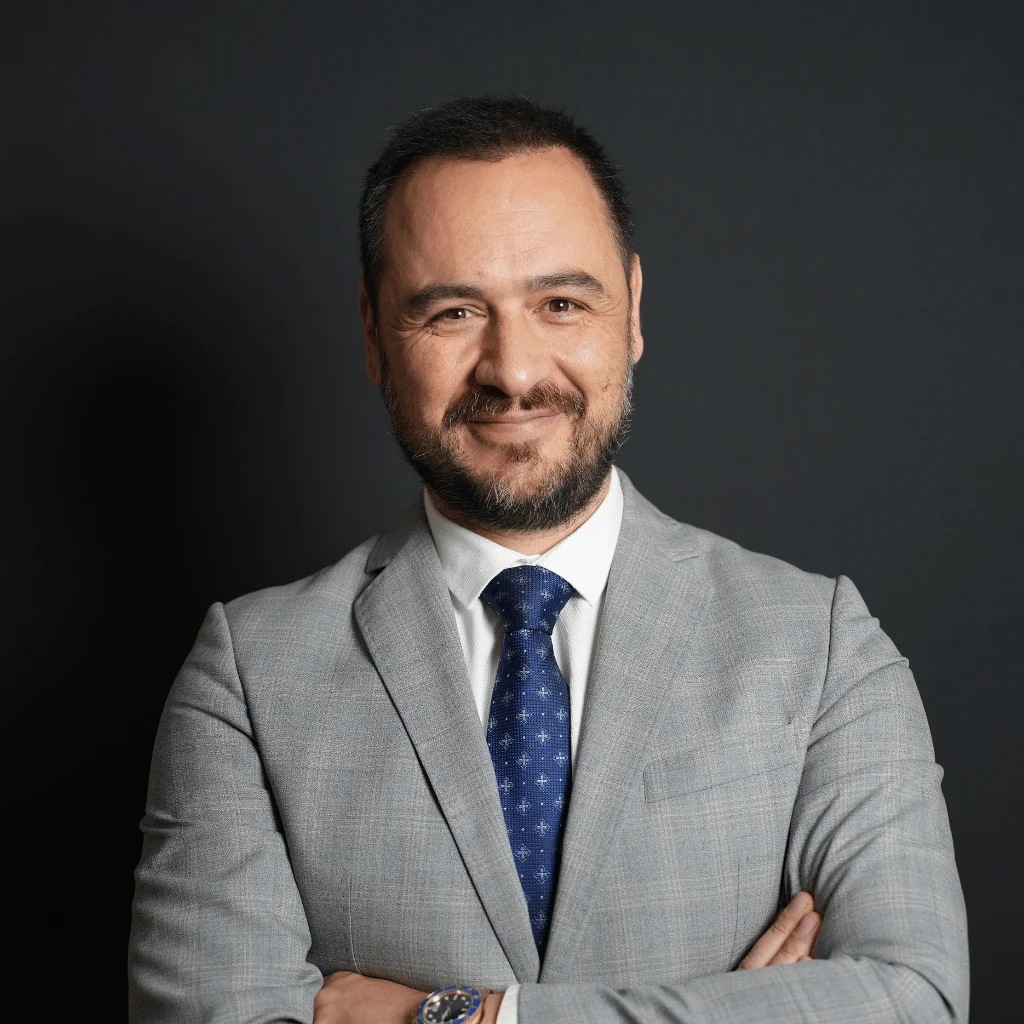
Dr. Mert Demirel
Plastic, Reconstructive & Aesthetic Surgery
Anatomy first. Proportion over excess. Decisions built to remain coherent over time.
Next step
The best treatment is the one that matches the right indication.
You do not need to choose a device, injectable or technique before asking the question. Start with what you would like to improve.
Private consultation
Let’s start with your question.
Leave your number first. We can then continue privately on WhatsApp.


