

Target
Treatment / Non-Surgical
Exosome Therapy
A focused treatment page built around indication, mechanism, expected experience and realistic limits.
Individual assessment
Indication first
Realistic expectations
Clinical focus
Treat the right mechanism — not simply the visible sign.
Treatment snapshot
Primary goalIndividual indication
AppointmentVaries by treatment
DowntimeDepends on method and area
SessionsPersonalized plan
ResultsTreatment-specific timeline
These are orientation points, not promises. Timing and suitability depend on the treatment, anatomy and individual response.
Mechanism
Which method matches the underlying issue?
Plan
What intensity, timing and follow-up make sense?
Patients usually hear about exosomes through a very attractive idea: regeneration.
They may be told that exosomes can improve skin quality, accelerate recovery, stimulate hair growth or somehow make tissue behave younger. I understand why that language is appealing.
But “regenerative” is not yet a clinical outcome, and “exosome” is not yet a complete treatment description.
Before I recommend anything, I want to know three things: what problem are we actually trying to treat, what exactly is the product being used, and how strong is the evidence for using that product in that particular way?
Those questions matter more to me here than the popularity of the treatment.
Exosome is a biological concept before it is a treatment claim
Exosomes are small extracellular vesicles involved in communication between cells. They can carry proteins, lipids, nucleic acids and other molecular signals from one cell to another.
That biology is scientifically interesting.
It has also created understandable interest in regenerative medicine because cell-to-cell signalling is involved in inflammation, healing, tissue maintenance and many other biological processes.
But there is an important step between understanding a biological mechanism and proving that a commercial treatment produces a reliable clinical benefit.
I do not think those two things should be confused.
A plausible biological mechanism is not the same thing as a proven clinical result.
The fact that exosomes participate in cellular communication does not mean every product labelled “exosome” will improve every skin, scalp or healing problem.
For me, this is the correct starting point.
What exactly is being called “exosome therapy”?
This question is more important than it may sound.
Exosome-based products are not necessarily identical simply because they are marketed using the same word.
Products may differ in their biological source, manufacturing process, purification, concentration, characterization, storage, sterility standards and accompanying substances.
The method of application can differ as well.
An exosome-containing preparation used topically after a controlled skin procedure is not automatically equivalent to a product injected into tissue. The biological exposure, risk profile and strength of evidence may be different.
So when a patient asks me, “Do exosomes work?”, I think the question is too broad.
I would rather ask:
- Which product?
- Derived from what source?
- How is it manufactured and characterized?
- What exactly does the manufacturer claim it contains?
- How is it intended to be used?
- What evidence exists for that route of administration?
- What regulatory framework applies to that product?
- What safety and sterility documentation is available?
A treatment becomes more credible when these questions become easier to answer, not when the marketing becomes more impressive.
What does the evidence actually tell us?
There is real scientific interest in exosome-based approaches for skin and hair applications.
Human studies have reported potentially encouraging changes in parameters such as skin texture, elasticity, pigmentation, wrinkles and hair density in selected protocols.
I would not dismiss that evidence.
I would also not present it as more mature than it currently is.
The literature includes different exosome sources, different products, different delivery methods, different combination treatments and different outcome measurements. Follow-up periods are not uniform, and many studies are relatively small or methodologically limited.
This creates a very practical problem.
If one study reports a benefit from one particular preparation used in one particular way, I cannot automatically transfer that result to every commercial product carrying the word “exosome”.
The correct interpretation is not “exosomes do nothing”, and it is not “exosomes regenerate everything”.
The more accurate position is that there are promising signals, but the evidence and protocols are still developing.
That uncertainty should be part of informed consent.
I first decide what problem we are trying to solve
“I want exosomes” is a treatment request.
It is not a diagnosis.
For skin, the patient may actually be concerned about texture, pigmentation, fine lines, laxity, acne scarring, dryness or recovery after another procedure.
For the scalp, the concern may be increased shedding, reduced density, patterned hair loss or a change that began relatively suddenly.
Those are different problems.
If I put them all under the heading “regeneration”, I lose the clinical distinction that should determine treatment.
| Patient concern | What needs to be clarified first | Can exosomes automatically be assumed to be the answer? |
|---|---|---|
| Skin looks dull or tired | Skin quality, hydration, sun damage, pigmentation, texture and expectations | No |
| Fine lines | Skin ageing, movement, volume change and structural factors | No |
| Skin laxity | Degree of tissue looseness and whether structural tightening is required | No — biological support should not be confused with mechanical lifting |
| Hair thinning | Pattern, duration and underlying cause of hair loss | No |
| Recovery after another procedure | What procedure was performed, normal healing biology and evidence for the combination | Only when the combination itself is clinically justified |
The indication has to come before the biological product.
For skin, “regeneration” does not replace anatomical diagnosis
Skin quality is a broad term.
Texture, hydration, pigmentation, elasticity, pore appearance and fine surface lines all involve different biological processes.
Exosome-based products are being studied as potential supportive tools in some of these areas, particularly in combination with procedures that create controlled skin stimulation.
That can be a reasonable area of interest.
But I do not want the concept of regeneration to become an umbrella explanation for every visible sign of ageing.
If the main problem is significant skin excess, exosomes do not remove the excess.
If the main problem is tissue descent, exosomes do not reposition the tissue.
If the main problem is facial volume loss, exosomes do not recreate lost structural volume in the way a volumising treatment does.
If the concern is pigmentation, the type and cause of pigmentation still matter.
If there is acne scarring, scar type and depth still matter.
The word “regenerative” should not erase the anatomy.
Exosomes should not be sold as a non-surgical facelift
I am particularly cautious with language suggesting that a biological skin treatment can produce the equivalent of surgical lifting.
Improved skin quality and tissue repositioning are not the same endpoint.
A treatment may potentially improve certain characteristics of the skin and still have almost no meaningful effect on significant tissue descent.
Both statements can be true at the same time.
If a patient has early skin-quality concerns, a supportive non-surgical approach may be reasonable.
If the patient has substantial laxity and expects the treatment to restore the position of descended tissue, the mechanism and expectation no longer match.
I do not want biological language to disguise a mechanical limitation.
If the problem is structural, calling a treatment regenerative does not make the structure disappear.
Hair loss requires diagnosis before stimulation
Hair is another area in which exosome treatments are increasingly discussed.
Early clinical research is interesting, particularly for certain patterns of hair loss. But “hair loss” is itself a broad symptom.
A patient can lose hair because of androgenetic alopecia, temporary shedding after physiological stress, nutritional or endocrine factors, inflammatory scalp disease, medication effects or other causes.
These conditions do not have the same biology.
So before discussing exosomes for the scalp, I want to understand what type of hair loss is actually present.
The key questions include:
- When did the shedding or thinning begin?
- Is it patterned or diffuse?
- Is there a family history?
- Is the scalp itself healthy?
- Has there been recent illness, weight change, stress or medication change?
- Is there evidence of an inflammatory or scarring process?
- Has an established treatment for the underlying condition already been considered?
I would not want an attractive regenerative treatment to delay the diagnosis of a hair-loss condition that has a more established management pathway.
Supportive treatment and replacement treatment are different ideas
This distinction is important throughout regenerative medicine.
A treatment can have a potential supportive role without replacing everything else.
If exosome-based therapy is being considered alongside another skin or scalp treatment, I want to know what each part of the plan is responsible for.
What is the primary treatment?
What is the supportive treatment?
Which outcome are we expecting from each?
How will we know whether either one actually contributed?
Without that structure, combination therapy can easily become a list of procedures rather than a coherent medical plan.
More modalities do not automatically produce more benefit.
Why the application method matters
One of the weaknesses in discussing “exosome therapy” as a single treatment is that the method of delivery may differ substantially.
A topical product placed on intact skin, a product applied after microneedling or another controlled skin procedure, and a preparation delivered by injection should not be treated as though they represent the same biological exposure.
The route affects both the potential mechanism and the risk.
If another procedure is being used to create channels or stimulate tissue, I also need to separate the effect of that procedure from the effect attributed to the exosome product.
For example, microneedling itself produces a biological response.
If improvement follows a combination treatment, the patient should not automatically be told that every visible change came from the added exosome preparation unless the evidence supports that conclusion.
This is part of intellectual honesty in treatment evaluation.
Product quality is part of the medical decision
With many aesthetic treatments, patients naturally focus on technique.
In exosome-based treatment, I think product identity deserves equal attention.
Biological products are more complex than a simple ingredient name.
Source material, manufacturing conditions, purification, contamination control, concentration, characterization, storage and traceability all matter.
The label “exosome” by itself does not answer those questions.
For me, this means that product sourcing is not a procurement detail handled after the treatment decision.
It is part of whether I am comfortable making the treatment decision at all.
If I cannot adequately understand what is in the product, where it came from and how it was produced, I cannot compensate for that uncertainty with better injection technique.
Regulatory status matters — and it is not the same everywhere
Exosome-based products exist in an evolving regulatory environment, and rules differ between countries and between product categories.
I think patients should be cautious when a regulatory statement from one jurisdiction is presented as though it automatically applies everywhere.
But the opposite mistake is also possible: assuming that because a product is commercially available, its clinical efficacy has therefore been established.
Commercial availability, regulatory status and strength of clinical evidence are three different questions.
A responsible treatment discussion should distinguish between them.
For the specific product being considered, I want its current legal and regulatory status, intended use, quality documentation and clinical evidence to be clear.
What does “safe” mean when the evidence is still developing?
When patients ask whether exosome therapy is safe, I do not think a simple yes or no is sufficient.
Safety depends on the product, route of administration, treatment area, combination procedure, sterility standards, medical history and the quality of available data.
Temporary redness, sensitivity, swelling or tenderness can occur when the treatment is combined with procedures that disrupt or stimulate the skin.
Any approach involving needles or disruption of the skin also introduces familiar procedural risks such as bruising or infection.
Biological products add additional questions relating to manufacturing quality, contamination and immune response.
The less standardized the product and application protocol, the more cautious I become about broad claims of safety.
“No serious complication happened in a small study” and “the long-term safety profile is fully established” are not equivalent statements.
Who should be assessed more cautiously?
Because the treatment is elective and the evidence base is still developing, I prefer a relatively high threshold for proceeding when medical uncertainty is present.
Additional caution may be appropriate in patients with active infection, important immune or inflammatory conditions, pregnancy or breastfeeding, relevant medication use, significant allergy history or impaired healing.
The exact decision depends on the treatment method and individual medical history.
In some situations the correct response is not “never”.
It is “not until this is clarified”.
I would rather postpone an elective regenerative treatment than make uncertainty part of the procedure.
What kind of result is realistic?
If exosome-based treatment produces a benefit, I would expect the conversation to be about gradual improvement rather than transformation.
For skin, that might mean changes in quality-related parameters rather than a completely different facial structure.
For hair, the relevant outcomes might include density, thickness or shedding patterns depending on the underlying diagnosis and protocol.
I would not promise:
- a surgical lifting effect;
- complete removal of wrinkles or scars;
- restoration of every type of hair loss;
- a guaranteed percentage improvement;
- a fixed number of sessions that works for everyone;
- a permanent result;
- or a predictable response simply because the product contains exosome-related material.
The baseline condition matters. The protocol matters. The product matters. The biology of the individual patient matters.
Uncertainty is not a flaw that needs to be hidden from the patient. It is part of the current evidence.
Why I am cautious with before-and-after photographs
Before-and-after images are especially persuasive in treatments that are still developing scientifically.
But they are weak evidence when used alone.
Skin appearance changes with lighting, hydration, camera settings, makeup, angle and time.
Hair photography is affected by styling, wetness, hair length, lighting, camera distance and the way the hair is separated.
A photograph can document a patient’s progress when it is standardized properly.
It cannot tell me whether the same result will occur in another patient, whether an exosome product caused the change, or whether a combination procedure was responsible.
I want photographs to support measurement, not replace it.
How I think about combination treatments
Exosome-based products are frequently discussed together with microneedling, laser procedures or other forms of controlled tissue stimulation.
A combination may be reasonable in selected circumstances.
But I do not believe “combination” should automatically mean “better”.
Each additional treatment introduces another mechanism, another variable and potentially another risk.
I want to know why the combination exists.
If the primary procedure already has a strong indication, what specific additional benefit are we expecting from the exosome product?
Is that benefit supported by evidence?
Does adding the product materially alter risk, recovery or cost?
Would I still recommend the primary procedure if the exosome component were removed?
These questions prevent a treatment plan from becoming a package.
How many sessions are needed?
I do not think there is a universal answer.
That uncertainty reflects the state of the field.
Different studies use different protocols, treatment intervals, products and endpoints. A commercially convenient session package should not be mistaken for a biologically established standard.
If I use a treatment with an evolving evidence base, I prefer a staged logic.
Treat for a defined indication.
Allow enough time to observe the relevant outcome.
Reassess using standardized clinical information where possible.
Then decide whether further treatment has a rational purpose.
I do not want the number of sessions to be decided before we know whether the first treatment produced a meaningful benefit.
How I decide whether exosome therapy belongs in the plan
My threshold is relatively simple.
First, there has to be a clearly defined problem.
Second, the proposed exosome-based approach has to be biologically and clinically relevant to that problem.
Third, the product itself has to meet a level of sourcing, quality and regulatory clarity that I am comfortable with.
Fourth, the expected benefit has to justify the uncertainty, cost and procedural burden.
Fifth, the patient has to understand that the evidence is still developing.
If those conditions are not met, I do not think the word “regenerative” is a good enough reason to proceed.
The questions I want answered before I recommend exosome therapy
Before recommending an exosome-based treatment, I want to be able to answer several questions clearly:
- What exactly is the patient’s concern?
- What is the underlying mechanism producing that concern?
- Is there a more established treatment that addresses it more directly?
- What exactly is the proposed exosome-containing product?
- What is its biological source?
- How is it manufactured and characterized?
- What quality, sterility and traceability information is available?
- What is its regulatory status for the intended use?
- What clinical evidence supports this specific indication?
- How will it be delivered?
- Is another procedure contributing to the expected result?
- What are the realistic limits of improvement?
- How will we decide whether the treatment actually worked?
- Would established treatment alone be the more rational option?
- Would waiting for clearer evidence be entirely reasonable?
Only after those questions have satisfactory answers does a treatment protocol become meaningful.
I think exosome research is worth following. There are biologically plausible mechanisms and increasingly interesting clinical data in areas such as skin quality and hair restoration.
But interest should not require certainty, and uncertainty should not require dismissal.
The responsible position sits between those two extremes.
The goal is not to be the first to use every new regenerative technology.
The goal is to know enough about the problem, the product and the evidence to recognise when a new technology has earned a place in the treatment plan — and when it has not.
Frequently asked questions
What exactly are exosomes?
Exosomes are small extracellular vesicles involved in communication between cells. They can carry biologically active molecules. Their role in normal cell signalling has generated interest in regenerative medicine, but understanding their biological function does not automatically prove the clinical effectiveness of every exosome-containing product.
Is exosome therapy the same as stem-cell therapy?
No. Exosomes are extracellular vesicles rather than living stem cells. Some products may be derived from cells grown under particular conditions, but the final preparation and its composition need to be understood individually. I would not use “stem cells” and “exosomes” as interchangeable terms.
Is exosome therapy proven?
There is growing human clinical research and some encouraging findings in skin and hair applications. At the same time, studies use heterogeneous products, protocols and outcome measures, and the evidence is not yet as standardized as it is for many established treatments. I would therefore describe the field as promising but still developing.
Can exosomes rejuvenate the skin?
Some clinical studies report improvements in skin-quality parameters such as texture, elasticity and fine lines, particularly in certain combination protocols. That should not be translated into a promise of complete rejuvenation or surgical lifting. The result depends on the problem being treated, the product and the delivery method.
Can exosomes tighten loose skin?
I would distinguish possible improvement in skin quality from true structural tightening. Significant skin laxity or tissue descent is a mechanical problem, and an exosome-based treatment should not be presented as though it reproduces surgical repositioning.
Can exosomes help hair loss?
Early clinical research has reported potentially encouraging changes in hair density or thickness in selected hair-loss populations. The evidence remains heterogeneous, and hair loss should be diagnosed before treatment because androgenetic alopecia, temporary shedding, inflammatory disease and other causes require different management.
Are exosome products all the same?
No. Biological source, manufacturing, purification, characterization, concentration, storage and accompanying components can differ. I would not assume that evidence relating to one product or protocol automatically applies to another product simply because both are described as exosome-based.
Is exosome therapy safe?
Safety depends on the specific product, route of administration, treatment method and patient. Topical use in conjunction with certain procedures and direct injection should not automatically be treated as equivalent. Product quality, sterility, medical history and the strength of available safety data all matter.
Can exosomes be injected?
The fact that a product can physically be injected does not establish that injection is the most appropriate or evidence-supported route. I would want the product’s intended use, regulatory status, safety data and evidence for that particular method to be clear before considering it.
Can exosomes be combined with microneedling or laser treatment?
Combination approaches have been studied and may be considered in selected circumstances. But microneedling and laser procedures have biological effects of their own. I want a clear reason for adding the exosome component rather than assuming that adding another modality automatically produces a better result.
How many sessions do I need?
There is no universal evidence-based number that applies to every product and indication. I prefer a staged plan with a defined objective and reassessment rather than purchasing a predetermined course simply because a package contains a certain number of sessions.
How quickly will I see a result?
If a benefit occurs, I would generally expect it to be assessed gradually rather than as an immediate transformation. Timing depends on the indication, treatment method and biological endpoint being measured. Hair-related outcomes, for example, need an appropriate observation period because the hair cycle itself takes time.
Are the results permanent?
I would not promise permanence. Skin ageing, hair biology and the underlying condition continue to change over time. The available evidence also does not support one universal duration for all exosome-based protocols.
What should I ask a clinic before having exosome therapy?
I would ask what specific product is being used, where it comes from, how it is manufactured and quality-controlled, how it will be administered, what evidence supports that specific indication, what its regulatory status is, what the alternatives are and how success will be measured. A clinic should be able to discuss limitations as clearly as potential benefits.
When would you recommend against exosome therapy?
I would not recommend it when the diagnosis is unclear, when a more established treatment addresses the problem more directly, when product quality or sourcing cannot be adequately verified, when the medical history creates unnecessary uncertainty, or when the expectation goes far beyond the available evidence. Sometimes exosomes may have a supportive role. Sometimes another treatment is more appropriate. And sometimes the most scientifically responsible decision is to wait.
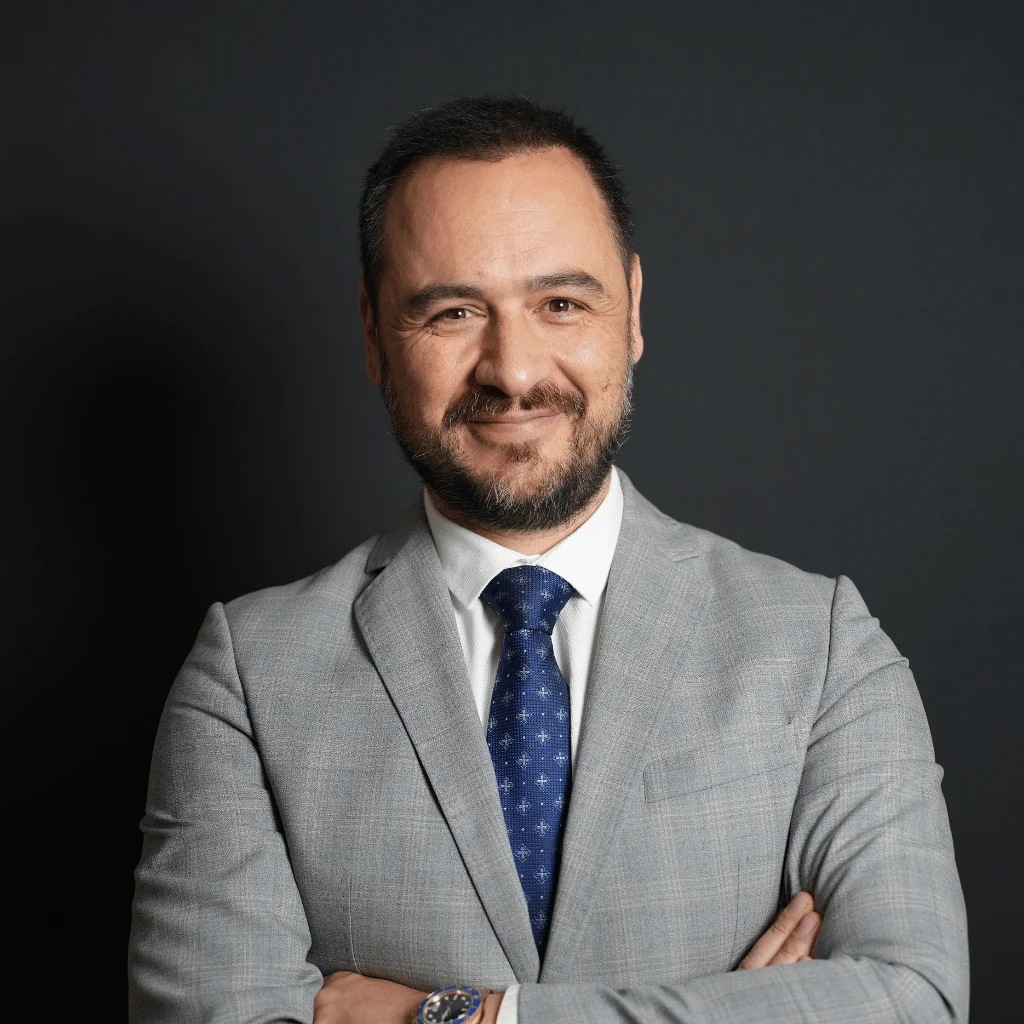
Dr. Mert Demirel
Plastic, Reconstructive & Aesthetic Surgery
Anatomy first. Proportion over excess. Decisions built to remain coherent over time.
Next step
The best treatment is the one that matches the right indication.
You do not need to choose a device, injectable or technique before asking the question. Start with what you would like to improve.
Private consultation
Let’s start with your question.
Leave your number first. We can then continue privately on WhatsApp.


