


Target
Treatment / Non-Surgical
Acoustic / Sound Wave Therapy
A focused treatment page built around indication, mechanism, expected experience and realistic limits.
Individual assessment
Indication first
Realistic expectations
Clinical focus
Treat the right mechanism — not simply the visible sign.
Treatment snapshot
Primary goalIndividual indication
AppointmentVaries by treatment
DowntimeDepends on method and area
SessionsPersonalized plan
ResultsTreatment-specific timeline
These are orientation points, not promises. Timing and suitability depend on the treatment, anatomy and individual response.
Mechanism
Which method matches the underlying issue?
Plan
What intensity, timing and follow-up make sense?
“Sound wave therapy” sounds almost too gentle to require a diagnosis.
There is no incision, no injected material and no tissue being physically removed. A handpiece is applied to the skin and acoustic pressure waves are transmitted into the underlying tissues. This simplicity can make the treatment easy to market as a general solution for cellulite, circulation, skin tightening and even fat reduction.
I think that is where the terminology begins to create problems.
Acoustic wave therapy is not one universal treatment effect. Different systems produce different types of pressure waves, and the clinical objective matters. In aesthetic practice, the most established discussion is around the appearance of cellulite and selected soft-tissue contour concerns rather than meaningful weight loss or surgical body reshaping.
So before I discuss how many sessions a patient might need, I want to define what we are actually treating: is the problem cellulite architecture, true excess fat, skin laxity, edema, or simply a normal surface variation that has been given a treatment name?
Cellulite is not simply fat sitting underneath the skin
This distinction is the starting point for understanding why acoustic treatment may help some patients and disappoint others.
Cellulite develops from the relationship between skin, subcutaneous fat and the fibrous septa connecting superficial tissue to deeper structures. Where these fibrous bands tether the skin downward while adjacent fat pushes upward, the surface can develop the familiar dimpling and undulating appearance.
Hormonal influences, connective-tissue architecture, skin thickness, age and genetics all contribute. Body fat can influence how visible cellulite becomes, but thin patients can have pronounced cellulite and patients with more body fat can have relatively little.
This is why I do not present cellulite as a weight problem.
If a patient believes that treating cellulite will reduce several centimetres of fat or produce the contour of liposuction, the treatment has already been assigned the wrong job.
Cellulite is a surface-architecture problem before it is a body-weight problem.
A treatment designed to improve that architecture should be judged by the quality of the skin contour, not by kilograms lost.
What acoustic waves are actually doing
Acoustic-wave systems transmit mechanical pressure pulses through tissue.
Depending on the device, these may be described as radial pressure waves, focused shock waves or other acoustic technologies. They are not all mechanically identical, which is one reason I am cautious about treating “sound wave therapy” as though every machine has the same evidence.
The proposed aesthetic benefit comes from repeated mechanical stimulation of the tissue. Clinical and experimental discussions include changes in connective-tissue organisation, local tissue mechanics and microcirculatory effects as possible contributors to the improvement in cellulite appearance.
I would keep the claim narrower than many commercial descriptions do.
The treatment is not literally shaking fat cells out of the body, flushing toxins from the tissue or melting a deep fat compartment through sound.
The more defensible objective is a gradual improvement in the surface appearance and tissue quality of selected cellulite.
The fact that the treatment is mechanical does not make its biological claims automatic
One of the difficulties in this field is that plausible mechanisms can quickly become marketing facts.
A pressure wave clearly interacts with tissue. It is reasonable to investigate whether repeated mechanical stimulation affects collagen structure, fibrous septa, circulation or other components of cellulite.
But showing that tissue has been mechanically stimulated is not the same as proving every downstream claim made for the treatment.
This matters because acoustic-wave therapy is sometimes described as simultaneously breaking fat, increasing collagen, draining lymph, tightening skin and permanently correcting cellulite.
Those are several separate biological claims.
I would rather judge the treatment against the endpoint for which there is the clearest clinical signal: whether the visible cellulite pattern becomes meaningfully smoother in an appropriately selected patient.
The evidence for cellulite is encouraging enough to be interesting, but not strong enough for certainty
Acoustic and shock-wave treatments have been studied for cellulite for a number of years, including in randomised trials.
Some studies report improvement in cellulite severity, surface appearance or related measurements. This means I would not dismiss the treatment as biologically meaningless.
At the same time, the evidence base has important limitations. Studies have used different machines, treatment protocols, assessment methods and follow-up periods. Sample sizes have often been relatively small, and more recent reviews of electrophysical cellulite treatments continue to describe the overall methodological quality of the literature as limited.
That changes the language I use with patients.
I can reasonably say that acoustic-wave treatment may improve the appearance of cellulite in selected patients.
I would not say that every patient will achieve a predictable percentage reduction, that one protocol is universally established, or that the result is permanent.
An evidence signal is not the same thing as a guarantee.
When the literature is heterogeneous, the consultation should become more precise, not more confident.
Mild surface dimpling and deep structural cellulite are not the same treatment problem
The depth and character of the cellulite matter.
A patient with relatively mild, diffuse surface irregularity and good skin quality presents a different mechanical problem from a patient with deep focal depressions created by strong fibrous tethering.
Mechanical stimulation may improve the overall surface quality in the first patient.
In a deeply tethered depression, however, the fibrous structure may remain strong enough that an external acoustic treatment cannot fully release it. Selected focal cellulite can require a more direct subcision-type or other structural approach when the tether itself is the dominant mechanism.
This does not mean acoustic therapy has failed.
It means the treatment has reached the limit of the layer it can reasonably influence.
The same principle appears repeatedly in aesthetic medicine: a modest problem often responds well to a modest mechanism. As the architecture becomes more structural, the treatment has to become more structural too.
Acoustic therapy is not fat reduction
This is probably the expectation I would want to correct most clearly.
A patient may have cellulite and localised fat in the same thigh or buttock region. The two findings overlap visually, but they are not identical treatment targets.
If the dominant concern is true excess adipose volume, I would not expect acoustic-wave treatment to reproduce the effect of liposuction, cryolipolysis or another fat-reduction method.
A small change in tissue firmness or surface contour can occasionally make a body region look somewhat more refined. That should not be translated into the claim that substantial fat has been removed.
Likewise, circumference measurements can change for several reasons and should not be used alone to imply destruction of fat tissue.
If body contour reduction is the patient’s actual objective, I want that objective stated honestly before selecting the device.
Skin laxity can coexist with cellulite, but tightening is a separate question
As skin becomes thinner and less elastic with age, cellulite can become more visible because the surface is less able to conceal the architecture beneath it.
This means a treatment that improves tissue quality may sometimes make the overall appearance look smoother.
But significant laxity is not simply another form of cellulite.
If loose skin is the dominant reason the thigh or buttock surface looks irregular, acoustic-wave therapy has a limited mechanical ability to change that skin envelope.
A patient may need a different tightening strategy, or in more substantial cases may simply have to accept that a non-surgical procedure cannot reproduce skin excision.
I do not want to add the word “tightening” to the treatment simply because firmer-looking skin would make the before-and-after photograph more attractive.
The clinical question remains whether meaningful tightening has actually occurred.
One session is unlikely to tell us very much
Most cellulite studies using acoustic-wave or shock-wave therapy have involved repeated sessions rather than one isolated treatment.
That makes sense because the intended effect is based on repeated tissue stimulation rather than an immediate structural removal.
But I do not think this should automatically become a fixed package sold before response is known.
If the patient is tolerating treatment and a standardised photographic comparison shows gradual improvement, continuing a planned series may be reasonable.
If several appropriately delivered sessions produce no meaningful visual change, simply completing additional treatments because they were prepaid does not strengthen the biological rationale.
I prefer the course to contain checkpoints.
The question at each stage is whether there is enough improvement to justify further treatment, not whether there are still unused sessions on the calendar.
Cellulite photography has to be unusually disciplined
Cellulite changes dramatically with position, muscle contraction and lighting.
Side lighting exaggerates depressions. Frontal diffuse lighting can almost erase them. Contracting the gluteal muscles can change the pattern. Weight distribution between the legs alters tension on the skin.
This makes before-and-after photography unusually easy to manipulate unintentionally.
I want the same body position, the same lighting direction, the same distance and ideally the same state of muscle relaxation when assessing response.
Otherwise we risk treating the photograph rather than the tissue.
A patient may genuinely improve and poor photography may hide it. The opposite can also happen: a change in lighting can create an impressive “result” from almost no biological change.
A temporary feeling of firmness should not automatically be called remodelling
After treatment, the area may feel different. There can be temporary redness, warmth, tenderness or a subjective sense of increased firmness.
Some of that may reflect the immediate tissue response to mechanical stimulation.
It should not automatically be interpreted as the final structural outcome.
If longer-term connective-tissue remodelling contributes to a visible result, that process takes time.
This is why I separate the experience immediately after a session from the result that remains after the tissue returns to baseline.
A treatment should be judged by what persists, not by the transient response that proves only that energy was delivered.
The treatment is non-invasive, but non-invasive does not mean biologically neutral
Acoustic-wave treatment does not require an incision or injection, which keeps the procedural burden relatively low.
Temporary redness, tenderness and bruising can still occur because mechanical pressure is being applied to soft tissue.
Patients with a tendency to significant bruising, relevant vascular conditions, active inflammation or infection in the treatment area, or medications and medical conditions affecting bleeding and healing require a more careful assessment.
The exact contraindications also depend on the device being used and its manufacturer’s medical guidance.
I prefer that specificity over a generic statement that “sound waves are completely safe because nothing enters the body”.
The absence of a needle changes the risk profile.
It does not remove the need for medical selection.
Combining treatments only makes sense if another mechanism is genuinely missing
Cellulite is a multifactorial condition, so combination treatment can sometimes be rational.
A deep focal tether may need a treatment that directly addresses the fibrous septum. A patient with separate skin laxity may need a tightening strategy. A patient with significant localised fat has another treatment problem again.
In those cases, different treatments can have different jobs.
What I do not want is to turn cellulite into a package of every machine available in the clinic simply because no single treatment promises perfection.
Adding modalities without defining their separate targets increases cost and biological exposure without necessarily increasing precision.
Combination therapy is useful when the diagnosis contains several mechanisms.
It is not automatically useful because the clinic contains several devices.
Cellulite can improve without disappearing
Cellulite is extremely common and forms part of normal female soft-tissue anatomy in many patients.
I think this matters because the treatment goal should not begin from the assumption that normal skin must become completely smooth.
A meaningful result may be shallower dimpling, a more uniform surface under ordinary lighting or a reduction in how strongly the texture draws attention.
Residual irregularity can remain.
If success is defined as making the buttock or thigh surface look digitally filtered in every position and every light source, almost every real-world treatment will eventually be judged as insufficient.
I prefer an endpoint the anatomy can actually sustain.
The result is unlikely to be permanently fixed in time
Even when cellulite improves, the biological factors that contributed to it remain.
Skin continues to age. Weight can change. Hormonal influences remain. Connective tissue continues to respond to time and movement.
This means maintenance may eventually be considered if the patient had a meaningful initial response and later notices that the surface irregularity has returned.
I would not, however, create an automatic maintenance schedule before that happens.
There is little value in repeatedly treating an area that still looks satisfactory simply because six or twelve months have passed.
The returning problem should trigger reassessment.
The calendar should not.
When acoustic wave therapy makes sense to me
I am most comfortable recommending acoustic-wave treatment when cellulite is genuinely the dominant concern, the degree of irregularity is compatible with a non-invasive mechanical treatment and the patient understands that the expected result is improvement rather than complete elimination.
I become more cautious when the patient actually wants substantial fat reduction, when deep focal tethering is the dominant problem, when significant loose skin is creating the contour or when the expectation comes from heavily edited photographs.
I also think the relatively modest procedural burden should not become a reason to treat cellulite that the patient had never considered a problem until someone pointed it out.
The existence of a non-invasive treatment does not create a medical need to remove every dimple.
For the right patient, acoustic-wave therapy can occupy a useful space: a relatively low-burden treatment for a relatively modest surface-architecture problem.
That is a more honest strength than calling it fat melting, body sculpting and skin tightening all at once.
Frequently asked questions
What is acoustic or sound wave therapy?
It is a non-invasive treatment that delivers mechanical acoustic pressure waves into soft tissue. In aesthetic practice, it is commonly discussed for improving the appearance of cellulite and selected tissue-quality concerns.
Is acoustic wave therapy the same as ultrasound?
No. Both involve forms of acoustic energy, but aesthetic acoustic-wave or shock-wave systems and focused ultrasound devices use different physical delivery patterns and have different clinical applications.
Does sound wave therapy remove fat?
I would not use it as a primary fat-reduction treatment. Improvement in surface contour should not be confused with substantial destruction or removal of adipose tissue.
Does it really work for cellulite?
Clinical studies and systematic reviews show a signal of benefit in selected patients, but the evidence is heterogeneous and many studies have methodological limitations. I would describe the expected result as a possible modest improvement rather than a guaranteed correction.
Can it completely remove cellulite?
I would not promise complete elimination. Cellulite reflects normal and age-related relationships between skin, fibrous septa and subcutaneous tissue. The realistic objective is to make the irregularity less visible.
How many sessions are required?
Published protocols commonly use a series rather than a single treatment, but devices and protocols vary. I prefer to reassess response during the course instead of treating one fixed session number as universal.
Does it hurt?
The treatment is generally performed without anaesthesia, but pressure and tenderness can be noticeable, particularly over sensitive areas. Intensity and individual tolerance vary.
Is there downtime?
Most patients have limited recovery, but temporary redness, tenderness or bruising can occur. “Non-invasive” should not be interpreted as a guarantee of zero tissue reaction.
Can it tighten loose skin?
Some patients may perceive improved tissue firmness, but significant skin laxity is a separate structural problem. I would not present acoustic-wave treatment as a substitute for a dedicated tightening or surgical procedure.
Can acoustic therapy be combined with other cellulite treatments?
Yes, when another clearly identified mechanism requires a different treatment. A combination should be based on anatomy rather than automatically adding multiple devices.
How long do results last?
Duration varies, and long-term evidence is less robust than short-term studies. Cellulite can recur or become more visible as tissues continue to change, so maintenance should be based on actual return of the concern.
When would you recommend no treatment?
If the cellulite is mild and does not genuinely bother the patient, if the primary problem is actually fat or significant skin laxity, or if the expected improvement is too small to justify a treatment series, doing nothing is entirely reasonable.
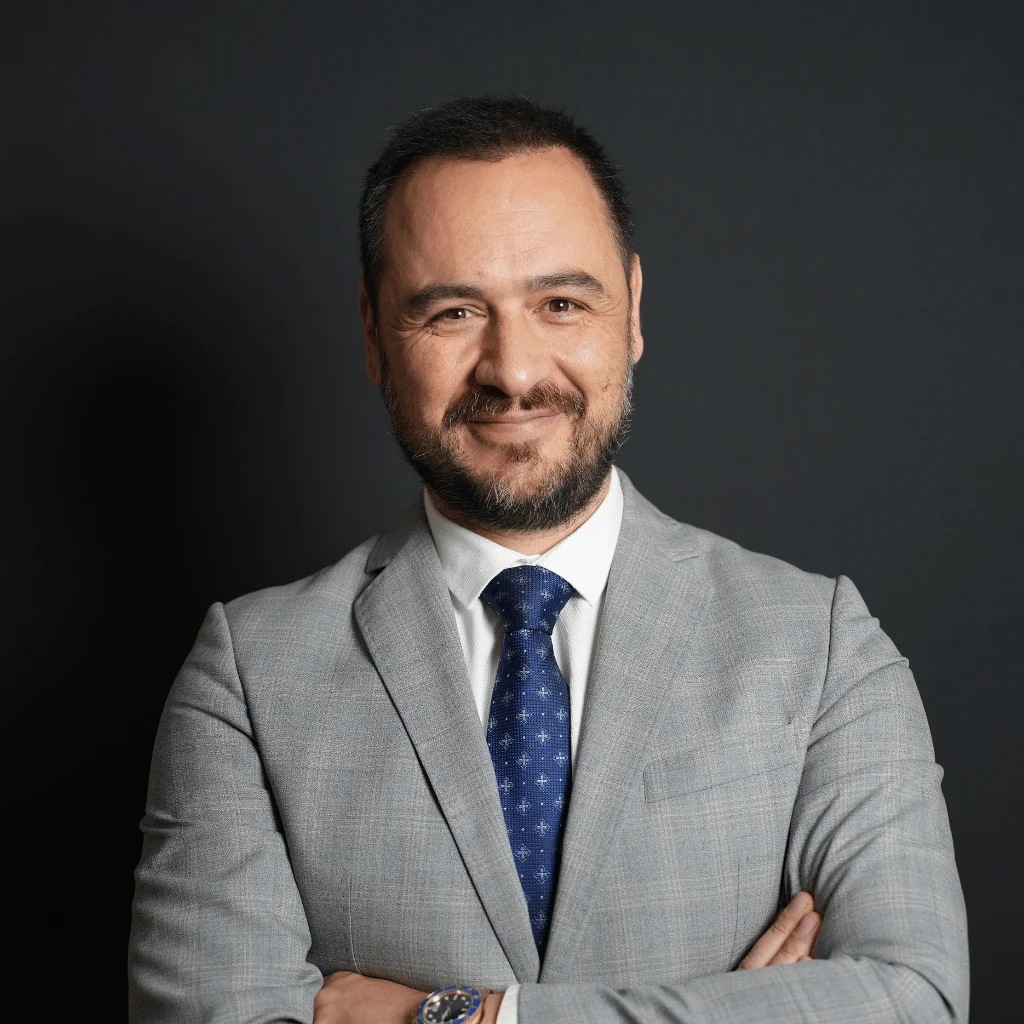
Dr. Mert Demirel
Plastic, Reconstructive & Aesthetic Surgery
Anatomy first. Proportion over excess. Decisions built to remain coherent over time.
Next step
The best treatment is the one that matches the right indication.
You do not need to choose a device, injectable or technique before asking the question. Start with what you would like to improve.
Private consultation
Let’s start with your question.
Leave your number first. We can then continue privately on WhatsApp.


