

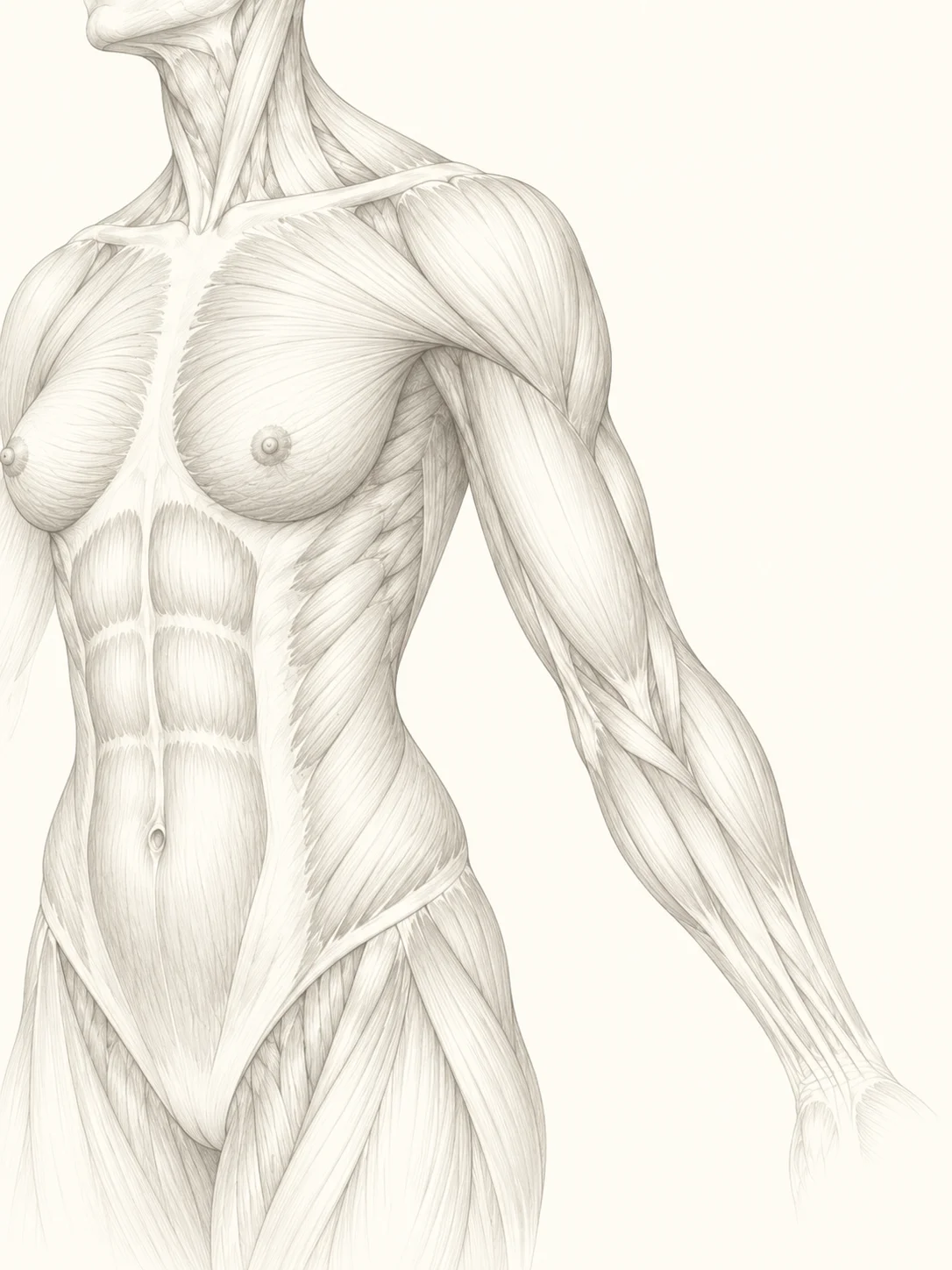
Buttock contour is rarely a buttock-only issue, and “buttock contouring” is not really the name of an operation. It is the name of a planning concept.
The gluteal region is read in relation to everything around it: the waist, the flanks, the sacral hollow, the hip depression and the upper posterior thigh. A change in one of those areas can improve or worsen another. That is why this work is about transitions and proportion rather than a single volume target — and why the first question is not which procedure, but what is actually lacking.
What buttock contouring actually refers to
Buttock contouring refers to a set of surgical strategies that improve the shape of the buttocks and the surrounding silhouette. Depending on anatomy and goals, a plan may include selective liposuction for framing, fat transfer to improve projection or hip transitions, and in selected cases skin-tightening or lift-based approaches when laxity is dominant.
Which of those is correct depends on whether the limitation is volume deficiency, fat distribution, skin envelope behaviour, or a combination. The tools follow the anatomy. They should not follow trends.
The buttock is read as part of a region, not as a shape on its own
The gluteal region does not exist visually in isolation. It is read against the waist, the flanks, the sacral hollow, the lateral hip depression and the upper posterior thigh. Because these areas read together, treating one of them changes how the others appear — which means a technically successful change in a single area can still worsen the overall silhouette. This is the reason contour planning is a mapping exercise before it is a surgical one.
Diagnosing the pattern comes before choosing the tool
The anatomical complexity of this work begins with identifying which pattern is present, because patients arriving with the same complaint frequently have four different problems.
Some have adequate buttock volume but poor framing, caused by wide flanks or lower-back fullness. Others have true projection deficiency, where volume is genuinely needed. Some have hip dips, where the issue is the lateral transition rather than central buttock size. Others have skin laxity after weight loss, where volume alone will not correct folds. These are different problems and they require different solutions.
Four patterns that all present as “I want a better buttock shape”
| Feature | Framing problem | Projection deficiency | Lateral transition (hip dips) | Skin laxity |
|---|---|---|---|---|
| What is actually limiting the shape | Adequate buttock volume, but wide flanks or lower-back fullness | Genuinely insufficient volume | The lateral transition rather than central buttock size | Envelope behaviour after weight loss |
| What the plan addresses | Selective liposuction to improve framing | Fat transfer to improve projection | Transition and blending across the hip | Skin-tightening or lift-based approaches |
| Principal trade-off | Over-aggressive harvesting can create contour breaks and waviness | Fat transfer is biologic, and retention varies | Blending across a visually unforgiving zone | Scars may be required if a lift is needed |
| If the wrong tool is chosen | Adding volume to a framing problem does not resolve the read | Framing work alone will not create projection that is absent | Central volume does not correct a lateral transition | Volume alone will not correct folds |
Why technique selection has to follow tissue behaviour
Liposuction can improve framing, but over-aggressive harvesting can create contour breaks and waviness — particularly in the upper posterior thigh and the lateral hip, where the surface is least forgiving.
Fat transfer can improve shape, but it is biologic rather than mechanical. Retention varies between patients, and overfilling beyond tissue capacity is not a responsible way to compensate for that variability. Individual tissue behaviour then governs swelling, firmness and long-term stability regardless of which tools were used.
In this region, removing more and adding more can both make the shape worse
Both directions have a ceiling set by tissue rather than by intention. Harvesting too aggressively produces breaks and waviness in exactly the zones that define the silhouette; filling beyond what the tissue can hold does not reliably become permanent volume. The result is decided by how well the transitions are managed, not by the magnitude of the change in either direction.
What buttock contouring is not
It is not a weight-loss procedure. It is not a guarantee of a fixed shape regardless of weight change — the contour that is created sits on a body that continues to fluctuate.
And it is not always the right answer. When expectations require an exaggerated look, or when the anatomy sets a clear ceiling, the honest response is to say so rather than to select a more aggressive plan.
The limits are worth stating plainly
Donor fat may be limited, which constrains what a fat-transfer element of the plan can realistically deliver. Skin laxity may require scars if a lift is needed. And pre-existing asymmetry persists: symmetry is a goal, not a promise.
Patients often describe an inconsistency rather than a deficiency
A common description is that the silhouette changes depending on lighting and posture — flatness in profile, a weak hip transition, or uneven framing despite stable weight and training. That is a useful complaint, because it points to transitions rather than to volume. It also explains why the answer is frequently not more volume but better framing, and why a patient can be dissatisfied after an operation that technically added exactly what was requested.
I map the region before I select any tool
My planning order here does not change: define what is actually lacking — projection, lateral transition, lower pole support, or simply framing — and only then choose between liposuction, fat transfer and selective tightening. The tools follow anatomy rather than trends, and the objective I am designing towards is smooth transitions and proportionate shape that looks natural from every angle, not a maximal change that reads well from one.
Recovery is a sequence, not a single date.
- Early phaseSwelling and firmness dominate
Where liposuction is part of the plan, recovery is dominated early by swelling and firmness. Early contour is not a reliable preview of the final one.
- Modified-activity phaseSitting and activity adjustments where fat transfer is used
A fat-transfer element adds sitting and activity modifications to the recovery, because the transferred tissue is settling rather than simply healing.
- Maturation phaseScar maturation where lift-based work was required
Lift-based work adds scar maturation as a separate process with its own timeline. Early appearance is not final appearance, and staged settling should be expected.
Recovery here is genuinely variable and depends on which methods were used, which is why I avoid describing it as one timeline. A plan combining framing, volume and tightening does not recover like a plan using only one of them.
Why the first plan should be the conservative one
Revision logic is part of responsible planning rather than an admission of failure. Secondary contouring can be considered for under-correction or for irregularities.
But revision in this region has narrower margins, because the tissue planes have been altered. That is the strongest argument for a conservative first plan that prioritises transitions — it tends to produce the most natural long-term result, and it leaves something to work with if refinement is later wanted.
What should be weighed in the decision?
Because this is a planning concept rather than a single operation, the trade-offs depend on which tools the plan actually uses. These are the ones that should be weighed before a technique is chosen.
- Trade-off: improving one region changes how the adjacent regions read, so the plan is a set of compromises across a whole silhouette rather than one isolated correction.
- Trade-off: where laxity is dominant and meaningful tightening is required, scars become part of the plan.
- Trade-off: a fat-transfer element adds sitting and activity modifications to the recovery.
- Trade-off: combining framing, volume and tightening in one plan produces a more complex recovery than any of them alone.
- Limitation: over-aggressive liposuction can create contour breaks and waviness, especially in the upper posterior thigh and lateral hip.
- Limitation: fat transfer is biologic. Retention varies, and overfilling beyond tissue capacity is not a responsible way to compensate.
- Limitation: donor fat may be limited, which constrains what volume-based elements of the plan can deliver.
- Limitation: volume alone will not correct folds when the dominant problem is envelope behaviour.
- Limitation: central volume does not correct a lateral transition problem such as hip dips.
- Limitation: pre-existing asymmetry persists. Symmetry is a goal, not a promise.
- Limitation: it is not a weight-loss procedure.
- Limitation: it does not guarantee a fixed shape regardless of weight change.
- Limitation: individual tissue behaviour affects swelling, firmness and long-term stability whichever tools are used.
- Limitation: early appearance is not final appearance, and settling is staged.
- Limitation: secondary contouring has narrower margins because the tissue planes are altered.
- Alternative: where the actual limitation is framing rather than volume, selective liposuction addresses the problem that adding volume would not.
- Alternative: where skin laxity is dominant, a tightening or lift-based approach is the coherent plan rather than volume work.
- Alternative: where expectations require an exaggerated look, or where the anatomy sets a clear ceiling, this is not the right plan.
How to think about the decision
A buttock contouring plan is well constructed when the pattern has been diagnosed rather than assumed, when the tool has been chosen to match that pattern, when the anatomical ceiling has been named, and when the goal is a proportionate result rather than a maximal one.
It is the wrong moment when the anatomy clearly cannot deliver what is being asked for, and the wrong plan when the intention is an exaggerated shape rather than a coherent silhouette.
When properly indicated, this work can improve the entire lower-body silhouette: smoother hip transitions, better projection relative to the waist, and a calmer, more athletic outline. The best outcomes come from anatomical mapping, conservative technique selection and individualised planning — and the result should read naturally from every angle, not only from the one it was designed for.
Is buttock contouring a single operation?
No. It describes a planning concept more than a single procedure. Depending on anatomy and goals, a plan may include selective liposuction for framing, fat transfer to improve projection or hip transitions, and in selected cases skin-tightening or lift-based approaches when laxity is dominant. The correct combination depends on what is actually limiting the shape.
Why do you assess the waist and thighs when my concern is my buttocks?
Because the buttocks are read in relation to the adjacent regions: the waist, flanks, sacral hollow, hip depression and upper posterior thigh. A change in one area can improve or worsen another. Assessing the buttock in isolation is how a technically successful change ends up producing a silhouette the patient does not recognise as an improvement.
How do you decide whether I need volume or framing?
By diagnosing the pattern. Some patients have adequate buttock volume but poor framing due to wide flanks or lower-back fullness. Others have true projection deficiency, where volume is needed. Some have hip dips, where the issue is the lateral transition rather than central buttock size. Others have skin laxity after weight loss. These are different problems requiring different solutions, and the plan follows the diagnosis.
I have hip dips. Will adding volume to my buttocks fix them?
Not on its own. Hip dips are a lateral transition issue rather than a question of central buttock size, so adding central volume does not address the region that is actually creating the appearance. The plan has to target the transition itself.
Can liposuction alone improve my buttock shape?
It can, when the dominant limitation is framing rather than volume — for example wide flanks or lower-back fullness with adequate buttock volume. But over-aggressive harvesting can create contour breaks and waviness, particularly in the upper posterior thigh and lateral hip, so the objective is blended transitions rather than maximal reduction.
How reliable is fat transfer as part of the plan?
Fat transfer can improve shape, but it is biologic rather than mechanical. Retention varies between patients, and overfilling beyond tissue capacity is not a responsible way to compensate for that variability. It is a useful tool with an honest degree of unpredictability built into it.
What if my main problem is loose skin rather than shape?
Then volume alone will not correct it. Skin laxity after weight loss is an envelope problem, and folds do not resolve by filling. Skin-tightening or lift-based approaches may be indicated, and if meaningful tightening is required, scars become part of the trade-off.
Will my two sides match afterwards?
Pre-existing asymmetry persists, and it is addressed as part of the plan rather than erased by it. Symmetry is a goal, not a promise.
How variable is recovery?
Recovery is variable and depends on the methods used. Liposuction recovery is dominated by swelling and firmness. A fat-transfer element adds sitting and activity modifications. Lift-based work adds scar maturation. Early appearance is not final appearance, and realistic expectations about staged settling are essential.
When is buttock contouring not the right answer?
It is not the right answer when expectations require an exaggerated look, or when the anatomy sets a clear ceiling on what can be achieved. It is also not a weight-loss procedure, and it does not guarantee a fixed shape regardless of weight change.
I have already had contouring in this area. Can it be refined further?
Secondary contouring can be considered for under-correction or irregularities, but it has narrower margins because the tissue planes are altered. That reality is also the reason a conservative first plan matters: it preserves the option of refinement rather than consuming it.
What does a good result actually look like?
Smoother hip transitions, better projection relative to the waist, and a calmer, more athletic outline that reads naturally from every angle. The measure is proportion and transition quality, not the size of the change.