

Target
Treatment / Non-Surgical
Non-Surgical Facelift / Ultherapy
A focused treatment page built around indication, mechanism, expected experience and realistic limits.
Individual assessment
Indication first
Realistic expectations
Clinical focus
Treat the right mechanism — not simply the visible sign.
Treatment snapshot
Primary goalIndividual indication
AppointmentVaries by treatment
DowntimeDepends on method and area
SessionsPersonalized plan
ResultsTreatment-specific timeline
These are orientation points, not promises. Timing and suitability depend on the treatment, anatomy and individual response.
Mechanism
Which method matches the underlying issue?
Plan
What intensity, timing and follow-up make sense?
Ultherapy is often introduced with a comparison rather than a definition.
It is called a “non-surgical facelift”.
I understand why that phrase became popular. The treatment is intended to create tightening without incisions, anaesthesia or surgical recovery, and some patients do notice a cleaner jawline, firmer neck or subtle change around the brow after treatment.
But tightening and lifting are not interchangeable mechanical events.
Ultherapy uses microfocused ultrasound energy delivered at selected depths beneath the skin. The treatment creates controlled thermal points within the tissue and relies on the subsequent wound-healing and collagen-remodelling response to produce gradual change.
A facelift works through a different mechanism. It allows tissues that have descended to be surgically released, repositioned and, when required, excess skin to be managed directly.
So I do not begin an Ultherapy consultation by asking whether the patient wants surgery or a machine.
I begin with a more useful question: is the visible problem still primarily one of tissue quality and early laxity, or has it become a problem of tissue position?
Ultherapy is a specific ultrasound treatment, not another name for every HIFU device
HIFU has become a broad commercial term for focused-ultrasound aesthetic treatments. Ultherapy belongs to that wider family, but it is more specifically a microfocused ultrasound with visualization platform.
The visualization component matters because the operator can assess tissue layers while planning where energy is being delivered. Different transducers allow treatment at different depths, so the procedure is not simply ultrasound energy applied uniformly across the face.
That additional information is useful.
It does not remove the need for judgment.
Seeing tissue depth does not answer whether the tissue should be treated, how aggressively it should be treated or whether tightening is capable of producing the result the patient wants.
Imaging can improve targeting.
It cannot turn the wrong indication into the right one.
This distinction is important because technology can create an impression of certainty that biology does not provide.
The treatment creates thermal injury because controlled repair is the intended mechanism
Ultherapy works by concentrating ultrasound energy at selected focal points beneath the skin.
At those points, tissue is heated sufficiently to create a controlled thermal injury. The surrounding tissue is not treated as one continuous burn; instead, multiple focal treatment zones create a stimulus that the body subsequently repairs.
Part of that response involves contraction and remodelling of collagen and the production of new collagen over time.
This is why I think the word “stimulation” should be used carefully. The treatment is not simply encouraging healthy tissue with a gentle signal. It is deliberately creating a measured biological stress because repair is expected to produce a useful structural response.
That is also why dose matters.
Depth, energy, treatment density, tissue thickness and the number of areas treated all affect the biological burden of the session.
The objective is not to create the largest inflammatory response available from the device. It is to create enough thermal stimulus for the tissue to remodel without unnecessarily injuring tissue that was not part of the problem.
The best indication sits between normal ageing and structural descent
Ultherapy occupies a relatively specific part of the ageing spectrum.
A patient may notice that a previously crisp jawline has begun to soften. The skin beneath the chin may feel slightly less supported. The neck may show early laxity without substantial redundant skin. The lateral brow may have changed subtly.
These are the kinds of changes in which a modest tightening response can make a visible difference because the tissues have not yet moved very far.
At the other end of the spectrum is established descent.
A heavy jowl, substantial neck redundancy or significant lower-face sagging is not simply the same problem at a larger dose. Tissue has changed position and, in some cases, excess skin has developed.
More ultrasound energy cannot change the category of that problem.
A tightening treatment works best while tightening is still enough.
Once meaningful repositioning is required, the mechanism has changed.
This is why “non-surgical facelift” creates more confusion than clarity
The phrase encourages patients to compare recovery rather than mechanics.
Ultherapy has no surgical incision and generally far less recovery. That is a real advantage for someone whose problem is appropriately small.
But if a patient has a surgical-scale problem, comparing downtime alone is misleading. The lower recovery burden comes partly because less has been done to the tissues.
This does not make the treatment inferior. It makes it smaller.
I think patients should be allowed to choose that smaller intervention knowingly. Some people with more advanced laxity understand that Ultherapy will not create a facelift result and still prefer a modest change because they do not want surgery.
That can be a perfectly reasonable decision.
What is not reasonable is reducing the recovery expectation while leaving the surgical result expectation unchanged.
Tissue thickness changes both the potential benefit and the treatment margin
Two faces with the same degree of apparent laxity may not be equally good candidates.
A patient with adequate soft-tissue volume has a different anatomical environment from a patient whose skin sits over a very lean face with little subcutaneous reserve.
In a thin face, preserving volume can be more important than creating additional contraction.
If an energy-based treatment produces unwanted change in the underlying soft tissue, a patient who already looks lean may become sharper or more hollow rather than younger.
This possibility should not be exaggerated into the claim that Ultherapy routinely destroys facial fat. Published clinical literature generally reports transient redness, swelling and discomfort more often than serious adverse events, while significant lipoatrophy appears uncommon in peer-reviewed reports.
But uncommon is not the same as irrelevant, particularly when the potential aesthetic cost is high for a thin face.
I therefore treat tissue reserve as part of candidacy, not as something considered only after a contour problem appears.
I want to know what the patient is calling “loose”
A soft jawline does not always mean skin laxity.
Submental fullness can blur the jaw–neck transition. A weak chin can reduce the structural definition of the lower face. Loss of facial volume can create shadows that patients interpret as sagging. Platysmal bands can change the appearance of the neck without the skin itself being the dominant problem.
If one of those mechanisms is primarily responsible, tightening the skin may create only a modest change because the structure that created the complaint is still there.
This is why I examine the face as layers rather than labels.
The jawline may need support rather than tightening. The neck may need a different type of assessment. The patient may actually be bothered by texture or pigmentation, which focused ultrasound is not designed to correct.
An energy device should not become the diagnosis simply because the patient has requested it.
Ultherapy is not a skin-surface treatment
Patients sometimes expect one treatment to improve firmness, pores, pigmentation, fine surface lines and skin glow at the same time.
That is not how I would position Ultherapy.
The treatment acts at deeper tissue levels and is designed primarily around tightening and remodelling. It is not a resurfacing procedure.
If the dominant concern is a brown spot, melasma, rough surface texture or acne scarring, there are other mechanisms that address those problems more directly.
A patient may have early laxity and pigmentation together. Both can be treated, but they remain two diagnoses.
The fact that both contribute to an older-looking face does not make one device responsible for both.
A subtle brow change can occur, but the forehead and eyelids still need their own diagnosis
Ultherapy can be used around the brow region in appropriately selected patients, and a modest change in tissue support can sometimes make the upper eye area appear more open.
I would not translate that into the claim that it treats every heavy brow or hooded eyelid.
The apparent heaviness may come from eyebrow position, upper-eyelid skin excess, skeletal anatomy or even compensatory forehead muscle activity.
If the patient is constantly using the frontalis muscle to hold the eyebrows higher, the underlying problem may require a very different assessment.
Likewise, substantial eyelid skin excess does not disappear because collagen has been stimulated above the brow.
The treatment should remain proportional to what tightening can realistically change.
The immediate result is biologically incomplete
One of the unusual features of Ultherapy is that the patient may leave the treatment room looking relatively similar to how they arrived.
There can be an early sensation of tightness or a small immediate contour change related to tissue contraction and swelling, but the more meaningful remodelling develops gradually.
This can be difficult psychologically because the treatment has already happened, the cost has already been paid and the patient wants evidence that something occurred.
But collagen does not reorganise according to the timetable of the appointment.
The tissue needs weeks and months to show the extent of its response.
That is why early disappointment does not necessarily mean treatment failure, and early enthusiasm does not necessarily represent the final result.
The useful assessment comes later, after the temporary biological noise has settled and remodelling has had time to develop.
Biological variability is not something the device can completely standardise
A machine can deliver a selected amount of energy at a selected depth.
It cannot guarantee how strongly one person’s collagen will remodel compared with another person’s.
This is one of the central limitations of collagen-dependent treatments.
Age, tissue quality, baseline anatomy and individual healing behaviour all influence the eventual result. Two patients with similar treatment maps may therefore obtain different visible changes.
I think this needs to be explained before treatment rather than described as an unexpected exception afterwards.
The device controls the stimulus.
The patient’s biology controls much of the response.
This is precisely why I do not promise a fixed percentage of lift or tightening.
More lines and more energy do not guarantee more tightening
Energy-based treatments can easily become numerical.
How many lines were delivered? How high was the setting? Was every possible region treated?
Those numbers may be relevant to the technical record, but they are not independent measures of treatment quality.
There is a biological dose beyond which greater intervention can mean greater pain or inflammatory burden without a proportional increase in visible improvement.
The treatment should therefore follow the tissue rather than pursue a maximum device output.
If one area does not need treatment, leaving it untreated is not wasting capability.
It is maintaining indication discipline.
Pain deserves a more honest discussion than “a little warmth”
The treatment experience varies considerably.
Some patients tolerate the ultrasound pulses relatively comfortably. Others find particular depths or regions distinctly painful.
The sensation can include heat, sharpness or deep tenderness during energy delivery.
I prefer to explain this honestly because underplaying discomfort does not make the procedure better tolerated; it simply makes the patient less prepared.
After treatment, tenderness, mild swelling or temporary sensory changes can occur. Most patients do not have the recovery associated with surgery and can continue ordinary activities, but “no downtime” should not be interpreted as “the tissue notices nothing happened”.
The intended treatment mechanism itself depends on a biological response.
Neurological symptoms are uncommon but deserve respect
Focused ultrasound is being delivered into anatomically complex facial and neck regions.
Published clinical studies predominantly report transient adverse effects, but post-market reports and systematic reviews have also described uncommon neurological symptoms such as focal numbness, dysesthesia, weakness or ptosis.
I do not think these possibilities should be used to frighten patients or imply that severe complications are routine.
They should influence planning.
Knowledge of regional anatomy, correct tissue depth and conservative treatment around vulnerable structures are part of responsible energy delivery.
An energy treatment is non-surgical. It is not anatomically consequence-free.
Repeating treatment every year should not become an automatic rule
Ultherapy is sometimes presented as an annual maintenance procedure.
I prefer to start with the patient’s tissue rather than the anniversary of the previous appointment.
If meaningful laxity has returned and the first treatment produced a useful response, another session may make sense.
If the tissue still looks adequately supported, repeating treatment because twelve months have elapsed may provide little additional value.
If the first treatment barely changed an anatomy that was already too descended for ultrasound tightening, repeating the same mechanism does not solve the original mismatch.
And if a patient has already received several energy treatments, I want to understand how that tissue now behaves before adding more thermal injury.
Maintenance is a reassessment, not a subscription.
Previous energy treatment changes the context, but we should not exaggerate what is known
Patients occasionally worry that Ultherapy will make a future facelift impossible.
The current peer-reviewed evidence does not support such a broad conclusion.
Systematic review data include very limited evidence of subsequent surgical compromise, and much of the concern about major tissue distortion comes from anecdotal or post-market reporting rather than strong comparative studies.
That does not mean previous energy treatment is irrelevant.
A surgeon should know what treatments were performed, where and how many times. Tissue that has undergone repeated thermal interventions is part of the patient’s procedural history and deserves to be treated as such.
The responsible position lies between two extremes: pretending previous energy has no biological consequence and claiming that one correctly performed treatment inevitably ruins future surgery.
Ultherapy and generic HIFU are related, but the brand name does not expand the indication
This distinction is useful because patients sometimes arrive believing that Ultherapy must produce a more surgical result simply because it is a specific branded technology.
Its visualization system and established platform are clinically relevant.
But the underlying treatment family is still focused-ultrasound tissue remodelling.
The same mechanical boundary remains: collagen tightening can improve selected laxity; it cannot remove excess skin or reproduce controlled surgical repositioning.
A sophisticated device should make us more precise about that boundary, not less.
What a good Ultherapy result means to me
I look for refinement rather than transformation.
A jawline that had begun to soften may become somewhat clearer. The skin under the chin may feel better supported. Mild neck laxity may look firmer. A subtle brow change may improve the way the upper eye area is framed.
I do not want the face to look depleted.
I do not want the patient to spend months searching for a surgical result that the treatment could never create.
And I do not think success requires treating every region simply because the device is capable of reaching it.
The best result is the amount of tightening that genuinely improves the patient’s existing anatomy without pretending that a different category of procedure has been performed.
When Ultherapy makes sense to me
I am most comfortable recommending Ultherapy when there is genuine mild to moderate laxity, adequate tissue reserve, realistic expectations and a patient who values gradual improvement without surgical recovery.
I become more cautious when the face is very lean, when substantial jowling or neck redundancy is present, when the primary concern is surface skin quality rather than laxity or when previous energy treatment has already created an uncertain tissue history.
There are also patients who are not ready for surgery and whose laxity is too advanced for Ultherapy to produce a substantial correction.
In that situation, there are two honest options.
The patient can accept a smaller non-surgical result, or they can wait.
What I do not want to do is change the promise simply because the patient has changed the treatment category.
Ultherapy is valuable precisely when the problem is still small enough that controlled ultrasound tightening is enough.
Frequently asked questions
Is Ultherapy the same as HIFU?
Ultherapy belongs to the focused-ultrasound treatment family but is a specific microfocused ultrasound with visualization platform. The imaging component allows tissue layers to be visualized during treatment planning, but candidacy and biological response still determine the result.
Is Ultherapy really a non-surgical facelift?
I would not describe it as equivalent to a facelift. It can tighten selected tissues and produce modest lifting effects in appropriate patients. Surgery can directly release and reposition descended tissues and manage excess skin, which is a different mechanical intervention.
Who is a good candidate for Ultherapy?
The clearest candidates have mild to moderate laxity, sufficient tissue thickness and realistic expectations of gradual refinement rather than dramatic repositioning.
Can Ultherapy treat jowls?
It may improve very early jawline softness when tissue descent is limited. Established or heavy jowling generally represents a larger structural problem than collagen tightening alone can correct.
Can Ultherapy reduce facial fat?
Significant unwanted fat loss appears uncommon in published clinical studies, but contour change and rare lipoatrophy have been reported. I therefore pay particular attention to tissue depth and soft-tissue reserve, especially in lean faces.
Can Ultherapy make a thin face look more hollow?
Potentially, which is why very lean patients require a more conservative threshold. The objective is to improve laxity without sacrificing useful soft-tissue volume.
Does Ultherapy improve pigmentation or pores?
Those are not its primary treatment mechanisms. Pigmentation, scars, surface texture and pore visibility generally require their own assessment and more directly targeted treatments.
When will I see the result?
The meaningful result develops gradually because collagen remodelling takes time. Early swelling or tightness should not be treated as the final outcome, and the degree and timing of improvement vary between patients.
Does Ultherapy hurt?
Discomfort varies considerably. Some patients tolerate it well, while others find energy delivery in certain regions distinctly painful. I prefer to discuss that variability rather than promise a painless procedure.
How long does Ultherapy last?
There is no fixed lifespan that applies to every patient. The result exists within ongoing ageing and depends on baseline anatomy and individual tissue response. Repeat treatment should therefore be based on reassessment rather than a standard annual schedule.
Will Ultherapy make a future facelift more difficult?
Current peer-reviewed evidence does not establish that a properly performed Ultherapy treatment routinely compromises later facelift surgery. Previous energy treatments should still be disclosed because they form part of the tissue’s procedural history.
When would you recommend no Ultherapy?
I would advise against it when the expected result requires substantial tissue repositioning, when the primary problem belongs to another anatomical layer, when a very thin face creates an unfavourable trade-off, or when the likely improvement is too small to justify another energy-based treatment.
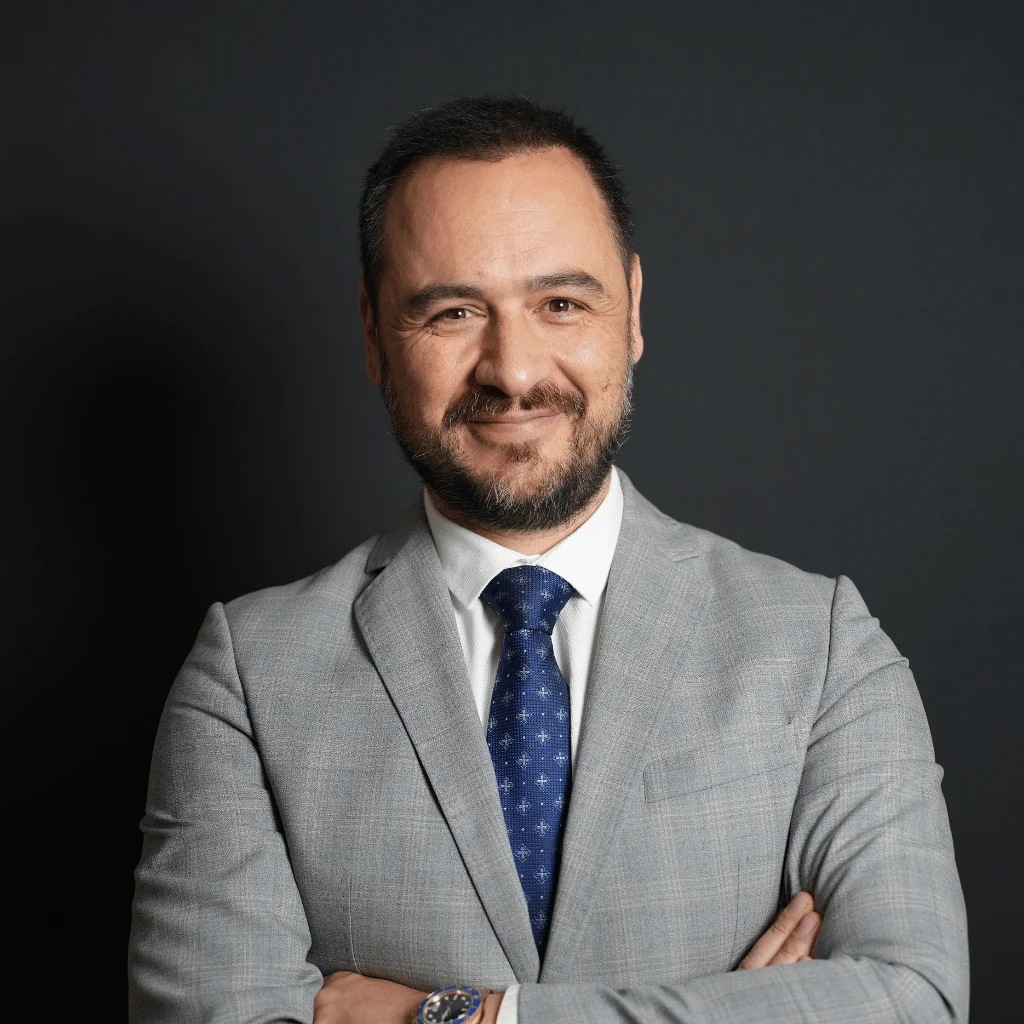
Dr. Mert Demirel
Plastic, Reconstructive & Aesthetic Surgery
Anatomy first. Proportion over excess. Decisions built to remain coherent over time.
Next step
The best treatment is the one that matches the right indication.
You do not need to choose a device, injectable or technique before asking the question. Start with what you would like to improve.
Private consultation
Let’s start with your question.
Leave your number first. We can then continue privately on WhatsApp.


