
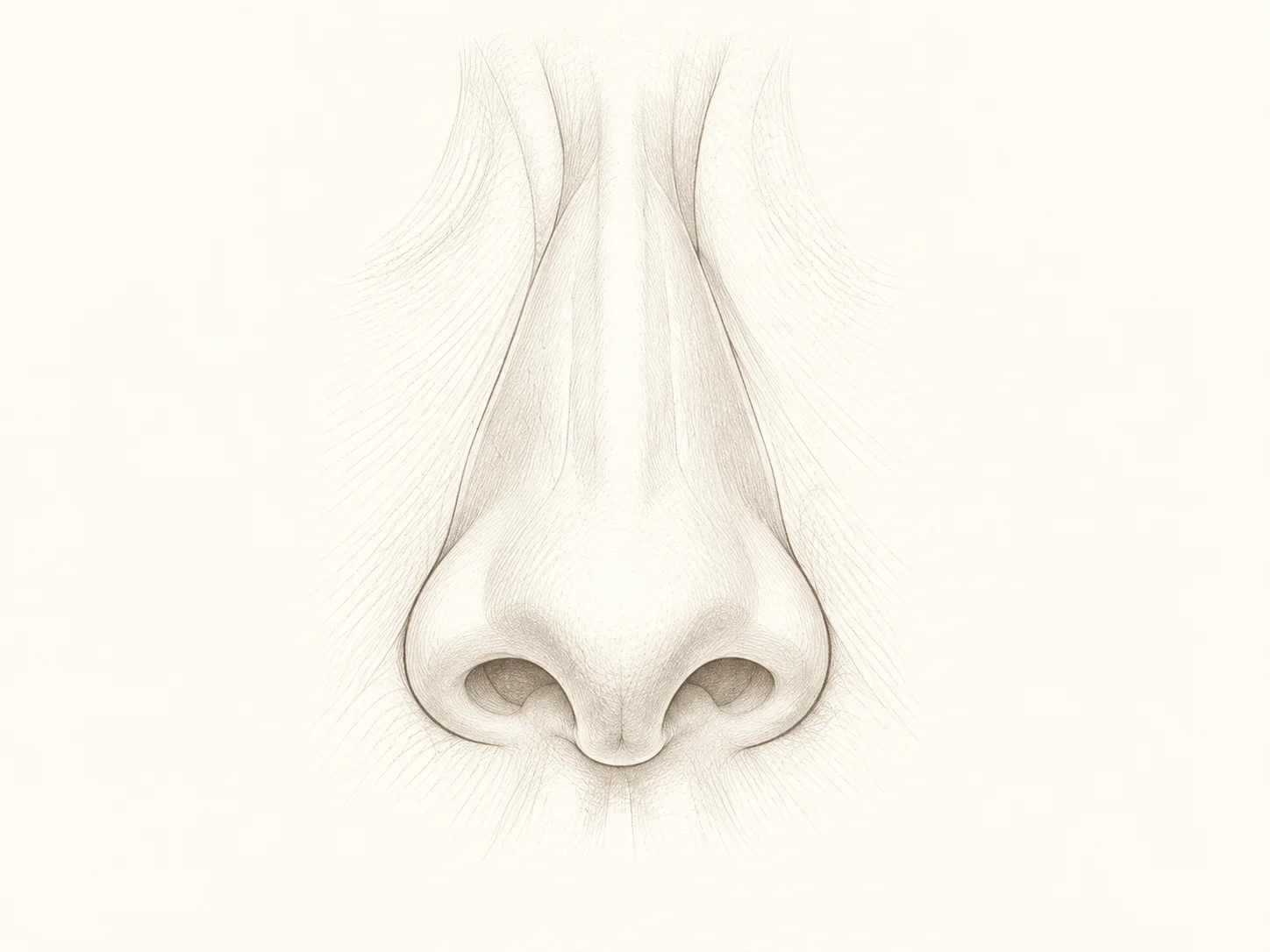
An upturned nose is not one anatomical diagnosis. A patient may be noticing a naturally high tip rotation, a genuinely short nose, excessive nostril show, a retracted alar rim, or a tip that became over-rotated after previous rhinoplasty. These can look similar in a front-facing photograph while requiring very different decisions.
The first useful distinction is rotation versus length
Imagine two patients whose nostrils are both more visible from the front than they would like. In one, the nasal tip is rotated upward but the overall nose has reasonable length. In the other, the entire lower nose is structurally short, so the tip, columella and alar rims all sit in a different relationship to the upper lip.
Those are not interchangeable problems. Reducing tip rotation may help the first patient. The second may require structural lengthening or support. If the anatomy is misclassified, trying to “bring the tip down” alone can create a heavier tip without restoring a coherent lower nose.
Nostril show can come from the alar rim rather than the tip
The amount of nostril visible from the front depends on several structures. Tip rotation matters, but so do alar-rim position, columellar show, nostril shape and the relationship between the nose and upper lip. A retracted alar rim can expose the nostril even when the tip itself is not excessively rotated.
This is why I do not use nostril visibility as a direct measurement of tip position. I want to know which border is actually sitting high. Correcting the wrong structure can make the base look more complicated rather than more balanced.
A naturally upturned nose can still be proportionate
Some patients have always had a shorter or more rotated nose. Older photographs are useful because they show whether the shape is a stable feature of the face or a new change. A naturally upturned nose is not automatically a deformity and does not require correction simply because current aesthetic trends favour a different profile.
The decision becomes more meaningful when the tip looks clearly out of proportion with the dorsum, upper lip or rest of the face, when nostril show is excessive for the patient, or when the shape has been created or exaggerated by previous surgery.
After rhinoplasty, “too upturned” has a different meaning
An over-rotated postoperative tip can result from several structural changes: excessive shortening, altered support, scar behaviour or an imbalance between the tip and surrounding nasal framework. The operated nose also contains scar tissue and modified tissue planes, so revision planning is not simply the reverse of the first operation.
I want to understand what was changed, how long the nose has been healing and whether the apparent rotation is stable. Early postoperative swelling and scar contraction can distort the impression of tip position. A revision decision should not be based on an anatomy that is still changing unless there is a separate functional or medical reason to intervene.
Tip filler can change contour, but it cannot create a longer nose in the structural sense
Nasal tip filler can modify selected contour relationships by adding volume. In very limited anatomy, a small additive correction can make the tip–columella relationship look different or soften a minor irregularity.
But filler does not lengthen a short nasal framework, lower an over-rotated tip through structural reconstruction or correct alar retraction. If enough material is required to imitate a larger structural change, the treatment begins to enlarge the nose rather than solve the underlying problem.
Tip plasty and rhinoplasty are different scopes of surgery
When the concern is truly concentrated in the tip, tip plasty may be part of the discussion. When rotation is linked to nasal length, dorsal relationships, septal support or broader framework issues, a full rhinoplasty may be more coherent.
The choice is not based on which operation sounds smaller. It is based on how much of the nose is actually involved. A limited operation is only conservative when the problem is also limited.
The upper lip changes how tip rotation is perceived
The nasolabial relationship is not created by the nose alone. Upper-lip length, dental support and facial profile influence how open or closed the angle beneath the nose appears. A tip can therefore look more upturned in one face than in another even when the measured rotation is similar.
I assess the nose and upper lip together because an isolated tip target can become artificial when it ignores the lower facial profile. The objective is not to reach one universal angle. It is to create a relationship that fits the patient’s own face.
Breathing should not be traded for a prettier base view
The tip and lower nasal framework contribute to the external nasal valve and to the stability of the nostril margins. Structural changes that alter the lower nose can therefore influence airflow as well as appearance.
If a patient also reports obstruction, collapse during inspiration or a meaningful breathing change after previous surgery, cosmetic planning should not proceed as though this were only a rotation problem. Functional anatomy needs its own assessment, and in selected cases nasal valve repair may become relevant.
What I want to preserve
I want the lower nose to look less exposed or less over-rotated when that is genuinely the problem, but I do not want to convert a light, short nose into a heavy or over-lengthened one. The tip should still relate naturally to the bridge, nostrils and upper lip.
A successful correction is often quieter than the patient expects. The nose stops drawing attention for the wrong reason, while the identity of the face remains intact.
How I decide whether treatment belongs here
I compare old and current photographs, examine tip rotation, nasal length, alar-rim position, columellar show, skin thickness, septal and tip support, breathing and any previous rhinoplasty. I also assess the upper lip and profile because tip position only makes sense in relation to neighbouring structures.
Sometimes the concern belongs to the tip. Sometimes it belongs to the alar rim or the entire short-nose framework. Sometimes the shape is normal and proportionate. The best plan begins by deciding which of those situations we are actually looking at.