A crooked nose is not one single deformity. The bridge may lean, the tip may point to one side, the septum may be deviated, or the entire nose may sit on a facial midline that is itself slightly asymmetric. Two noses can look equally “crooked” in a photograph and require very different planning. The important first step is to separate what is visible from the structure that is producing it — and to decide whether breathing, previous trauma or previous surgery also belongs to the problem.
Where is the deviation actually coming from?
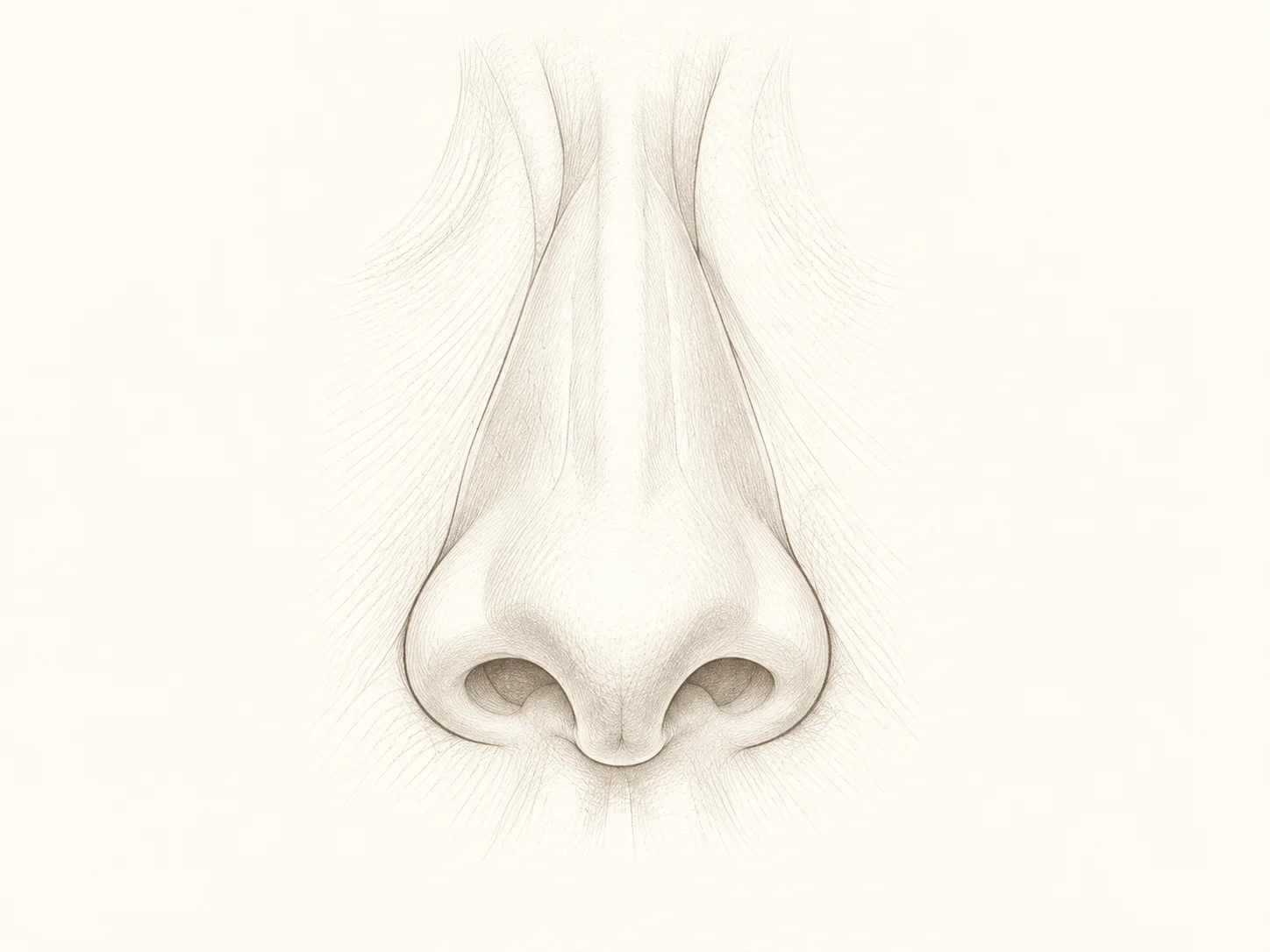
The upper third of the nose is mainly bony. The middle vault depends on cartilage and its relationship with the septum. The lower third is shaped by the tip cartilages, caudal septum and soft tissues. A deviation can involve one of these levels or pass through all three. This is why a crooked nose should not automatically be reduced to “a bent septum” or “a bump that needs shaving.”
The direction of the visible deviation also matters. A C-shaped curve, an S-shaped curve and a tip that sits off-centre are different patterns. The nasal bones may be displaced after trauma, the cartilaginous middle vault may be asymmetric, or the caudal septum may push the tip and columella away from the facial midline. A plan that treats only the most obvious segment can leave the underlying vector unchanged.
External crookedness and internal obstruction can overlap without being identical
Some patients with a visibly deviated nose breathe normally. Others have significant nasal obstruction even when the external deviation seems modest. Septal deviation, valve narrowing, mucosal swelling and other functional factors can all affect airflow. The aesthetic appearance alone cannot tell us which mechanism is responsible for breathing difficulty.
For that reason, I separate the cosmetic question from the functional one and then look for where they meet. If the same structural deviation affects both the external framework and the airway, one integrated operation may make sense. If the breathing problem is driven by a different mechanism, it needs its own diagnosis rather than being treated as a side effect of cosmetic planning.
Facial asymmetry can change what “straight” means
The human face rarely has a perfectly vertical midline. The chin can sit slightly to one side, the dental midline may differ from the centre of the lips, and the two cheekbones can project differently. A nose positioned inside that asymmetrical frame may look more deviated than its own measurements suggest.
This is not an argument for ignoring a crooked nose. It is a reason to define the endpoint carefully. Making the nasal dorsum mathematically vertical in isolation does not guarantee that it will look natural on the face. The target is a nose that reads as straighter and more balanced in the patient’s own facial context, not a geometric object detached from that context.
Assessment should include history, structure and movement
Previous trauma is important because an old fracture can alter the nasal bones, septum and internal support together. Previous surgery matters for a different reason: cartilage may have been removed, grafted or repositioned, scar may limit mobility, and the nose may behave differently from an untreated nose. These details change both what is technically possible and how predictable further correction may be.
I also assess the tip during facial movement. Smiling can pull a deviated tip or base further to one side. Palpation can help distinguish rigid bony deviation from more mobile cartilaginous asymmetry. If obstruction is part of the complaint, internal examination becomes part of the decision rather than an afterthought.
Rhinoplasty can straighten the framework only by addressing the level that is actually deviated
When the external framework genuinely requires correction, rhinoplasty can involve controlled changes to the nasal bones, middle vault, tip or several levels together. The operation is not simply about moving the nose toward the centre. Support has to be maintained while the deviated forces are reduced or redirected.
If a significant septal problem is present, septoplasty may be part of the plan. Septal surgery can improve internal alignment and may help external correction when the septum is a structural driver, but septoplasty by itself does not necessarily straighten the entire visible nose. The relationship between the septum and the outer framework must be assessed rather than assumed.
For very mild visual irregularities, non-surgical rhinoplasty can sometimes camouflage a line by adding volume to a selected area. It cannot move deviated bone or cartilage back to the midline, and it cannot make a structurally crooked nose smaller. Camouflage is useful only when adding material is an acceptable trade-off.
A straightening operation still has biological limits
Cartilage has memory, scar contracts, and a previously deviated framework may not behave like one that developed perfectly straight. Even after careful correction, small residual asymmetries can remain or become visible as swelling resolves. The more severe the original deviation — and the more previous surgery or trauma involved — the more important it is to discuss improvement rather than promise perfect symmetry.
Overcorrection creates its own problems. Excessive narrowing or removal of support can compromise breathing, create contour irregularities or make the nose look operated rather than balanced. The best result is not the smallest possible deviation on a ruler. It is the most stable improvement that preserves support, airway and facial identity.
When should a crooked nose be assessed?
Assessment is useful when the deviation is visible from more than one angle, when the tip and bridge seem to point in different directions, when the nose changed after trauma, when breathing is limited on one side, or when a previous rhinoplasty left persistent or new asymmetry. It is also worthwhile when the patient cannot tell whether the concern is the nose itself or the relationship between the nose, chin and facial midline.
The consultation should clarify the anatomy before discussing a technique. A crooked nose is a description of appearance. A useful surgical plan needs a more exact answer: which level is deviated, which forces are maintaining that deviation, which parts affect function, and how much correction can be achieved without sacrificing the structures that keep the nose stable.