
Very small buttocks can reflect low soft-tissue volume, limited posterior projection, a narrow gluteal muscle envelope, pelvic proportions, weight loss or a buttock that sits low rather than truly lacking tissue. The word “small” describes the impression. The treatment decision depends on which dimension is actually underdeveloped.
Projection and width are different deficits
One patient may have enough lateral width but very little posterior projection. Another may project reasonably in profile but appear narrow from behind because the pelvis and gluteal footprint are small.
Adding volume without defining the deficient dimension can create fullness in the wrong place. I want to know whether the patient wants more projection, more lateral roundness, a smoother hip-to-buttock transition or a larger overall gluteal envelope.
A small buttock can still be low
After weight loss or with reduced skin support, the buttock may lose upper fullness and sit lower on the posterior thigh. The patient experiences this as “small” because the upper buttock looks empty.
Adding volume alone can increase size while leaving the low position unchanged. In that anatomy, position and envelope may be as important as volume.
Muscle establishes part of the projection surgery cannot imitate perfectly
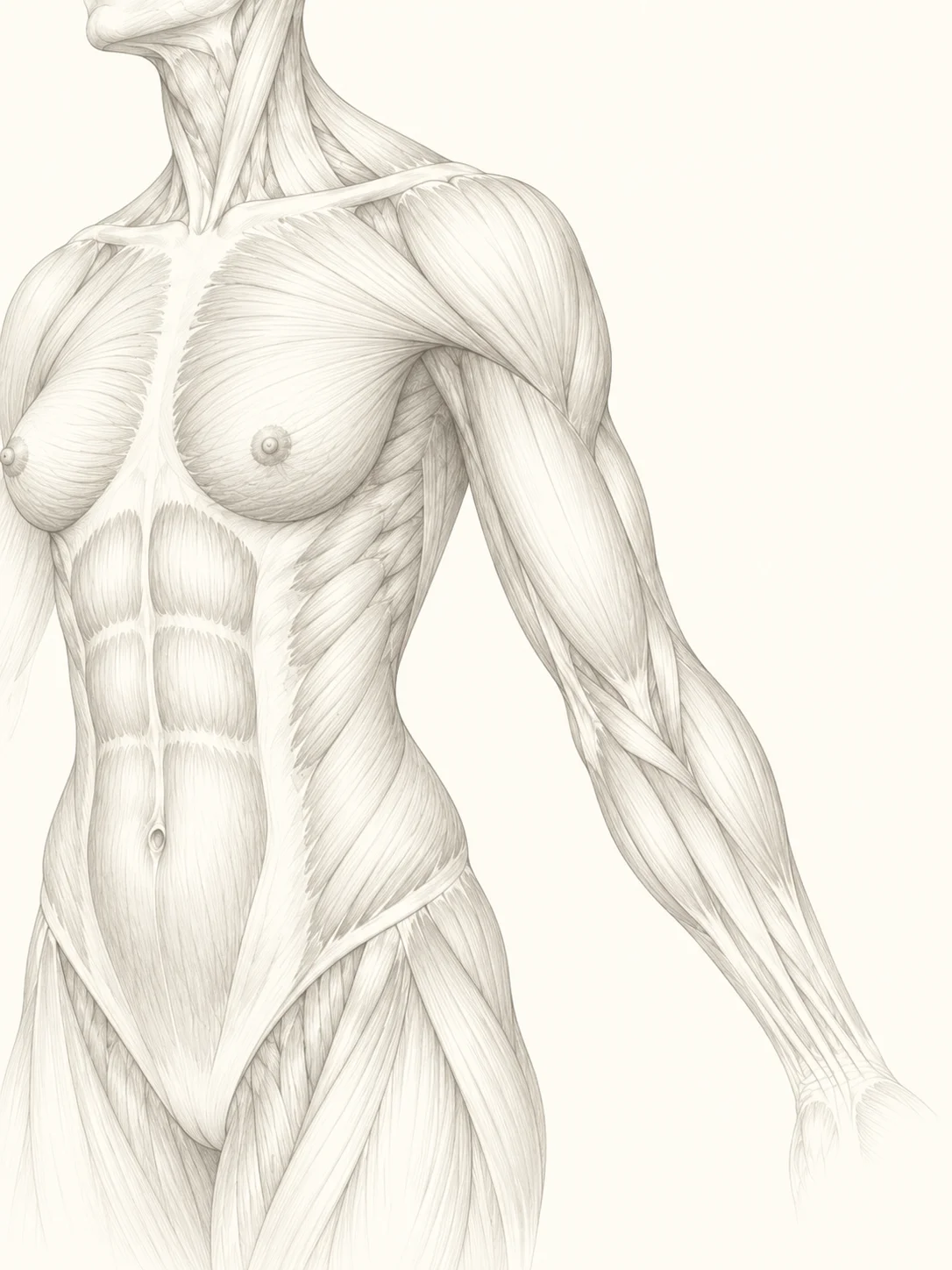
The gluteal muscles create the underlying frame. A patient with limited muscular development can improve shape through training to a degree that surgery cannot reproduce biologically.
Augmentation can add soft-tissue or implant volume, but it does not create functional muscle. I want expectations to reflect the patient’s existing frame rather than promise that added volume will reproduce an athletic gluteal contour.
The pelvis and waist change how “small” the buttocks look
A broad waist can make the buttocks appear smaller by reducing contrast. A narrow pelvis can do the same from the back. A patient may therefore be focusing on the buttocks when part of the visual issue comes from surrounding proportions.
This does not mean every patient needs waist contouring. It means augmentation should be planned after understanding the silhouette, because the same added volume can look modest on one frame and excessive on another.
Buttock augmentation is a family of strategies, not one standard shape
Buttock augmentation can be considered when true volume or projection deficiency is meaningful. The method and extent depend on anatomy, available donor tissue where relevant, skin quality, desired dimensions and the patient’s tolerance for the risks and maintenance of the chosen approach.
I do not begin with a target volume. I begin with the shape that is missing and the amount of change the surrounding tissues can carry without looking overfilled.
Fat transfer has biological limits
When autologous fat is part of the augmentation discussion, not all transferred volume can be assumed to behave identically or remain exactly as placed. Donor-fat availability and individual healing influence the achievable result.
This is one reason I avoid promising a copied reference shape from a fixed number of millilitres. The procedure has to respect both the donor body and the recipient anatomy.
More volume is not always more shape
A buttock can become larger while remaining poorly proportioned if volume is added uniformly. Upper-pole fullness, central projection and lateral contour contribute differently to the final silhouette.
The plan should therefore be three-dimensional. A technically larger buttock can still look flat from one view if the deficient region was not the region that received the most support.
Hip dips and small buttocks are not the same concern
Lateral indentations are influenced by pelvic anatomy, muscle origin and soft-tissue distribution. They can coexist with small buttocks, but they are not proof that the entire gluteal region lacks volume.
I separate the central buttock from the lateral hip transition because correcting one does not automatically correct the other.
Weight stability matters when augmentation depends on soft tissue
Significant future weight loss or gain can change the volume and skin around an augmented buttock. A result planned at one body composition can read very differently after a major change.
I prefer augmentation around a stable baseline so the planned proportion belongs to the body the patient expects to maintain.
A conservative primary result protects future options
Over-augmentation can create excessive weight on the skin envelope, disproportion with the thighs and waist, or a result that becomes difficult to revise. A modest residual desire for more volume is usually easier to address than an overfilled result that needs subtraction.
I prefer a first operation that creates enough change to matter while preserving the ability to reassess after the tissues have settled.
What I assess before recommending augmentation
I map posterior projection, lateral width, gluteal muscle frame, pelvic proportions, skin quality, upper and lower buttock volume, hip transition, thigh relationship, weight stability and any previous gluteal surgery.
Sometimes the buttock is genuinely volume-deficient. Sometimes it is mainly low, narrow or surrounded by proportions that make it look small. Augmentation is strongest when that distinction has already been made.