


Target
Treatment / Non-Surgical
Radiofrequency Skin Tightening
A focused treatment page built around indication, mechanism, expected experience and realistic limits.
Individual assessment
Indication first
Realistic expectations
Clinical focus
Treat the right mechanism — not simply the visible sign.
Treatment snapshot
Primary goalIndividual indication
AppointmentVaries by treatment
DowntimeDepends on method and area
SessionsPersonalized plan
ResultsTreatment-specific timeline
These are orientation points, not promises. Timing and suitability depend on the treatment, anatomy and individual response.
Mechanism
Which method matches the underlying issue?
Plan
What intensity, timing and follow-up make sense?
Radiofrequency skin tightening is often explained with one word: heat.
That is correct, but incomplete.
Non-invasive RF systems deliver electrical energy through tissue. Resistance within the tissue converts part of that energy into heat, allowing deeper dermal and subdermal structures to be heated while the surface is protected through device-specific cooling and treatment control.
The intended result is a controlled thermal response followed by collagen contraction and longer-term remodelling.
This makes radiofrequency useful for selected laxity.
It does not mean every loose-looking face needs more heat.
My first question is still anatomical: is the problem genuinely mild tissue laxity that can improve through contraction and remodelling, or has the tissue changed position enough that tightening is no longer the same thing as correction?
The machine can heat tissue very effectively.
The important decision is whether heat is the right answer.
Thermage-type radiofrequency is a non-invasive heating treatment, not RF microneedling
This distinction matters because both procedures contain the letters RF.
In a Thermage-type monopolar radiofrequency treatment, no needle needs to penetrate the skin to deliver the principal energy.
Electrical current passes through the tissue between the treatment electrode and the return pathway. Tissue resistance creates controlled heating at depth while the epidermis is protected through cooling and treatment design.
RF microneedling works differently.
Needles enter the skin and deliver energy directly at selected depths.
The two technologies can both stimulate thermal remodelling, but their energy distribution, invasiveness and complication profiles are not identical.
Radiofrequency is an energy category.
How that energy reaches the tissue is part of the treatment.
Monopolar and bipolar RF should not be treated as interchangeable marketing words
Radiofrequency devices can use different electrical configurations.
Monopolar systems deliver current through a treatment electrode and a separate return path, allowing a relatively broad and deep electrical field to be created.
Bipolar systems pass energy between electrodes positioned closer together on the treatment handpiece, producing a different distribution of heating.
Multipolar and other proprietary arrangements exist as well.
This is one reason “RF tightening” does not describe one standard procedure.
Depth of heating, power, impedance feedback, pulse duration, cooling and treatment passes differ between technologies.
I want the device’s actual energy pattern understood rather than assuming that every radiofrequency facial produces the same biological dose.
The treatment uses tissue resistance rather than a skin chromophore
This is one of the important physical differences between radiofrequency and many laser or light treatments.
A pigment laser depends heavily on absorption by chromophores such as melanin.
RF heating is produced through electrical resistance rather than selective optical absorption by melanin.
This can make non-invasive RF useful across a broad range of skin tones because the mechanism is not dependent on targeting epidermal pigment.
That does not make skin colour or tissue characteristics completely irrelevant.
Every patient still has different tissue thickness, fat distribution and thermal tolerance.
But the treatment is not constrained by the same wavelength–melanin relationship that defines many light-based procedures.
Heat is the dose, not simply evidence that the machine is working
The treatment requires tissue heating to create the desired biological response.
That does not mean hotter is better.
Thermal dose depends on both temperature and the duration for which tissue experiences that temperature.
A shorter high-temperature exposure and a longer lower-temperature exposure do not necessarily produce the same effect.
The device, pulse protocol and treatment technique all shape that relationship.
This is why sophisticated RF systems use mechanisms such as impedance measurement, energy control, surface cooling or real-time feedback.
The purpose is not to make the patient tolerate as much heat as possible.
The purpose is to deliver a sufficient thermal dose to the intended tissue while protecting structures that do not need to be injured.
Collagen contraction and collagen remodelling happen on different timelines
Heat can alter the physical organisation of collagen relatively quickly.
This can contribute to an early sensation or appearance of tissue tightness.
The longer-term result depends more on the subsequent biological response.
Fibroblast activity and extracellular-matrix remodelling develop over weeks and months.
This is why the treatment should not be judged solely by the appearance immediately after the final pass.
Some early change may be real.
Some may be influenced by swelling and temporary tissue contraction.
The result that matters is what remains after the acute response has disappeared and the remodelling process has had time to develop.
The evidence supports modest tightening better than dramatic lifting
Clinical literature on non-invasive monopolar and bipolar RF shows measurable improvement in selected facial and body laxity.
I think the key word is measurable.
The treatment can create genuine improvement without producing a surgical-scale change.
Patients with mild to moderate laxity and realistic expectations tend to fit the technology much better than patients with established heavy descent.
This is consistent with the mechanics.
Remodelling and contraction can improve tissue quality and firmness.
They cannot reproduce surgical release and repositioning of significantly descended facial tissues.
A legitimate tightening result does not become a facelift because the before-and-after photographs were taken carefully.
“Loose jawline” can describe several different mechanisms
A patient may point to the lower face and say the jawline has become loose.
Sometimes genuine skin and soft-tissue laxity are important.
Sometimes the problem is submental fat. Sometimes there is early jowling related to tissue descent. A weak chin can reduce jawline definition even in relatively tight skin. Previous filler can increase lower-face heaviness.
Heating all of these faces with the same RF protocol would treat the visible label rather than the anatomy.
I want to know what is creating the blurred border.
If laxity is only one small part of the problem, RF may provide only one small part of the solution.
Early laxity is where non-invasive RF makes the most mechanical sense
A patient whose jawline has just begun to soften can obtain meaningful benefit from relatively modest contraction.
The same is true of selected early neck laxity or mild crepey change.
The tissues are still close enough to their previous position that improving support and firmness can alter the visible contour.
As descent becomes larger, however, the amount of change required increases faster than the ability of simple tightening to create it.
Tightening is most useful before the problem requires repositioning.
That is not a criticism of the technology.
It is the anatomical boundary that keeps the technology honest.
Significant jowls are not simply “more laxity”
A developed jowl contains several structural changes.
Soft tissues have shifted relative to the mandibular border. Ligamentous and compartment relationships have changed. Skin may also be redundant.
Heating can improve some tissue firmness.
It cannot directly release and reposition all of those structures.
A patient may still choose RF because they do not want surgery and would be satisfied with a smaller improvement.
That is reasonable.
What I do not want is to compensate for a structural mismatch by repeatedly increasing energy or adding sessions until a non-surgical treatment has become expensive, painful and still mechanically insufficient.
The neck is not simply the face extended downward
Neck ageing can involve skin laxity, platysmal activity, submental fat, deeper neck anatomy and tissue descent.
Non-invasive RF may improve selected skin-quality and laxity components.
It does not reduce every platysmal band or remove substantial fat. It does not reproduce surgical neck-lift mechanics.
The neck also has relatively thin skin in some regions and important underlying structures.
Treatment depth and thermal exposure therefore need to respect regional anatomy rather than copy a facial protocol downward.
Thin faces require a different conversation because useful soft tissue is part of facial youth
Energy-based tightening can become aesthetically counterproductive if useful facial volume is reduced.
RF literature includes evidence of volumetric fat reduction with some technologies and treatment protocols.
In certain body-contouring applications, that may be desirable.
In a lean face, it may not be.
This is why I am cautious about aggressive deep heating in patients who already have temple hollowing, limited cheek volume or a generally low-fat facial architecture.
The face can become tighter and simultaneously look older if useful soft tissue has been sacrificed.
Less tissue is not automatically younger tissue.
Thermal treatment needs to know whether the volume beneath the skin is part of the problem or part of the patient’s remaining support.
Fat reduction should not be casually promised or casually dismissed
Some RF systems and parameters are deliberately designed to affect subcutaneous fat.
Others are primarily intended for dermal tightening.
The boundaries can overlap depending on depth and thermal dose.
I therefore do not use the simplistic claim that a facial tightening device “cannot affect fat at all”.
I also would not advertise every tightening session as simultaneous fat melting.
The desired tissue target has to be specified.
If the patient has unwanted submental fullness and the system has evidence for treating that layer, fat effect may be useful.
If the patient is lean, the same biological effect may be a complication rather than a benefit.
Pain control should not allow us to ignore excessive thermal dose
Older monopolar RF treatments developed a reputation for discomfort.
Modern technologies use improved cooling, vibration and pulse-delivery strategies to improve tolerability.
That is useful.
But patient comfort cannot be the only safety sensor.
If strong anaesthesia or another method significantly reduces thermal feedback, treatment parameters still have to remain within appropriate limits.
The absence of pain does not prove that tissue is not being overheated.
Good technology should make correct treatment more tolerable.
It should not make excessive treatment easier to deliver.
Burns and contour injury are the complications that define the importance of thermal control
Most properly performed non-invasive RF treatments produce temporary redness, tenderness or swelling rather than major complications.
Burns can occur if excessive energy is concentrated or surface protection fails.
Contour changes can occur if deeper tissue is affected in an unwanted way.
Temporary sensory symptoms or other uncommon complications have also been reported across energy-based tightening technologies.
These possibilities should remain proportional in the conversation.
I do not present RF as dangerous.
I also do not describe an invisible energy treatment as risk-free simply because there is no needle and no wound visible afterwards.
One treatment can make sense because the biological response continues after the appointment
Some monopolar RF protocols are intentionally designed as a relatively infrequent high-energy treatment rather than a weekly series.
The logic is that sufficient thermal stimulation is delivered during one session and subsequent remodelling develops gradually.
Other RF platforms use different treatment schedules.
This is another reason one session count should not define the entire radiofrequency category.
I want the treatment interval to follow the actual system and the biology it is designed to create.
Repeated energy should not be added merely because the collagen response is taking the expected amount of time.
Three months without dramatic change is not automatically treatment failure
Collagen remodelling is gradual and individual response varies.
Some patients notice change earlier. Others continue evolving over several months.
The degree of improvement also depends on the starting problem.
A patient with small early laxity may appreciate a relatively small change because that change restores a previously sharp transition.
A patient with significant descent may barely notice the same absolute amount of contraction.
This is why patient selection influences perceived efficacy as much as the machine settings do.
Biological response cannot be standardised as precisely as electrical output
The device can measure impedance and deliver a programmed pulse.
It cannot guarantee that two patients will remodel collagen identically afterwards.
Age, skin thickness, baseline collagen architecture, sun damage, smoking, metabolic health and individual wound-healing behaviour can all influence the eventual response.
This is a limitation of treatments that depend on the patient completing much of the biological work after the energy has been delivered.
I prefer to explain that variability before treatment rather than offer one percentage of tightening as though it were a machine specification.
Radiofrequency does not treat pigmentation because the patient also wants rejuvenation
A patient may have laxity, brown spots and rough texture simultaneously.
RF can improve the laxity component when the indication is appropriate.
It is not a pigment-targeting treatment in the same sense as a pigment laser or BBL.
Likewise, deep acne scars may require a fractional or needle-based remodelling approach rather than broad non-invasive heating.
The fact that several concerns all contribute to ageing does not make one energy modality responsible for all of them.
I prefer the treatment plan to remain anatomically modular.
Thermage-type RF and HIFU overlap in patient goals but not in energy physics
Both technologies are used for non-surgical tightening.
Focused ultrasound delivers acoustic energy to selected focal depths.
Radiofrequency produces resistive electrical heating over a different tissue distribution.
Neither is automatically superior.
The patient, tissue thickness, treatment area, device characteristics and desired depth all influence which system is more coherent.
I would not recommend combining both automatically simply because two forms of heat might sound stronger than one.
If one technology has already delivered an adequate thermal stimulus, another energy treatment needs a separate reason.
Maintenance should depend on recurrent laxity rather than the birthday of the previous treatment
Ageing continues after radiofrequency treatment.
A useful tightening result can therefore diminish over time as tissue changes continue.
Repeat treatment may be reasonable.
I do not want it to become automatic.
If the tissue remains adequately supported, another thermal treatment may add very little.
If the anatomy has progressed into more structural descent, repeating the original RF protocol may also produce progressively less useful change.
Maintenance begins by asking whether the same problem still exists in the same form.
What a good radiofrequency tightening result means to me
I look for a modest improvement in firmness and contour.
A jawline beginning to soften may appear somewhat cleaner. Selected neck skin may feel more supported. Mild laxity can become less obvious.
I do not expect a surgical lift.
I do not want a thin face to become thinner in the process. I do not want repeated thermal treatment to become the answer every time another layer of ageing becomes visible.
The best result is proportional.
The patient looks somewhat tighter because the tissue required somewhat more tightening.
Nothing more dramatic needed to be invented.
When Thermage-type radiofrequency makes sense to me
I am most comfortable recommending non-invasive RF when genuine mild to moderate laxity is present, useful facial volume is sufficient and the patient understands that the expected change is gradual and modest.
I become more cautious in very lean faces, substantial jowling, significant neck descent or situations where the visible problem is primarily fat, pigment, scar architecture or another mechanism.
The treatment is particularly coherent when the problem sits in the narrow space between “no intervention needed” and “repositioning is required”.
That is not a compromise.
It is the treatment’s real anatomical territory.
Once the problem leaves that territory, more radiofrequency does not expand it.
Frequently asked questions
What is Thermage-type radiofrequency?
It refers broadly to non-invasive monopolar RF tightening treatments in which electrical energy creates controlled tissue heating without microneedle penetration. Thermage is a specific proprietary platform within that category.
How does radiofrequency tighten skin?
Electrical resistance generates heat in tissue. This can create immediate collagen contraction and a longer-term fibroblast and extracellular-matrix remodelling response.
Is RF tightening the same as RF microneedling?
No. Non-invasive RF delivers energy through surface electrodes without needle penetration. RF microneedling places needles into tissue and delivers thermal energy at selected depths.
Does radiofrequency really lift the face?
It can produce measurable tightening and modest contour improvement in appropriate patients. I would not equate this with surgical lifting or significant tissue repositioning.
Can RF treat jowls?
Very early jawline softening may improve. Established, heavy jowling generally contains a larger structural component than non-invasive tightening can correct.
Can RF reduce facial fat?
Some RF technologies and parameters can influence subcutaneous fat. Whether that is desirable depends on the treatment target. In a thin face, unwanted volume reduction can be aesthetically counterproductive.
Is RF safe for darker skin?
RF does not depend on melanin absorption in the way many lasers do, which allows broad applicability across skin tones. Thermal dose and individual tissue characteristics still require appropriate control.
Does the treatment hurt?
Heat and discomfort can be noticeable, particularly with higher-energy monopolar treatments. Modern cooling and pulse strategies improve tolerability, but patient experience varies.
When will I see results?
Some early tightening may occur, but longer-term remodelling develops over subsequent months. I prefer to judge the mature result after the acute tissue response has settled.
How many treatments do I need?
It depends on the specific RF technology. Some monopolar protocols are designed around one substantial treatment, while other systems use a series. Device-specific protocol and patient response should guide this.
Is Thermage better than HIFU?
They use different energy physics and tissue distributions. Neither is universally superior; suitability depends on anatomy, tissue thickness, treatment area and the type of laxity present.
Can RF replace a facelift?
No. It can improve selected tissue laxity. A facelift can directly release and reposition descended tissues and address excess skin, which is a different mechanical intervention.
When would you recommend no RF tightening?
I would avoid or redirect treatment when significant structural descent requires another mechanism, the face is too lean for aggressive deep heating to offer a favourable trade-off, or the visible concern is not primarily laxity.
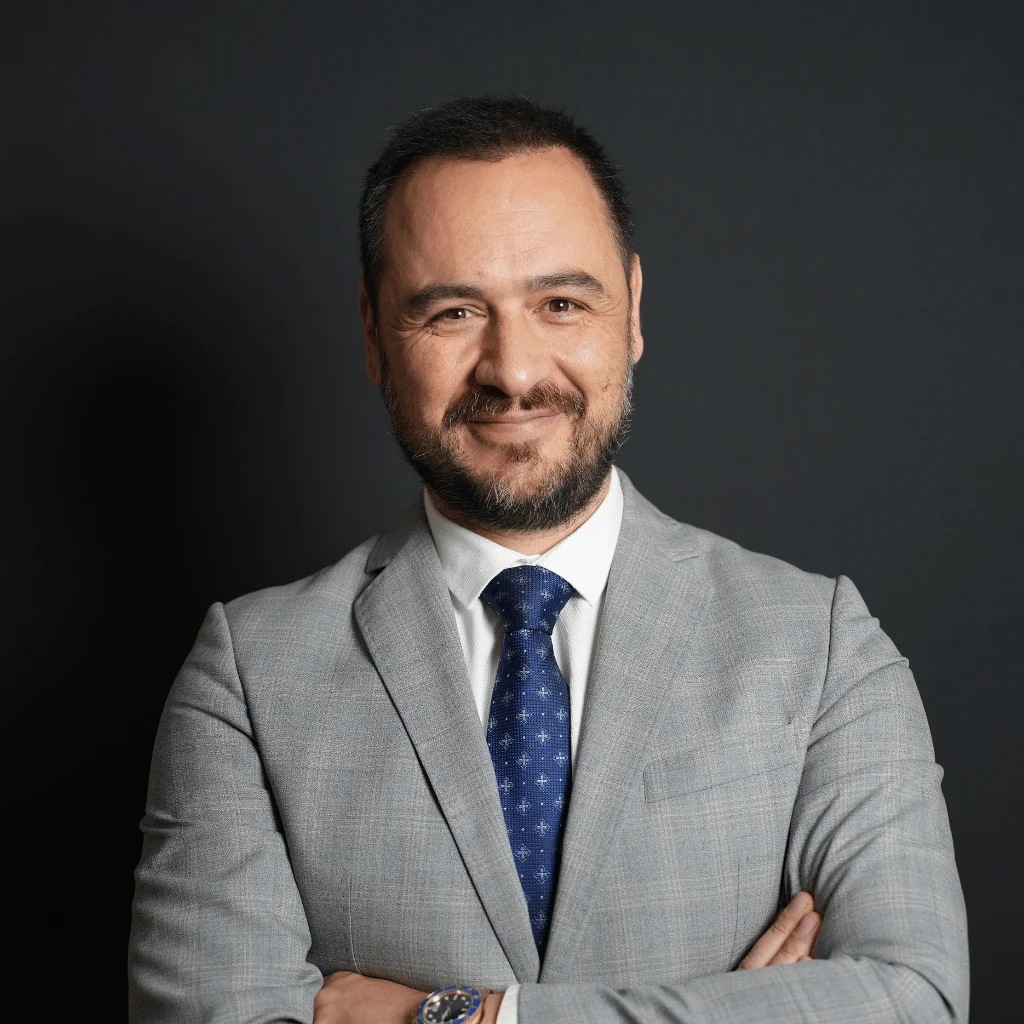
Dr. Mert Demirel
Plastic, Reconstructive & Aesthetic Surgery
Anatomy first. Proportion over excess. Decisions built to remain coherent over time.
Next step
The best treatment is the one that matches the right indication.
You do not need to choose a device, injectable or technique before asking the question. Start with what you would like to improve.
Private consultation
Let’s start with your question.
Leave your number first. We can then continue privately on WhatsApp.


