


Target
Treatment / Non-Surgical
Cheek Filler
A focused treatment page built around indication, mechanism, expected experience and realistic limits.
Individual assessment
Indication first
Realistic expectations
Clinical focus
Treat the right mechanism — not simply the visible sign.
Treatment snapshot
Primary goalIndividual indication
AppointmentVaries by treatment
DowntimeDepends on method and area
SessionsPersonalized plan
ResultsTreatment-specific timeline
These are orientation points, not promises. Timing and suitability depend on the treatment, anatomy and individual response.
Mechanism
Which method matches the underlying issue?
Plan
What intensity, timing and follow-up make sense?
Patients usually do not come to me saying, “I have a specific midface volume deficiency.” They say something much simpler: “My cheeks look flat,” “I look tired,” or “I want more cheekbone.”
Those sentences describe what the patient sees. They do not yet tell me what the anatomical problem is.
A cheek can look flat because volume has genuinely been lost. It can look flat because the under-eye transition creates a shadow. The underlying skeletal projection may be limited. The face may already have enough midface volume but lack the particular contour the patient has learned to associate with a “high cheekbone”. And sometimes the concern comes mainly from a photograph, lighting condition or filtered reference rather than from a meaningful anatomical deficiency.
These situations can look similar to the patient. They are not the same problem.
So before I discuss filler, I want to answer a more important question: what exactly are we trying to change?
“Flat cheeks” is a description, not a diagnosis
This distinction is where cheek filler planning begins for me.
If I accept the label “flat cheek” without defining it, the next step seems obvious: add volume. But once the complaint is separated into its possible causes, the decision becomes much more precise.
- True midface volume loss may create a more tired or deflated appearance and can sometimes respond well to careful volume restoration.
- Under-eye shadowing can make the upper cheek appear deficient even when the cheek itself is not the primary problem.
- Limited skeletal projection may be softened or camouflaged to a degree with filler, but soft tissue cannot become a different bone structure.
- An already-full midface may not benefit from more volume at all. Adding filler may make the face rounder or heavier instead of more defined.
- Tissue descent or laxity is a positional problem. Volume may alter how some transitions look, but it does not reproduce surgical repositioning.
Five patients can therefore ask for the same treatment and require five different answers.
I do not want the treatment name to become the diagnosis.
Before deciding how much filler a cheek needs, I first need to decide whether the cheek needs filler at all.
What cheek filler can actually change
Cheek filler has a simple fundamental action: it adds soft-tissue volume.
That volume can be useful. In selected anatomy, it can restore a deficiency, modify projection, improve continuity between regions of the midface and change how light reflects across the cheek.
A relatively small correction can sometimes have a larger visual effect because the cheek does not exist in isolation. Its relationship with the lower eyelid, nasolabial region and lower face influences how the entire midface is perceived.
But the same mechanism also defines what filler cannot do.
Filler does not remove existing volume. It does not tighten significantly lax skin. It does not eliminate tissue descent. It does not permanently reposition the midface. And it cannot guarantee a fixed cheekbone shape that looks identical in every facial expression, camera angle and lighting condition.
I think these limitations should be discussed before the treatment, not discovered afterwards.
The cheek is not a single point
One of the reasons cheek filler can look elegant in one patient and obvious in another is that the cheek is a three-dimensional region, not a single injection point.
I look at the relationship between several areas: the upper and lateral cheek, the central midface, the lid–cheek transition, the nasolabial region and the overall balance between the middle and lower thirds of the face.
I also look at tissue thickness, existing volume, baseline asymmetry and how the tissues behave when the patient smiles.
This last part matters more than people sometimes expect.
A cheek contour may look very sharp in a static photograph because the face is still, the light is controlled and the camera is positioned in a favourable way. The same volume can behave differently when the patient talks or smiles.
I am not planning a cheek for one photograph. I am planning it for a moving face.
| What the patient sees | What may actually be contributing | Does more cheek volume automatically solve it? |
|---|---|---|
| “My cheeks look flat” | True volume loss or limited projection | Sometimes, if added volume matches the mechanism |
| “I look tired under my eyes” | Lid–cheek shadow, tear-trough anatomy, skin or pigmentation | Not necessarily |
| “I want higher cheekbones” | Projection preference, facial width, skeletal shape or trend reference | Only within the limits of the existing anatomy |
| “My midface has dropped” | Volume change, tissue descent, laxity or a combination | Volume cannot be assumed to be the correct solution |
How I decide whether cheek filler is appropriate
Once the complaint has been defined, I move to candidacy.
The question is not simply whether filler can technically be injected. The question is whether adding volume is likely to produce more benefit than cost in this particular face.
If there is a genuine midface deficiency and the surrounding tissues can carry additional volume without losing clarity, filler may be a useful option.
If the face is already relatively full, the calculation changes.
If the patient retains fluid easily and wants an extremely sharp contour at all times of day, that expectation may conflict with the biology of the tissue.
If the dominant problem is descent or laxity, I would rather explain that limitation than continue adding volume in an attempt to manufacture a lifting effect.
And if the patient already has balanced cheeks but feels pressure to reproduce a particular social-media face, doing nothing remains a legitimate medical recommendation.
Possible and appropriate are not synonyms.
Why more volume can create less definition
This is probably the most important aesthetic paradox in cheek filler.
Patients often assume that if some projection creates definition, more projection should create more definition.
That is not always what happens.
Definition depends on relationships and transitions. When volume is added selectively to a genuine deficiency, those transitions may become clearer. When volume begins to spread through a midface that was not actually deficient, the opposite can happen: the face becomes fuller, rounder and less visually separated into distinct contours.
This is how a technically smooth filler result can still look aesthetically heavy.
More volume is not the same thing as more structure.
At some point the treatment stops refining the face and starts asking the rest of the face to adapt to the filler.
Knowing where that point is matters more to me than trying to maximise projection.
Can cheek filler lift the face?
I would be careful with the word “lift”.
There are situations in which restoring lost volume makes the midface look better supported. Shadows may soften. The transition beneath the eye may look less abrupt. A patient can reasonably describe the overall effect as fresher or more lifted.
But anatomically, filler and lifting surgery are doing different things.
Filler adds volume. A midface lifting procedure repositions tissue.
If the main mechanism is volume loss, replacing selected volume may make sense. If the main mechanism is tissue descent, adding increasing amounts of filler can eventually add weight to tissue that is already sitting lower than before.
| Clinical problem | Cheek filler | Surgical / alternative category |
|---|---|---|
| Selected volume deficiency | May restore or refine volume | May not be necessary |
| Mild contour transition | May improve the transition | Depends on the underlying cause |
| Meaningful tissue descent | Can sometimes camouflage but does not reposition tissue | A lifting strategy may address the mechanism more directly |
| Already-full midface | Additional volume may worsen heaviness | Another treatment or no treatment may be more logical |
I would rather place a patient in the correct treatment category than try to make filler behave like a procedure it is not.
What about the under-eye area?
This is another place where labels can be misleading.
A patient may say, “My cheeks have disappeared,” when what they are mainly seeing is a stronger shadow beneath the lower eyelid.
In selected anatomy, restoring some midface support can soften the lid–cheek transition. That does not mean every under-eye concern should be treated by increasing cheek volume.
The under-eye region can be affected by lower-eyelid anatomy, tear-trough configuration, pigmentation, skin quality, tissue distribution and several other factors.
If I treat every under-eye shadow as a cheek-volume deficiency, I may create a fuller cheek without solving what the patient was actually bothered by.
Again, the treatment follows the mechanism.
How I plan the amount of filler
I do not like beginning treatment planning with a predetermined syringe number.
Dose should be the consequence of the plan, not the plan itself.
Once I know which anatomical area is deficient, I can think about how much change is likely to be useful. I also need to consider what the additional volume will do to the rest of the midface.
A face with thin tissues and limited volume behaves differently from a face with substantial existing volume. A patient who has never had filler is different from someone who has been treated repeatedly for several years. A patient who tends to swell is different from one whose tissues settle with very little fluid retention.
The question is not, “How much filler can I place?”
It is, “What is the smallest amount of additional volume that creates a meaningful improvement without starting a new problem?”
When I am uncertain whether more volume is necessary, I prefer the uncertainty to be solved by time and reassessment rather than by another syringe.
Staging is not indecision. It is a way of keeping the treatment controllable.
What should a good cheek filler result look like?
I do not think the best cheek filler result is necessarily the one with the highest cheekbone.
I look for coherence.
Does the cheek connect more naturally with the lower eyelid? Does the midface look less depleted without becoming inflated? Has the facial balance improved without making the patient look like a different person? Does the result still work when the patient smiles?
These questions matter more than whether the treatment looks dramatic in a before-and-after photograph.
Aesthetic medicine becomes unstable when the photograph starts controlling the anatomy rather than documenting it.
The face has to continue working in ordinary life: different light, different expressions, different camera distances, mornings when the tissues retain a little more fluid, and years in which the face continues to change.
For me, a good result should survive those conditions reasonably well.
Swelling is part of the decision, not just the recovery
After cheek filler there may be an immediate visible change, but the immediate appearance is not the settled result.
Swelling, tenderness and bruising can occur. Temporary asymmetry or contour irregularity can become more noticeable during the early period. Some patients retain more fluid than others.
This has two practical consequences.
First, the patient should know that early appearance contains biological noise. A result should not be judged as though the tissues are already stable.
Second, I should not respond to every early asymmetry by immediately adding more product.
If the tissues are swollen, the examination has temporarily become less reliable. Waiting is sometimes the correct clinical action.
Not every early imperfection requires correction.
Sometimes the most accurate intervention is to allow the tissues to settle and reassess when the information becomes more reliable.
Maintenance should begin with reassessment
Cheek filler is temporary, but temporary does not mean that every patient needs another treatment at a predetermined month.
Longevity varies according to the product, amount, placement, metabolism, existing tissue characteristics and treatment history.
More importantly, the face being assessed one year later is not necessarily the same face that was assessed at the first appointment.
Some product may remain. The patient’s weight may have changed. Ageing continues. Tissue distribution changes. Previous filler may already be contributing more volume than the patient realises.
This is why I do not think maintenance should mean “replace what we used last time”.
I prefer to start again with the original question: what is actually deficient now?
If nothing meaningful is deficient, no maintenance treatment is required simply because the calendar says so.
When cheeks already look overfilled
Overfilled cheeks are a good example of why revision needs a different mindset from primary treatment.
If a cheek looks too full, more filler rarely solves the problem.
But I also do not want to react impulsively in the opposite direction. First I need to understand what is present now.
Is there residual filler? Is the issue mainly distribution? Is the patient particularly oedema-prone? Has repeated treatment gradually changed the proportions of the face? Is part of the heaviness actually coming from the patient’s own tissue rather than the filler?
Only after that assessment does it make sense to decide whether time, reduction when appropriate, limited rebalancing or another strategy is the least disruptive option.
The goal in revision is not to create a dramatic correction in one visit. It is to restore clarity without creating another cycle of correction.
You cannot reliably “out-inject” an overfilled face.
Safety is more than avoiding a complication
Cheek filler is non-surgical, but it is still a medical procedure.
Bruising, swelling, tenderness, asymmetry and palpable or visible irregularities can occur. Facial filler treatment also carries uncommon but potentially serious vascular complications.
Anatomical knowledge, technique, product handling and an appropriate response pathway if a complication is suspected are therefore part of the treatment itself.
But I also think safety has another dimension in aesthetic medicine.
There is procedural safety — performing the injection correctly.
And there is decision safety — deciding whether the injection should have been performed in the first place.
A technically perfect injection can still be the wrong treatment when the problem has been incorrectly classified.
- If the face is already full, more volume can increase heaviness.
- If the main issue is tissue descent, filler cannot become a true lifting procedure.
- If the concern is primarily lower-eyelid anatomy, cheek augmentation may not solve it.
- If the expectation is a fixed filtered template, the endpoint may not be compatible with normal soft tissue.
- If previous filler is still present, automatic maintenance can create accumulation.
Correct indication is therefore part of complication prevention and part of aesthetic quality.
The questions I want answered before I recommend cheek filler
Before I say yes to treatment, I want to be able to answer a series of questions clearly:
- What exactly does the patient mean by “flat”, “tired” or “not defined enough”?
- Is there genuine midface volume deficiency?
- Is the concern mainly coming from the cheek, the lower eyelid or the transition between them?
- How much volume already exists?
- How does the cheek behave when the patient smiles?
- Is swelling tendency likely to conflict with the desired result?
- Would added volume improve facial clarity or reduce it?
- Is the patient asking filler to perform the job of a lifting procedure?
- Is there previous filler that needs to be understood first?
- Would less treatment produce the better result?
- Would another procedure address the mechanism more directly?
- Would doing nothing currently have the better benefit–trade-off balance?
Only when those answers point in the same direction does the syringe plan become useful.
For the right anatomy, cheek filler can be a precise and elegant way to restore selected volume or refine a midface transition. But I do not think its value comes from its ability to make a large change quickly.
Its value comes from using a small, controllable intervention when that intervention actually matches the problem.
The goal is not to manufacture cheekbones. The goal is to understand why the face looks the way it does, change only what genuinely benefits from change, and know when enough is enough.
Frequently asked questions
How do I know whether cheek filler is appropriate for me?
I would first want to define what you mean by flat, tired or underprojected cheeks. If there is genuine midface volume deficiency or a selected contour problem that responds to additional volume, filler may be appropriate. If the midface is already full, tissue descent is dominant or the concern comes mainly from another anatomical region, another strategy may make more sense.
Can cheek filler make my face look heavier?
Yes. Filler adds volume, and a face that already has adequate midface volume can become rounder or heavier when more is added. Placement, dose and individual swelling tendency all matter. This is why candidacy is not simply a question of whether a patient wants more projection.
Does cheek filler actually lift the face?
It can sometimes improve the visual support of the midface when volume loss is part of the problem, but filler primarily adds volume. It does not reproduce surgical tissue repositioning. When descent or laxity is the dominant mechanism, increasing filler volume can eventually add weight without correcting the underlying problem.
Can cheek filler improve under-eye hollowness?
Sometimes, indirectly. Improving selected midface support may soften the lid–cheek transition in suitable anatomy. But under-eye concerns can also relate to lower-eyelid structure, tear-trough anatomy, pigmentation or skin quality. I would not automatically treat every under-eye complaint by adding cheek volume.
How much cheek filler do I need?
I do not think a universal syringe number is useful. The amount should follow the anatomical deficiency, existing volume, tissue behaviour and the size of the change that can be achieved without creating heaviness. In many cases a staged, conservative plan gives better control than trying to reach the final result in one session.
How long does cheek filler last?
Duration varies according to the product, amount, placement, metabolism and individual tissue behaviour. I prefer to treat maintenance as a new assessment rather than assume that another injection is required after a fixed period.
Why can cheek filler look different when I smile?
The cheek is a moving soft-tissue region. Volume that looks well positioned in a still image also has to behave naturally during expression. This is one reason I assess the cheek in relation to smile dynamics rather than planning solely from a static photograph.
What are the main risks?
Possible effects include swelling, bruising, tenderness, asymmetry and contour irregularities. Facial fillers also carry uncommon but potentially serious vascular risks. Appropriate patient selection, anatomical knowledge, technique, safety protocols and follow-up are therefore important parts of treatment.
What if my previous cheek filler looks overfilled?
I would first reassess what is present rather than add more volume. Residual filler, distribution, tissue behaviour and swelling tendency all need to be considered. Depending on the findings, waiting, reduction when appropriate or conservative rebalancing may be more logical than further augmentation.
When would you recommend against cheek filler?
I would be cautious when the midface already carries substantial volume, when true tissue descent or laxity is the main issue, when the expected result depends on a fixed filtered template, when previous filler has accumulated, or when additional volume creates more trade-off than benefit. Sometimes the correct answer is another treatment. Sometimes it is less treatment. And sometimes it is no treatment.
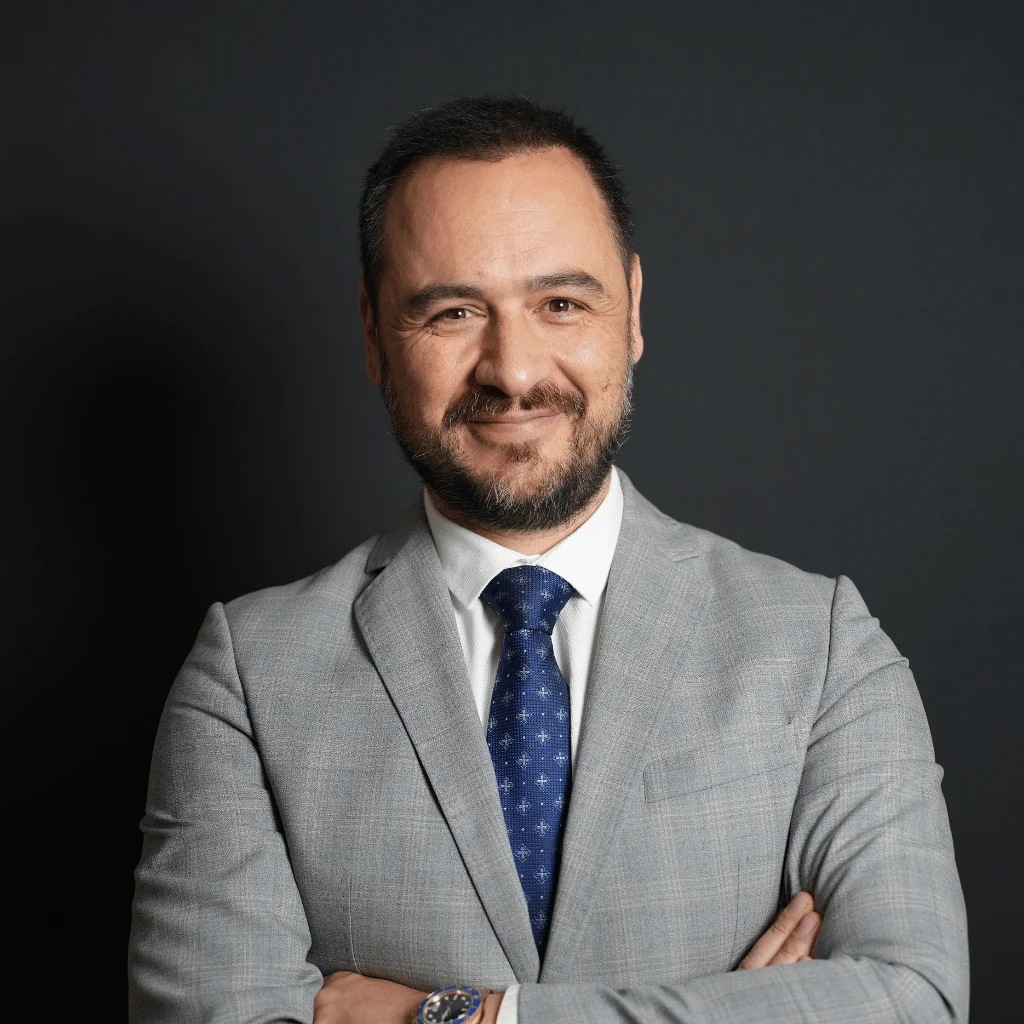
Dr. Mert Demirel
Plastic, Reconstructive & Aesthetic Surgery
Anatomy first. Proportion over excess. Decisions built to remain coherent over time.
Next step
The best treatment is the one that matches the right indication.
You do not need to choose a device, injectable or technique before asking the question. Start with what you would like to improve.
Private consultation
Let’s start with your question.
Leave your number first. We can then continue privately on WhatsApp.


