


Target
Treatment / Non-Surgical
Microneedling Radiofrequency — RF
A focused treatment page built around indication, mechanism, expected experience and realistic limits.
Individual assessment
Indication first
Realistic expectations
Clinical focus
Treat the right mechanism — not simply the visible sign.
Treatment snapshot
Primary goalIndividual indication
AppointmentVaries by treatment
DowntimeDepends on method and area
SessionsPersonalized plan
ResultsTreatment-specific timeline
These are orientation points, not promises. Timing and suitability depend on the treatment, anatomy and individual response.
Mechanism
Which method matches the underlying issue?
Plan
What intensity, timing and follow-up make sense?
RF microneedling is often explained as “microneedling, but stronger”.
I do not think that is a useful way to understand the treatment.
Ordinary microneedling creates a controlled mechanical injury. RF microneedling does something additional: the needles enter the tissue to a selected depth and radiofrequency energy is delivered through them, creating a controlled thermal effect below the skin surface.
That additional energy expands what the treatment may be able to do. It may create a stronger remodelling stimulus in selected scars, influence dermal quality and provide a degree of tissue contraction in appropriately selected laxity.
But additional capability also means additional variables. Depth matters. Energy matters. Tissue thickness matters. Existing facial volume matters. The same device can therefore be useful in one face and unnecessarily aggressive in another.
My starting question is not how powerful the machine is. It is much more specific: which layer of the tissue are we trying to change, and how much injury does that problem actually justify?
RF microneedling is not one treatment setting
A device name can create the impression that the treatment is standardized. In reality, the device is only one part of the treatment.
Needle depth determines where the mechanical and thermal effect is being created. Energy determines how much heat is delivered. The number of passes and treatment density influence cumulative exposure. The same parameters do not belong on every part of the face because facial tissues are not uniformly thick.
A scarred cheek, a thin temple and the skin over the jawline are different anatomical environments. Treating them as though they were identical simply because the same handpiece can reach all three areas would be convenient, but not precise.
This is why I think of RF microneedling less as a device treatment and more as a controlled tissue-remodelling procedure. The machine provides the tools. Clinical judgment determines where those tools should be used and where they should not.
The goal is not to deliver the maximum energy the tissue can survive.
The goal is to deliver the smallest effective thermal and mechanical stimulus that still addresses the problem we have identified.
The first question is what kind of problem the skin actually has
RF microneedling is versatile, and versatility can easily become overuse.
A patient may be concerned about acne scars, visible pores, rough texture, fine lines or early laxity. These concerns can sometimes respond to remodelling, but they are still not the same biological problem.
Acne scars involve altered architecture. Early laxity involves changes in dermal support and the relationship between skin and underlying tissue. Visible pores are influenced by surrounding skin quality and sebaceous anatomy. Fine lines may reflect dermal ageing, but some are primarily driven by repeated muscle movement.
If I use the same treatment simply because all of these concerns are described as “skin quality”, I lose the mechanism that should determine treatment.
RF microneedling becomes most coherent when collagen remodelling and controlled thermal contraction are actually relevant to the visible problem. It becomes less coherent when the patient is asking it to remove significant excess skin, replace volume or correct a movement-driven line.
Acne scars are a strong indication only after the scars have been classified
Acne scarring is one of the areas where RF microneedling can be particularly useful, but the term acne scar is still too broad to plan treatment from.
A broad rolling depression behaves differently from a narrow deep scar. A scar tethered downward by fibrous attachments may remain depressed even if collagen is stimulated above it. In that situation, simply increasing energy does not remove the mechanical tether.
This is why I first examine the architecture of the scar. Is the depression shallow and primarily dermal? Is there tethering? Is there a sharp edge? Is surrounding volume loss contributing to the shadow?
Once those questions are answered, RF microneedling can take its proper place. For some patients it may be a central remodelling treatment. For others it may be one part of a plan that also needs scar release or another targeted method.
The treatment becomes more effective when we stop expecting one mechanism to solve several different scar mechanisms simultaneously.
Active acne has to be separated from acne scarring
A patient can have both active acne and scars at the same time, but that does not mean both should be treated in the same phase.
If inflammatory acne is still producing new lesions, my priority is usually to control the disease process first. There is limited logic in repeatedly remodelling old scars while new inflammatory lesions continue creating new ones.
Once the skin is clinically more stable, the residual architecture becomes easier to assess. The scar treatment can then be designed around what is actually left rather than around a constantly changing inflammatory background.
This sequencing is important because aesthetic treatment becomes less predictable when the tissue being treated is already unstable.
Early laxity and tissue descent are not the same thing
RF microneedling is also frequently marketed as a lifting treatment.
I would use that word carefully.
Controlled thermal energy can create tissue contraction and stimulate longer-term remodelling. In a patient with early loss of firmness, that may translate into a modest improvement in skin tightness or jawline clarity.
But there is a point at which laxity becomes structural descent. A heavy jowl is not simply skin that needs more collagen. Tissue has changed position. Significant skin excess is also not removed by creating dermal contraction.
Tightening and repositioning are different mechanical events.
If the result the patient wants requires tissue to be moved, increasing RF intensity does not turn an energy device into a facelift.
This distinction is one of the most important parts of candidacy. A modest non-surgical treatment can be excellent when the problem is modest. The same treatment becomes disappointing when it is asked to solve a surgical-scale problem.
A thin face changes the entire treatment strategy
One of the reasons I do not treat RF microneedling as a standard protocol is that not every face can afford the same degree of thermal intervention.
A patient with substantial soft-tissue reserve is different from a patient whose cheeks and temples are already lean. In a thin face, unwanted change in the subcutaneous tissue can make the face look more hollow even if the overlying skin appears tighter.
This is a poor trade.
Aesthetic treatment should not improve one layer at the expense of another layer that was already functioning well.
This is why I pay attention not only to what I want the energy to affect, but also to what I want it to leave alone. Preserving tissue can be just as important as stimulating tissue.
More energy does not create a linear increase in benefit
Energy-based procedures are particularly vulnerable to the assumption that stronger settings must produce stronger results.
Biology does not work linearly.
A sufficient thermal stimulus may trigger useful remodelling. Beyond that point, additional energy can increase inflammation, recovery and uncertainty without guaranteeing an equivalent increase in collagen or visible improvement.
That principle is familiar to me from surgery as well. More tissue manipulation does not automatically create a better correction. It often creates more swelling, more recovery and a narrower margin for error.
Precision is therefore partly a question of dose restraint.
I do not want the post-treatment reaction to become proof that the device was used aggressively. I want the eventual result to justify the biological cost of the session.
RF microneedling and ordinary microneedling should not be treated as competitors
Patients sometimes ask which one is “better”.
I think the more useful question is which mechanism the problem needs.
Ordinary microneedling uses mechanical injury to initiate wound healing. For selected superficial texture concerns or certain scar patterns, that may be entirely sufficient.
RF microneedling adds thermal energy and may therefore offer a stronger remodelling effect in selected deeper scars or when some tissue contraction is part of the objective.
But additional treatment intensity should have a clinical reason. I do not think every patient suitable for microneedling automatically benefits from adding RF simply because the technology is more complex.
The simpler treatment is preferable when it adequately solves the problem.
Pigment risk is reduced in some respects, but not eliminated
One reason RF microneedling is attractive across a range of skin tones is that much of the thermal energy can be delivered below the epidermal surface rather than heating the surface directly.
That is useful, but I still avoid absolute statements such as “there is no pigmentation risk”.
The skin is being injured. Inflammation occurs. Any inflammatory procedure can trigger post-inflammatory pigment change in susceptible skin.
For a patient with a history of hyperpigmentation, melasma or a strong pigment response after previous procedures, I use a different threshold for intensity. Sun exposure, baseline pigment stability and aftercare also matter.
The objective is not merely to complete the treatment without a burn. It is to improve one problem without creating a new visible one.
The early reaction should not be confused with collagen remodelling
Redness, warmth, swelling and temporary sensitivity can occur after RF microneedling. Depending on the system and settings, small treatment marks or minor crusting can also occur.
The face may feel tighter early in recovery.
That is not the same thing as mature collagen remodelling.
Some of the early appearance comes from temporary tissue contraction and swelling. The longer-term biological response develops more slowly as tissue reorganises over the following weeks and months.
I make this distinction because otherwise patients can judge treatment too early — positively or negatively. An impressive day-two tightness is not the final result, and a modest first-week change does not mean the remodelling process has failed.
A session series should still contain the possibility of stopping
RF microneedling is commonly performed in stages. That makes biological sense because tissue needs time to heal and remodel between treatments.
But I do not want the number of sessions to become more important than the patient’s actual response.
After a treatment, I want to know how the skin recovered. Did pigmentation remain stable? Did the scars become shallower? Did skin quality improve? Is laxity responding at all? Did any unwanted hollowness appear?
Those findings should influence what happens next.
Sometimes the same strategy is continued. Sometimes the intensity should be reduced or the interval extended. Sometimes a residual scar requires a different mechanism. And sometimes the treatment has delivered most of what it can reasonably deliver.
The next session should be a new decision, not the automatic consequence of the first one.
Combination treatment only makes sense when each treatment has a separate job
RF microneedling is frequently combined with other treatments. Combination itself is not a strategy.
If a scar is tethered, a release procedure may address the tether. RF may then support remodelling. If genuine volume deficiency exists, volume correction belongs to another layer. If expression is producing a line, botulinum toxin addresses movement rather than dermal collagen.
That is a coherent combination because every component solves a separate mechanism.
What I try to avoid is treatment stacking: RF plus several injectables plus another energy procedure simply because each has a different marketing claim. The skin experiences the biological total, not the number of attractive names on the package.
Sometimes the best combination plan is staged precisely so that the effect of one treatment can be understood before another is added.
What a good RF microneedling result means to me
For acne scars, I look for softer transitions and less shadow rather than complete disappearance.
For texture, I want the skin to reflect light more evenly and feel structurally smoother.
For early laxity, the appropriate result is a modest improvement in firmness rather than a visibly repositioned face.
I do not want the treatment to advertise itself. I want the tissue to function and look better within the limitations of its starting anatomy.
And I do not judge the treatment only by what it achieved. I also judge it by what it preserved: facial volume, pigment stability, natural texture and an acceptable recovery burden.
Safety begins with tissue selection
RF microneedling is a controlled thermal and mechanical injury. Temporary redness, swelling and tenderness are expected possibilities. More significant problems can include prolonged inflammation, infection, pigment alteration, burns or unwanted contour changes when treatment is poorly selected or excessively aggressive.
Device quality and operator understanding matter, but neither can correct a weak indication.
If the face is already very lean, if pigmentation is unstable, if active inflammation is present or if the expected result requires true surgical repositioning, the correct decision may be to use another method or postpone treatment.
A device becomes safer when it is used less indiscriminately.
When RF microneedling makes sense to me
I am most comfortable recommending RF microneedling when the problem is genuinely one of remodelling: selected acne scars, a meaningful texture problem or early laxity in tissue that can tolerate a controlled thermal stimulus.
I also want the expectation to match the scale of intervention. A patient looking for gradual improvement in skin architecture is very different from a patient expecting a surgical transformation without surgery.
When those elements align, RF microneedling can occupy a useful space between surface skincare and larger structural procedures.
Its strength is not that it can treat everything.
Its strength is that it allows us to deliver a precisely placed biological stimulus when remodelling is actually the correct answer.
Frequently asked questions
How is RF microneedling different from normal microneedling?
Ordinary microneedling relies primarily on controlled needle injury. RF microneedling additionally delivers radiofrequency energy through the needles at selected tissue depths, creating a thermal remodelling component.
Is RF microneedling better than ordinary microneedling?
Not for every problem. The additional energy can be useful for selected scars and early laxity, but if mechanical microneedling already provides the mechanism required, greater treatment complexity is not automatically an advantage.
Does RF microneedling work for acne scars?
It can be particularly useful for selected atrophic acne scars. Scar architecture still matters; tethered or very deep scars may require additional techniques rather than progressively increasing RF treatment intensity.
Can RF microneedling tighten jowls?
It may modestly improve early laxity. Significant jowling generally includes structural tissue descent, which cannot be fully repositioned by an energy-based remodelling treatment.
Can RF microneedling cause facial fat loss?
Unwanted contour change is a relevant consideration when energy reaches tissue that should be preserved. This is particularly important in thin faces, where treatment depth and energy need a more conservative approach.
Can it improve large pores?
Improved dermal quality can make pores appear less prominent, but pores are normal anatomical structures and are not permanently removed or closed.
Is it suitable for darker skin tones?
It can be appropriate for many skin tones, partly because energy can be delivered below the epidermal surface. Pigment risk is not zero, however, because inflammation itself can provoke pigmentation in susceptible skin.
How many sessions are needed?
There is no single number that applies to every indication. I prefer staged treatment with reassessment so that the patient’s actual response determines whether another session remains useful.
When will I see the final result?
Some early change may be visible during the first weeks, but meaningful tissue remodelling develops gradually over the following months. Immediate swelling or tightness should not be confused with the mature result.
Can RF microneedling replace a facelift?
No. It can improve selected skin-quality and early-laxity problems. A facelift addresses a different mechanism by repositioning descended tissues and managing structural ageing.
When would you recommend against RF microneedling?
I would be cautious when active inflammation or infection is present, pigment is unstable, the face has very limited soft-tissue reserve, or the requested improvement requires structural repositioning rather than dermal remodelling.
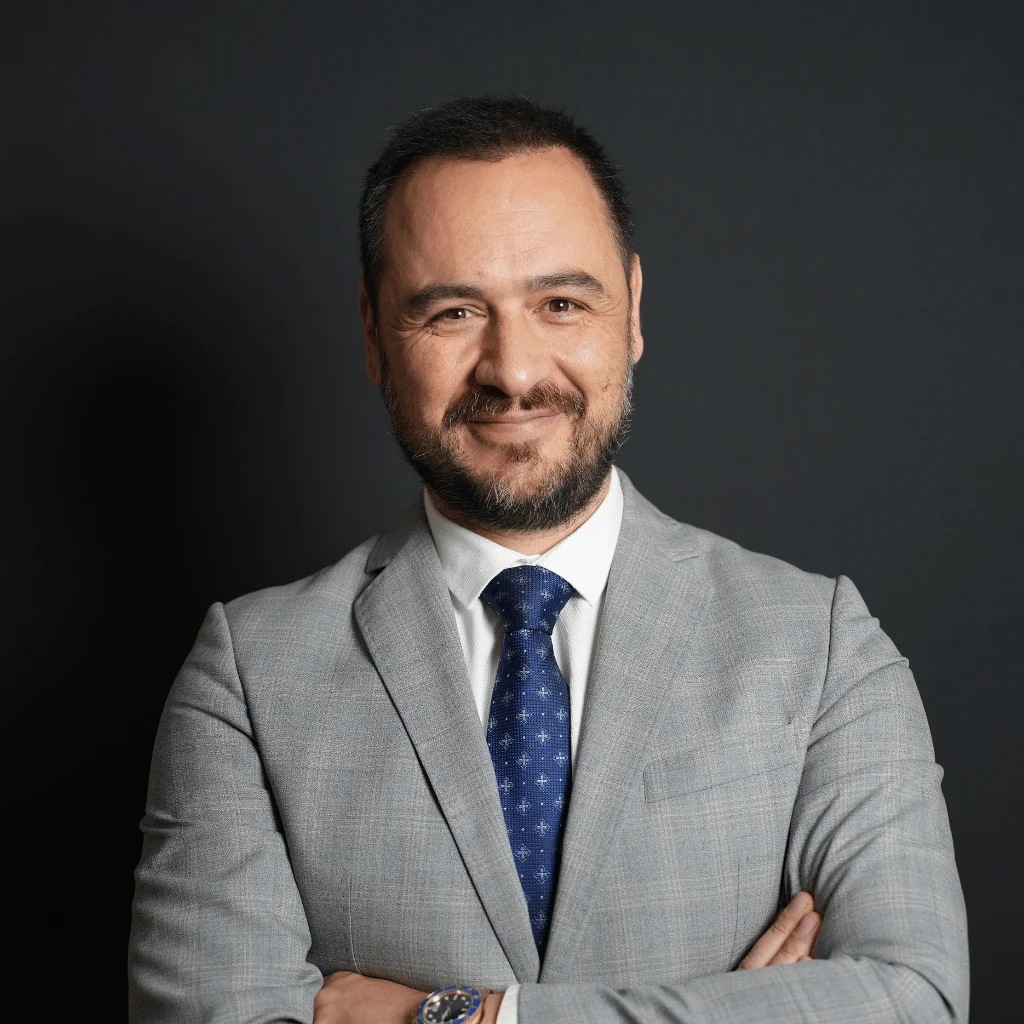
Dr. Mert Demirel
Plastic, Reconstructive & Aesthetic Surgery
Anatomy first. Proportion over excess. Decisions built to remain coherent over time.
Next step
The best treatment is the one that matches the right indication.
You do not need to choose a device, injectable or technique before asking the question. Start with what you would like to improve.
Private consultation
Let’s start with your question.
Leave your number first. We can then continue privately on WhatsApp.


