An online consultation is one of the most useful tools in international plastic surgery, but it is also one of the most misunderstood. Many patients treat it as a brief introduction or a price conversation. I treat it as the first real planning step. The quality of the result often begins here, before the patient …

An online consultation is one of the most useful tools in international plastic surgery, but it is also one of the most misunderstood. Many patients treat it as a brief introduction or a price conversation. I treat it as the first real planning step. The quality of the result often begins here, before the patient ever travels.
The goal of an online consultation is not to sell a procedure. The goal is mechanism definition: understanding what the anatomy is, what bothers the patient, what the realistic options are, and whether traveling for surgery is genuinely a good idea in this specific case. A short message and a single photo are not enough for that. A well-prepared online consultation, on the other hand, can carry almost the same value as a calm in-person evaluation.
The honest answer is that the more precise the input you give me, the more disciplined and realistic the plan can be. International patients who prepare carefully usually receive a clearer recommendation, and they usually leave the consultation knowing whether the operation is right for them, not just whether the operation is possible.
Why preparation matters more for international patients
For local patients, an online consultation is often only the first step. They can come for a physical examination soon after. Decisions can be revisited easily.
For international patients, the dynamic is different. The online consultation often shapes the actual travel plan, the choice of procedure, the duration of the stay, and sometimes financial commitments. A vague online consultation can lead to a poorly matched operation, an unrealistic recovery plan, or the wrong patient traveling for the wrong reasons.
Preparation is what protects you. Good preparation lets me see your anatomy clearly, understand your priorities, and tell you honestly whether what you want is reasonable, only partially possible, or not the right path at all.
What I want to understand in one sentence
Before any photo, I want one short, direct sentence from you. Something like:
- "I want a flatter abdomen and a smaller waistline."
- "My main problem is loose skin after pregnancy."
- "My lower back rolls bother me more than my belly."
- "I just want my clothes to fit better, not a dramatic change."
This sentence tells me what your real priority is. Patients often have several concerns, but there is usually one that matters most. If we plan around the wrong priority, even a technically successful operation can feel like the wrong result.
If you cannot describe your priority in one sentence yet, that is useful information too. It usually means the goals need to be clarified before any surgical plan is offered.
What I want to know about your history
For body contouring decisions — especially for procedures like a 360° tummy tuck — history is as important as photos.
I usually want to understand:
- Your weight history: highest, lowest, and current weight, and how stable it has been in the last six to twelve months.
- Whether you have had pregnancies, how many, and how long ago.
- Whether you are planning future pregnancies.
- Whether you have breastfed, and for how long.
- Whether you have had prior abdominal surgery (cesarean, gallbladder, hernia repair, gynecological surgery, etc.).
- Whether you have had prior liposuction or body contouring procedures.
- Any chronic conditions: diabetes, thyroid issues, blood pressure, autoimmune disease.
- Medications and supplements you currently take.
- Smoking, vaping, or nicotine use — this matters more than most patients realize.
- Any history of blood clots, leg swelling, or family history of clotting problems.
This is not a bureaucratic checklist. Each item changes how the operation should be planned, whether a procedure is safe to combine, and what the recovery should look like.
How to take useful photos
Photos are the second most important input after history. The most common reason an online consultation is unclear is that the photos do not show what they need to show.
Useful photos include:
- Front view, arms slightly away from the body, neutral posture, full torso visible from chest to upper thigh.
- Right oblique view (45°), same framing.
- Left oblique view (45°), same framing.
- Right side (profile) view, arms slightly forward to expose the waistline.
- Left side (profile) view, same framing.
- Back view, arms slightly away from the body, lower back and flanks fully visible.
- Optional: a photo lifting the abdominal skin gently with one hand, to show how much loose skin is present.
- Optional: a photo seated, to show how the lower abdomen folds.
For each photo:
- Use neutral, even lighting (daylight is usually best, no harsh overhead light).
- Plain background, ideally a wall.
- No filter, no editing, no compression.
- Stand naturally. Do not pull in your stomach. Do not arch your back.
- Wear simple underwear that does not compress the waist or hide the hips.
- Keep the same distance from the camera in every photo.
The purpose is not aesthetic. The purpose is anatomical clarity. Filtered, posed, or partial photos hide the very details I need to see, especially around the waistline, flanks, and lower back — areas that matter for a 360° tummy tuck.
What I look for in your photos
From a complete photo set, I usually evaluate:
- The amount and distribution of fat (abdomen, flanks, lower back, upper back).
- The skin quality (firm, slightly loose, significantly loose, with stretch marks or not).
- The presence and pattern of any abdominal separation (diastasis).
- The position and quality of any previous scars (cesarean, hernia, prior abdominoplasty).
- The shape of the waistline from front, side, and back.
- The relationship between the abdomen, flanks, and lower back.
- Posture habits that may exaggerate or hide the actual shape.
- Asymmetries that the patient may not have noticed.
This is why partial photos can be misleading. A flat-looking front view can hide significant lower back fullness. A photo that only shows the abdomen cannot answer whether a 360° approach is justified or whether a more limited operation is enough.
What expectations should sound like
Expectations are the third pillar of a good online consultation. I want to understand not just what you want, but how you describe it.
Useful expectation language is specific and honest:
- What "refinement" means to you: a flatter abdomen, a defined waistline, a smoother back, a cleaner profile in clothing.
- What trade-offs you are willing to accept: the length and position of the scar, the recovery time, the temporary limitations, the small but real risks.
- What outcomes you consider unacceptable: a visible scar above a certain level, an over-tightened waist, a hollow look, an artificial silhouette.
- What inspiration images mean for you: not as guarantees, but as preference indicators.
The more precise the input, the more disciplined the plan. Vague expectations — "I want to look amazing," "I want my body completely transformed" — are not useful. They sound positive, but they leave the surgeon guessing, and they often produce a mismatch between the result and the patient’s internal image.
Inspiration photos: how to use them well
Many international patients send reference photos. This is fine, but the way they are used matters.
Inspiration photos are useful when they show:
- The general direction you like (silhouette, level of definition, naturalness).
- Specific details (waist shape, abdominal smoothness, scar tolerance).
- What you do not like, just as clearly as what you do.
Inspiration photos are not useful when they:
- Belong to a body type very different from yours.
- Have been heavily edited or filtered.
- Are presented as a guarantee ("I want exactly this").
- Are used instead of describing your own goals in your own words.
I am not bothered by inspiration photos. I am bothered when they replace the patient’s own thinking. Your body is not the body in the reference. The plan must be based on your anatomy, not on someone else’s photo.
What is realistic for an online consultation
An online consultation can do a great deal:
- Define the likely diagnosis and the most reasonable surgical options.
- Explain the trade-offs of each option.
- Estimate scar position and approximate length.
- Discuss recovery, travel timing, and follow-up.
- Identify red flags that need in-person evaluation or imaging.
- Tell you honestly whether you should travel at all.
An online consultation cannot:
- Replace a physical examination.
- Measure exact tissue quality, skin elasticity, or muscle tone.
- Detect every hernia or abdominal wall finding.
- Guarantee that the plan will not be adjusted on the day of in-person assessment.
- Promise a specific outcome.
This is why I describe the online consultation as the planning step, not the contract step. The final plan is confirmed in person, before surgery, with the patient and the surgeon in the same room.
Logistics that matter for international patients
Beyond medical preparation, international planning has a logistical layer that often gets neglected. It is worth thinking about:
- How long you can realistically stay in Istanbul after surgery.
- Whether someone will travel with you or visit during recovery.
- Your flight tolerance after abdominal surgery (for body contouring, longer stays are usually safer).
- Whether your home country has a plastic surgeon you can see for follow-up if needed.
- Whether your work and family schedule actually allow for proper recovery, not just a minimum timeline.
- Travel insurance and emergency planning.
These are not commercial details. They are clinical safety details. A patient who must fly home too early, alone, into a stressful environment, is taking an unnecessary risk — even if the surgery itself is performed correctly.
Red flags that suggest waiting
An honest online consultation should sometimes lead to "not yet," not just "yes." I become cautious when:
- Weight has been changing significantly in recent months.
- A pregnancy is planned within the next year or two.
- The patient is still actively losing weight on GLP-1 medications.
- The expectations are mostly emotional and cannot be described concretely.
- The patient is in a high-stress life period and wants surgery to mark a transition.
- The travel plan is too tight for safe recovery.
- The diagnosis is unclear and would benefit from imaging or in-person examination first.
In these cases, the responsible recommendation is to wait, prepare further, or do less than the patient initially requested.
Common misconceptions about online consultations
"It is just a formality before booking." It is not. A serious online consultation is the first clinical step. Skipping it or rushing it is the most common reason international patients arrive with mismatched expectations.
"More photos always equal more clarity." Quality matters more than quantity. Six well-taken photos are more useful than thirty inconsistent ones.
"If the surgeon does not push for booking, they are not interested." A surgeon who pushes for booking on the first message is a warning sign, not a sign of confidence. Good planning takes time.
"The price answers the question." Price is the easiest information to share, but it is also the least informative. A precise plan from a careful evaluation is far more valuable than a fast quote.
A simple preparation checklist
Before your online consultation, prepare:
- One short sentence describing your main concern.
- A clear list of secondary concerns, in order of priority.
- Your weight history and stability over the last year.
- Pregnancy and breastfeeding history, plus any future plans.
- Prior surgeries (especially abdominal) and prior liposuction.
- Medical conditions, medications, and nicotine use.
- Six to ten standardized photos (front, both obliques, both sides, back, optional skin-lift and seated).
- A description of what "a good result" means to you, in your own words.
- A description of outcomes you would consider unacceptable.
- Honest information about how long you can stay after surgery and who will support you.
This is not a bureaucratic exercise. Each item directly improves the quality of the recommendation you receive.
The realistic answer
So, what should you prepare for an online consultation as an international patient?
You should prepare three things, all clearly: your history, your photos, and your expectations. None of them can substitute for the others. A clear history without good photos leaves the anatomy uncertain. Good photos without clear expectations leave the goals uncertain. Clear expectations without a clear history leave safety uncertain.
In my practice, the goal of the online consultation is not to convince you to come to Istanbul. The goal is to give you an honest, anatomy-based answer about whether the operation you are considering is the right operation, at the right time, for the right reasons.
A good treatment plan should answer three questions clearly: What is the tissue? What is the least invasive method that can treat it properly? And what trade-off — scar, recovery, contour change, or limitation — does the patient need to accept?
An online consultation that helps answer those three questions is a planning conversation. Anything less than that is just a message exchange. Preparing well is how you turn the conversation into the first real step of your treatment.
Op. Dr. Mert Demirel
European Board Certified Plastic Surgeon (EBOPRAS)
ISAPS & ASPS Member
Istanbul, Turkey
Sent via Notion Automations
Book a Consultation
Get a clear, personalized assessment based on your anatomy and goals.
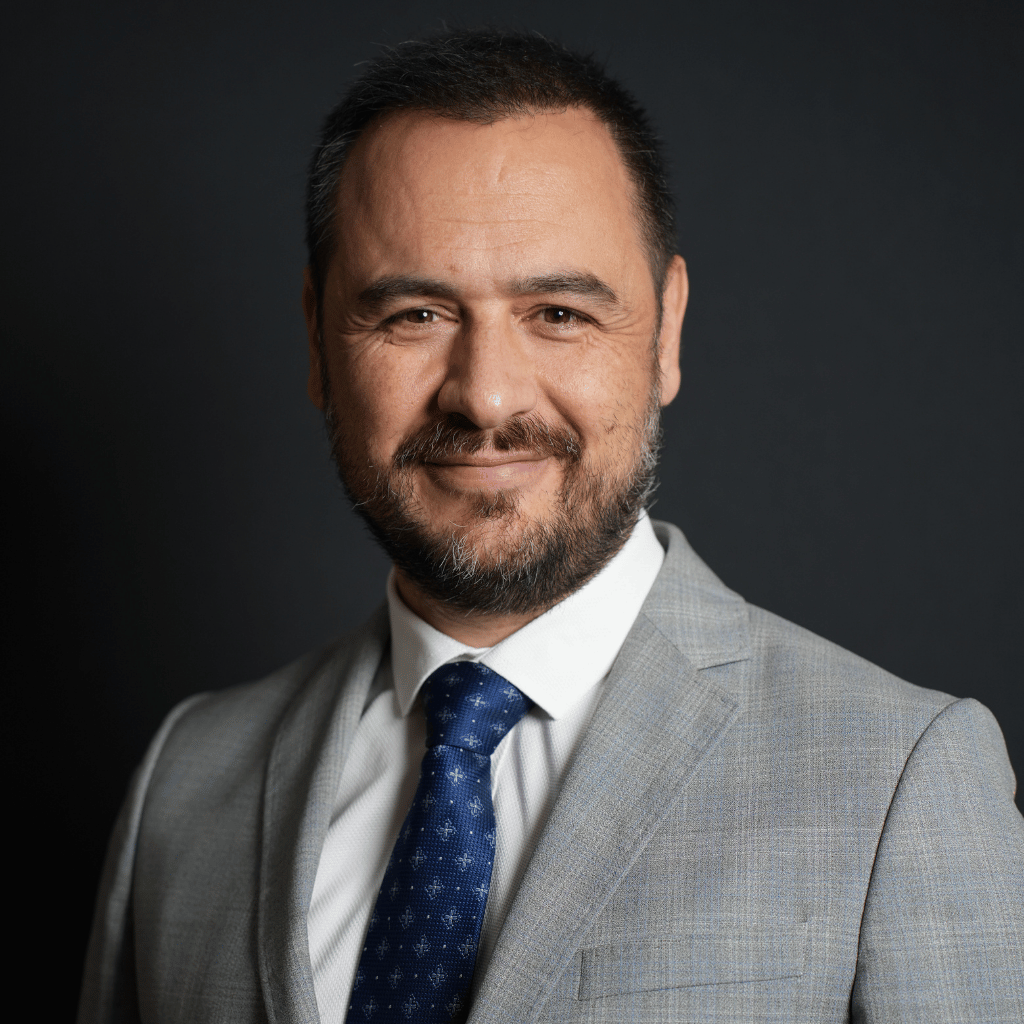
Dr. Mert Demirel
Dr. Mert Demirel is a European Board Certified Plastic, Reconstructive and Aesthetic Surgeon based in Istanbul, with over 20 years of medical experience and a strong focus on natural, balanced outcomes.
He approaches aesthetic surgery as a medically guided decision process, prioritizing anatomical suitability, long-term safety, and individualized treatment planning for each patient.