

Target
Treatment / Non-Surgical
Skin Rejuvenation (Skin Renewal)
A focused treatment page built around indication, mechanism, expected experience and realistic limits.
Individual assessment
Indication first
Realistic expectations
Clinical focus
Treat the right mechanism — not simply the visible sign.
Treatment snapshot
Primary goalIndividual indication
AppointmentVaries by treatment
DowntimeDepends on method and area
SessionsPersonalized plan
ResultsTreatment-specific timeline
These are orientation points, not promises. Timing and suitability depend on the treatment, anatomy and individual response.
Mechanism
Which method matches the underlying issue?
Plan
What intensity, timing and follow-up make sense?
“Skin rejuvenation” is not a procedure.
It is an outcome patients use to describe several different things they would like the skin to do better.
One patient wants the skin to feel less dry. Another is bothered by rough texture. Another notices pores and fine lines more than before. Another has accumulated sun damage. Another has early loss of firmness and describes the entire change simply as “I look tired”.
These concerns can coexist, but they do not come from one layer of the skin and they do not respond to one treatment.
This is why I am cautious when “skin renewal” is sold as a package before the skin has been examined.
The useful starting question is not which rejuvenation treatment is newest. It is: what exactly has changed in this skin, and which part of that change is realistically modifiable?
Skin rejuvenation is an objective, not a device category
The word rejuvenation can make very different treatments sound interchangeable.
A chemical peel changes the surface through controlled exfoliation. Microneedling produces mechanical micro-injury and subsequent remodelling. RF microneedling adds thermal energy at selected depths. Certain injectable treatments are designed primarily around hydration or tissue quality. Pigment treatments target a different biological problem again.
All of them may be placed under the broad commercial heading “skin rejuvenation”.
That does not mean a patient needs all of them.
I prefer to define the endpoint first. Are we trying to improve hydration? Texture? Pigment? A scar? Dermal firmness? A combination of two clearly identified problems?
Once that is clear, the treatment becomes much smaller and much easier to justify.
I do not rejuvenate “the skin” as one object.
I identify the specific quality that has changed and choose a mechanism capable of changing it.
Dull skin is a visual description, not a biological diagnosis
Patients use the word dull very accurately from an aesthetic point of view. The skin no longer reflects light in the same way. Makeup sits differently. Fine irregularities seem more visible. The face can look tired even after adequate sleep.
But several mechanisms can create that appearance.
Surface dehydration can reduce smooth light reflection. Accumulated keratin can make texture feel rough. Pigment irregularity can create uneven tone. Chronic ultraviolet exposure can affect both colour and dermal quality. Inflammatory skin can also look tired because the barrier is not functioning normally.
A patient may therefore have a “dullness” complaint that responds well to relatively simple skincare and barrier support. Another may benefit from controlled resurfacing. Another needs a pigment-specific strategy.
Using one fashionable injectable or device for all three would treat the adjective rather than the mechanism.
Skincare is not limited to sitting uselessly on the surface
I think one common piece of rejuvenation marketing needs correcting.
Patients are sometimes told that creams can only touch the superficial skin and that meaningful biological improvement therefore requires a clinic procedure.
That is too simplistic.
Topical therapies can produce meaningful biological effects. Retinoids, for example, can influence epidermal turnover and dermal remodelling. Pigment-directed topical therapy can substantially change melanogenesis. Barrier-supportive products can improve the environment in which every subsequent treatment has to heal.
Procedures have their own capabilities, particularly when a deeper or stronger remodelling stimulus is needed. But I do not need to diminish skincare to justify them.
The best plan uses the least invasive mechanism that is sufficient for the problem.
The skin barrier determines whether “renewal” is actually a good idea today
Many rejuvenation procedures work by deliberately disturbing tissue.
We exfoliate it. Needle it. Heat it. Inject it. The intervention is useful because the skin repairs itself afterwards.
That only makes sense if the tissue is capable of a controlled recovery.
A patient who arrives with persistent burning, redness, peeling and sensitivity after months of acids, retinoids, exfoliating toners and procedures may not need another rejuvenation treatment. They may have created an unstable baseline in the effort to improve the skin faster.
In that situation, barrier recovery has priority.
Skin that is constantly recovering cannot show us its true baseline.
Sometimes renewal begins by stopping the cycle of injury long enough to see what actually remains to be treated.
Hydration can change how the skin looks without changing facial structure
Hydrated skin tends to feel smoother and reflect light more evenly. Fine dehydration-related creasing may become less obvious and the surface can appear fresher.
That can make hydration-oriented treatments genuinely satisfying for the right patient.
But I keep the endpoint narrow.
Hydration does not reposition jowls. It does not replace significant facial volume. It does not release tethered acne scars. It does not correct a dynamic forehead line created primarily by muscle activity.
This distinction is especially important with injectable “skin boosters” and similar treatments. They may improve selected aspects of tissue quality without being structural filler.
A patient who wants better skin should not accidentally receive a different facial shape because the treatment categories were not kept separate.
Texture improvement requires us to know why the texture is uneven
Texture is another word that covers several problems.
Small surface irregularities may respond to exfoliation or controlled remodelling. Fine lines may have a dermal component. Enlarged-looking pores can become less conspicuous when surrounding tissue quality improves.
Acne scars are more complicated.
A shallow scar whose main problem is dermal architecture can respond to remodelling. A tethered scar may remain depressed until the mechanical attachment beneath it is addressed. A narrow deep scar may need a different method again.
This is why I do not automatically recommend RF microneedling simply because a patient mentions scars and pores in the same consultation.
The useful procedure is the one matched to the structure that is actually abnormal.
Microneedling and RF microneedling occupy different levels of the same conversation
Ordinary microneedling produces controlled mechanical injury. RF microneedling adds a thermal component at selected depths.
Both can stimulate remodelling, but additional energy should have a purpose.
A patient with a relatively modest texture problem may not need the stronger intervention simply because the technology is available. A patient with selected scar architecture or early dermal laxity may benefit from the additional thermal effect.
I think the hierarchy matters.
More technology is not automatically more treatment quality.
If the simpler mechanism can give us the result we need with less inflammatory burden, that is a clinical advantage rather than undertreatment.
Pigment does not become a rejuvenation problem simply because it makes the skin look older
Uneven pigmentation can have a major effect on perceived skin age.
A face with relatively few wrinkles but substantial sunspots or melasma may look less uniform and therefore older or more tired.
But the fact that pigmentation contributes to the ageing appearance does not change its biology.
Solar lentigines, melasma and post-inflammatory pigmentation still need to be classified. Melasma in particular can react poorly to indiscriminate inflammation.
I therefore do not want a generic “rejuvenation laser” applied to pigmentation without first deciding what kind of pigment is present.
Skin renewal becomes safer when every visible sign is allowed to keep its own diagnosis.
Collagen is important, but “collagen stimulation” has become too broad a promise
Collagen is a fundamental component of the dermis, and several useful treatments work partly by triggering a collagen-remodelling response.
That biological fact is sometimes stretched into the idea that any collagen-stimulating treatment can solve almost every sign of ageing.
It cannot.
Improved dermal quality may soften fine lines and improve firmness. It does not automatically restore a lost cheek projection. It does not replace significant facial fat loss. It does not mechanically reposition descended tissues.
The layer matters.
If a patient has early skin-quality decline, remodelling can be very useful. If the dominant problem sits beneath the skin, a skin procedure may improve the surface while leaving the reason the face looks older largely unchanged.
Exosome and regenerative language requires a higher evidence threshold, not a lower one
Newer regenerative treatments are attractive because the biological language is compelling.
Exosomes, growth signalling and cellular communication are legitimate areas of scientific interest, and early clinical work in skin applications is worth following.
But a plausible regenerative mechanism does not mean every commercial formulation has proven rejuvenating value.
Product source, manufacturing, delivery method and clinical evidence matter. A result from one preparation cannot automatically be transferred to another simply because both are sold under the word exosome.
I therefore position these treatments differently from established methods.
Promising is a useful scientific category.
It is not a synonym for proven.
A combination plan should become simpler as the diagnosis becomes clearer
Skin rejuvenation pages often become long menus because different layers can benefit from different treatments.
That does not mean the patient should receive a little of everything.
If hydration is poor and scar architecture is also present, two mechanisms may genuinely be relevant. They can be staged so that each treatment has a defined role.
But if the plan becomes microneedling, mesotherapy, exosomes, peel and another device simply because every modality promises “better skin”, I have stopped explaining why the patient needs each one.
This matters biologically as well as financially.
The skin has to recover from the total inflammatory burden of all procedures. Stacking treatments too closely can make it harder to identify which treatment produced benefit, which produced irritation and whether the patient would have done just as well with a simpler plan.
Combination treatment is useful when each component solves a different problem.
Otherwise it is only complexity.
The first glow after a procedure is not necessarily rejuvenation
Many procedures create an attractive early appearance.
Temporary swelling can make fine lines look softer. Increased hydration can improve light reflection. The skin can appear plumper during the recovery phase.
These changes are real, but they are not always the long-term biological result we are trying to measure.
Collagen remodelling takes longer. Pigmentation changes follow their own timeline. Scar architecture changes gradually.
This is why I separate immediate cosmetic response from structural improvement.
Otherwise a treatment can be credited with a dramatic result during the swollen phase and then described as “wearing off” when the temporary component settles.
There is no universal three-session skin-renewal protocol
Some procedures make sense as staged treatments because their biological effect accumulates over time.
But a treatment series should not become a fixed product sold independently of response.
If the skin is recovering well and improving, another session may have a rational purpose. If the previous treatment caused prolonged inflammation, pigment instability or almost no meaningful benefit, that information should change what happens next.
The same applies when improvement reaches a plateau.
At that stage, another identical session may produce diminishing returns. The remaining problem may need another mechanism, or the treatment may simply have achieved what it can realistically achieve.
A useful protocol therefore includes the ability to stop.
Skin renewal does not mean changing the face
This page needs to remain separate from filler and surgical rejuvenation.
When I am treating skin quality, the facial architecture should generally remain the same.
The skin may become smoother. Hydration may improve. Pigment may become more even. Selected fine lines and textural irregularities may soften. Early dermal firmness may improve.
Those changes can make the entire face look more rested without making the cheeks larger, the jaw wider or the expression less mobile.
I think this is one of the strongest reasons to treat skin quality as its own category.
Not every patient who wants to look fresher wants a different face.
Skin rejuvenation and anti-aging overlap, but they should not duplicate one another
I think of anti-aging as the longer strategy.
It includes prevention, photoprotection, sustainable skincare and deciding when a visible age-related change genuinely deserves intervention.
Skin rejuvenation is more immediate and problem-based.
The patient already sees a change — dullness, texture, pigmentation, fine lines, early loss of firmness — and wants to know what can realistically improve it now.
This distinction keeps the pages clinically useful.
Anti-aging asks, “How do we manage the trajectory?”
Rejuvenation asks, “What is present today, and which part of it can we improve?”
When skin rejuvenation makes sense to me
I am most comfortable recommending treatment when we can define the current skin-quality problem clearly enough to match it with a mechanism.
Sometimes that means skincare and photoprotection rather than a procedure. Sometimes controlled resurfacing makes sense. Sometimes dermal remodelling, pigment treatment or hydration-oriented injection is appropriate.
There are also times when I would postpone everything.
An unstable skin barrier needs recovery. Active inflammatory disease needs control. A patient whose perceived “skin problem” is actually structural volume loss deserves a different conversation.
And if the skin is healthy and the concern is largely created by comparison with filtered photographs, no treatment remains available as a perfectly legitimate decision.
Skin renewal should not be a commitment to keep the skin continuously under procedure.
It should be the disciplined use of biological interventions when there is something specific enough to justify renewing.
Frequently asked questions
What is skin rejuvenation?
It is a broad term for treatments intended to improve selected aspects of skin quality such as hydration, texture, pigmentation, fine lines or firmness. Because those problems have different mechanisms, there is no single skin-rejuvenation procedure.
How is skin rejuvenation different from filler?
Filler primarily changes soft-tissue volume and contour. Skin-rejuvenation treatments are generally aimed at the quality of the skin itself. A patient can need one without needing the other.
How is it different from Botox?
Botulinum toxin changes selected muscle activity. It can influence expression lines, while skin-renewal treatments address other components such as texture, hydration or dermal quality.
What is the best treatment for dull skin?
It depends on why the skin looks dull. Dehydration, barrier dysfunction, pigment irregularity and surface texture can all produce a similar appearance while requiring different treatments.
Do I need RF microneedling for skin rejuvenation?
Not automatically. RF microneedling can be useful when deeper remodelling or early tightening is relevant, but a more superficial concern may not need that degree of thermal intervention.
Do skin boosters add facial volume?
Hydration-oriented injectable treatments are designed differently from structural filler and should not be planned primarily to change facial shape. Temporary swelling can still occur, and product characteristics vary.
Can skin rejuvenation treat acne scars?
Selected scar patterns can respond to remodelling treatments, but scar architecture needs to be classified first. A tethered or very deep scar may require another mechanism in addition to skin remodelling.
How many sessions are needed?
There is no universal number. The method, target and individual response determine whether staged treatment remains useful. I prefer reassessment between sessions rather than a mandatory package.
When will I see results?
The timeline depends on the mechanism. Hydration and surface changes can appear relatively early, while collagen remodelling, scar improvement and some pigment changes develop more gradually.
Can different rejuvenation treatments be combined?
Yes, when each treatment has a separate clinical purpose and the sequence respects tissue recovery. I do not consider combining several treatments automatically superior to using one well-selected treatment.
Can skin rejuvenation replace a facelift?
No. Skin-quality treatment can improve the tissue surface and selected aspects of firmness. Significant tissue descent and excess skin are different structural problems.
When would you recommend no procedure?
When the skin mainly needs barrier recovery, skincare or photoprotection; when an inflammatory condition needs treatment first; when the concern belongs to another anatomical layer; or when the possible benefit is too small to justify procedural treatment.
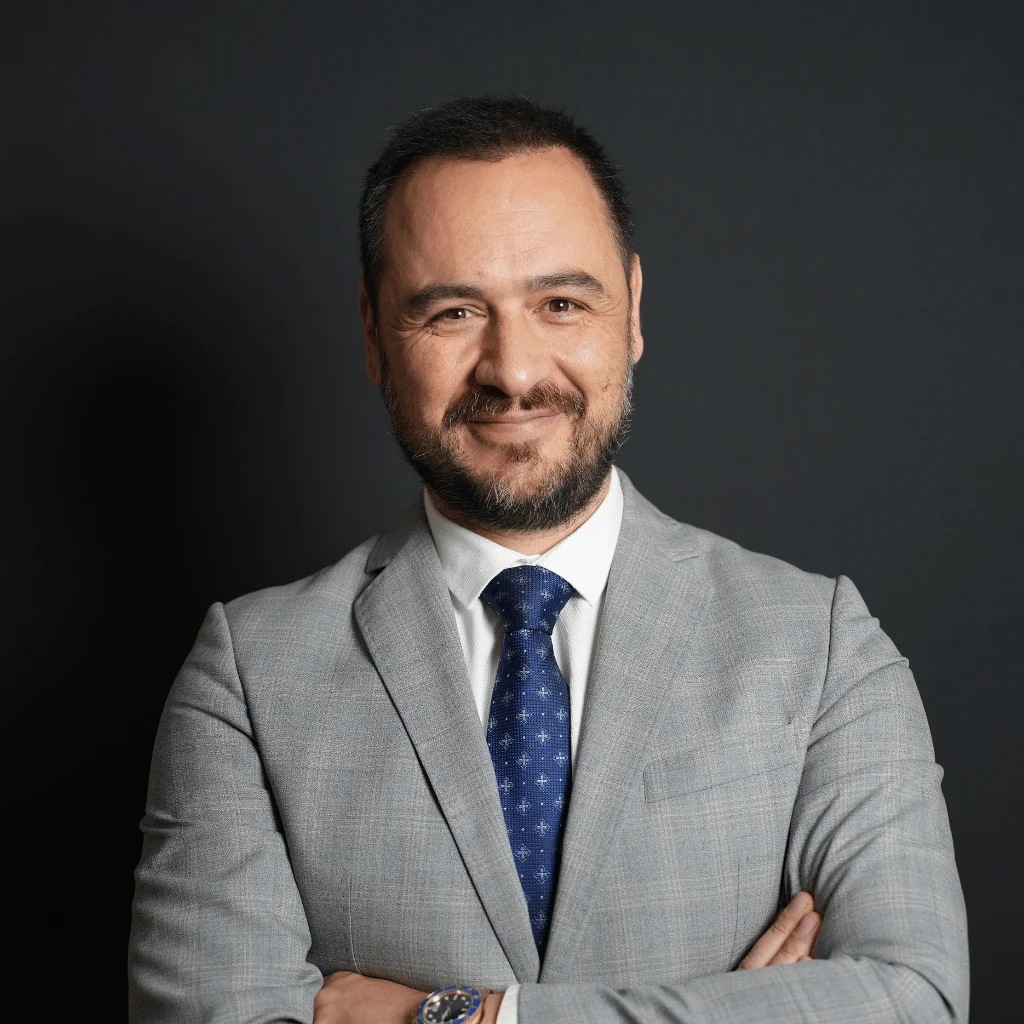
Dr. Mert Demirel
Plastic, Reconstructive & Aesthetic Surgery
Anatomy first. Proportion over excess. Decisions built to remain coherent over time.
Next step
The best treatment is the one that matches the right indication.
You do not need to choose a device, injectable or technique before asking the question. Start with what you would like to improve.
Private consultation
Let’s start with your question.
Leave your number first. We can then continue privately on WhatsApp.


