How long do 360° tummy tuck results last? It is one of the most common questions I receive, and it is also one of the questions that deserves a careful answer rather than a marketing answer. The honest reply is that the results can be long-lasting under stable conditions, but they are not immune to …
How long do 360° tummy tuck results last? It is one of the most common questions I receive, and it is also one of the questions that deserves a careful answer rather than a marketing answer. The honest reply is that the results can be long-lasting under stable conditions, but they are not immune to life. The body keeps changing after surgery, just as it kept changing before it.
What surgery does is reset the architecture: it removes excess skin, tightens the abdominal wall, restores the waistline, and re-establishes a clean transition between the abdomen, flanks, and lower back. What surgery cannot do is freeze that architecture in time. From the day the swelling settles, biology continues — weight, hormones, posture, aging, pregnancy, medications, and lifestyle all interact with the new shape.
So the more accurate way to think about longevity is not "how long will the result last" but "under what conditions does the result remain stable, and what realistically changes it."
What actually stays after a 360° tummy tuck
Some elements of the result are essentially structural, and they tend to remain even when the body changes:
- The repaired abdominal wall (the muscle plication for diastasis) usually stays intact, as long as it is not stressed by a future pregnancy or significant abdominal weight gain.
- The skin that was removed does not come back. The amount of redundant skin you had before surgery is gone.
- The repositioned belly button stays where it is.
- The improved transition between abdomen, waist, and flanks is preserved as long as the underlying tissue volume does not change dramatically.
- The scar location does not move, although the scar itself matures and softens for 12–18 months after surgery.
These are the durable parts of the result. They are why a properly performed 360° tummy tuck is considered a long-term operation, not a temporary intervention.
What can change with time
Other elements of the result are more sensitive to biology and behavior:
- Skin elasticity continues to decrease with age. Skin that is firm at 35 is not the same skin at 55.
- Fat distribution shifts with weight changes, hormonal changes, and aging.
- Muscle tone fluctuates with activity, posture, and overall fitness.
- The lower back and flanks, in particular, are areas where small weight changes can become visible quickly.
- The scar character (color, thickness, texture) evolves over the first one to two years, and continues to soften gradually after that.
None of these changes "undo" the surgery. They simply mean that the body keeps living, and the contour you see at one year is not necessarily the contour you will see at ten years. The architectural improvement remains; the surface adapts to your life.
Weight stability is the single biggest factor
If I had to choose one variable that determines how stable a 360° tummy tuck result remains, it would be weight stability. Not weight loss. Not weight gain. Stability.
I usually explain it this way:
- Patients who maintain their weight within a narrow range (roughly ±3–5 kilograms) tend to keep their result very recognizable for many years.
- Patients who gain 10–15 kilograms or more after surgery often see the abdomen become rounder again, the flanks fill out, and the waistline soften — even though the muscle repair and the skin removal still help.
- Patients who lose a significant amount of weight after surgery may see new skin laxity appear, especially in the lower abdomen, flanks, and lower back.
- Patients who repeatedly gain and lose weight (yo-yo cycles) tend to lose contour quality faster than patients who stay stable, even if their average weight is similar.
The contour can remain stable when the body remains stable. This is the most honest sentence I can offer about longevity.
What pregnancy does to the result
Pregnancy is a special case. A 360° tummy tuck is not a contraindication to future pregnancy, but it does raise a real planning question.
The repaired abdominal wall can stretch again during pregnancy. In some patients, the diastasis returns partially. Skin can stretch again, although usually less dramatically than the first time. The waistline can change. After delivery, some patients return close to their post-surgery shape; others do not.
For this reason, my standard recommendation is straightforward: if a patient is planning a pregnancy in the next one to two years, body contouring of this scale is usually not the right operation at this time. Doing the surgery, then becoming pregnant shortly afterward, often means doing the surgery again later. That is not a good use of time, money, recovery, or risk.
This is not a refusal. It is a sequencing decision. The same operation, done after the family is complete, gives a much more durable result.
What hormonal changes do
Hormonal phases also influence longevity, and they are often underestimated.
Perimenopause and menopause typically bring three changes: a redistribution of fat toward the abdomen, a gradual loss of skin elasticity, and a slow decrease in muscle tone. None of these are dramatic month to month, but over five to ten years they are real.
Patients who undergo a 360° tummy tuck before menopause and then go through menopause without addressing weight, activity, and skin care often notice a softening of the contour over time. The architecture is still better than it would have been without surgery, but the sharpness of the early result is no longer the same.
This is biology, not surgical failure. The honest framing is that surgery improves the starting point. It does not stop the biological clock.
What GLP-1 medications and rapid weight loss do
The era of GLP-1 medications has changed how I talk to patients about longevity. Many patients now lose significant weight before, during, or after the period when they consider surgery.
Two patterns matter:
- Patients who reach a stable weight on GLP-1 medications, hold that weight for at least six to twelve months, and then have surgery, tend to do well in the long term.
- Patients who have surgery while still actively losing weight, or who lose another large amount of weight in the first year after surgery, often develop new skin laxity, new contour irregularities, and sometimes need a secondary procedure.
For longevity, the rule is simple: do not chase a moving target. The body should be reasonably stable before contouring, and reasonably stable after it.
What aging itself does, independent of weight
Even with stable weight, no pregnancy, and no major hormonal events, aging quietly changes the result.
- Skin loses collagen and elastin slowly over time.
- The dermis becomes thinner.
- The fat compartments under the skin shift.
- Posture changes subtly with age and activity.
- The scar fades but never fully disappears.
Most patients are surprised to learn that the difference between a result at one year and the same result at ten years is usually not dramatic, as long as weight has been stable. The decade between fifteen and twenty-five years out is where slow biological changes become more visible — and even then, the contour is almost always better than what the patient would have had without surgery.
What patients control, and what they don’t
It helps to be clear about which factors are within the patient’s control and which are not.
Mostly within the patient’s control:
- Weight stability.
- Smoking and nicotine use (which significantly accelerate skin aging and worsen scars).
- Sun exposure on the scar (which can darken it permanently).
- General activity level and core engagement.
- Diet quality and protein intake (which affect skin and tissue quality).
- Realistic decisions about future pregnancy timing.
Mostly outside the patient’s control:
- Genetic skin quality.
- Inherent scar tendency (some patients scar wider or thicker despite excellent care).
- Hormonal phases of life.
- Aging itself.
- Unforeseen medical events that affect weight or hormones.
A good plan respects both lists. It does not blame the patient for biology, and it does not pretend that lifestyle is irrelevant.
How the scar evolves over time
The scar is one of the most visible markers of how a result "ages," and it deserves its own honest description.
- In the first three months, the scar is usually pink to red, slightly raised, and most noticeable.
- Between three and twelve months, it slowly flattens and lightens.
- Between twelve and eighteen months, it usually reaches a stable color, often closer to the surrounding skin.
- After two years, it continues to soften slowly, but most of the visible improvement has already happened.
Sun exposure during the first year is the single most common reason a scar darkens permanently. Patients who protect the scar tend to be much happier with it five and ten years later.
It is also important to remember that the scar is not removable. It can be optimized, repositioned, and refined, but it is part of the trade-off of the operation. Longevity of result includes longevity of scar.
What "long-lasting" actually means in practice
When I tell a patient that the results of a 360° tummy tuck can be long-lasting, I mean something specific:
- The skin removal is permanent.
- The muscle repair is durable in the absence of pregnancy or significant weight gain.
- The improved waist-to-hip relationship usually remains recognizable for many years.
- Most patients, ten years after surgery, still consider their abdomen and waistline meaningfully better than before.
- A small subset will benefit from a minor revision later in life — usually for skin laxity, not for the muscle repair.
What I do not mean is that the body becomes static, that the scar disappears, or that the contour is identical at year fifteen as at year one. Those promises are not realistic, and patients who are told otherwise often feel misled later.
Common misconceptions about longevity
"A tummy tuck is permanent." No surgery is permanent in the strict sense. The structural improvements are durable; the surface keeps living. "Long-lasting under stable conditions" is the accurate phrase.
"If I gain weight, the surgery is ruined." Significant weight gain reduces the visible benefit, but it does not erase the muscle repair or the skin removal. Patients who later return to a stable weight often regain much of the contour.
"The result will look exactly the same forever." It will not. It will mature. Skin softens, scars fade, fat shifts, posture changes. Better than before — yes. Frozen in time — no.
"Pregnancy after a tummy tuck is forbidden." It is not forbidden. It is just usually a poor sequencing choice if pregnancy is planned within a year or two. After pregnancy, the surgery may need to be revised.
"A second surgery means the first one failed." Sometimes a planned secondary refinement is part of a long-term contour strategy, especially after major life events. It is not a failure; it is a maintenance step.
How patients can protect the result
There is no special program required to keep a 360° tummy tuck result stable. The principles are ordinary, but they are also the most underestimated:
- Stay within a narrow weight range. Aim for stability, not extremes.
- Avoid yo-yo dieting. The repeated cycle is harder on skin than a steady higher or lower weight.
- Do not smoke or use nicotine in any form, especially during the first year and ideally long term.
- Protect the scar from direct sun for at least 12 months.
- Maintain regular activity. Walking, posture work, and core engagement help long-term shape.
- Eat enough protein to support tissue quality.
- Plan future pregnancies before, not after, this kind of surgery whenever possible.
- Manage hormonal phases with medical guidance, not with extreme dietary swings.
- Address skin quality with sensible skincare; do not expect dramatic results from any product.
- See your surgeon for a follow-up if something genuinely changes — not for cosmetic anxiety in the first weeks of recovery.
None of this is dramatic. All of it works.
When a small revision is reasonable
Even with excellent care, a minority of patients eventually consider a small revision. Reasonable indications include:
- Mild skin laxity that develops after significant weight loss.
- A scar segment that healed wider than the rest and bothers the patient consistently.
- A small contour irregularity in the flank or lower back that becomes more visible over time.
- Changes after pregnancy that the patient wants to address.
Unreasonable indications include:
- Anxiety in the first six months, when swelling and tissue changes are still happening.
- A wish for a more dramatic result than the original anatomy can support.
- Comparison with edited images on social media.
- Pressure from another clinic that benefits from a new operation.
The decision to revise should be calm, anatomical, and timed correctly. Most patients who think about revision in the first year end up not needing one if they wait.
The realistic answer
How long do 360° tummy tuck results last, and what changes them over time?
The structural improvements — skin removal, muscle repair, scar position, waistline restoration — are durable and tend to remain recognizable for many years. The surface elements — fat distribution, skin elasticity, scar appearance, contour sharpness — continue to live with the body. Weight stability, pregnancy timing, hormonal phases, and aging are the variables that most influence how the result ages.
I deliberately avoid the word "permanent." It promises something biology cannot deliver. The more accurate, more useful, more adult statement is this: the contour can remain stable when the body remains stable, and the operation gives the patient a much better starting point for the rest of their life.
A responsible plan does not promise a fixed measurement forever. It focuses on proportion, controlled refinement, and a result that ages calmly with the patient. That is what I aim for, and that is what I think patients deserve to be told before they decide.
Op. Dr. Mert Demirel
European Board Certified Plastic Surgeon (EBOPRAS)
ISAPS & ASPS Member
Istanbul, Turkey
Sent via Notion Automations
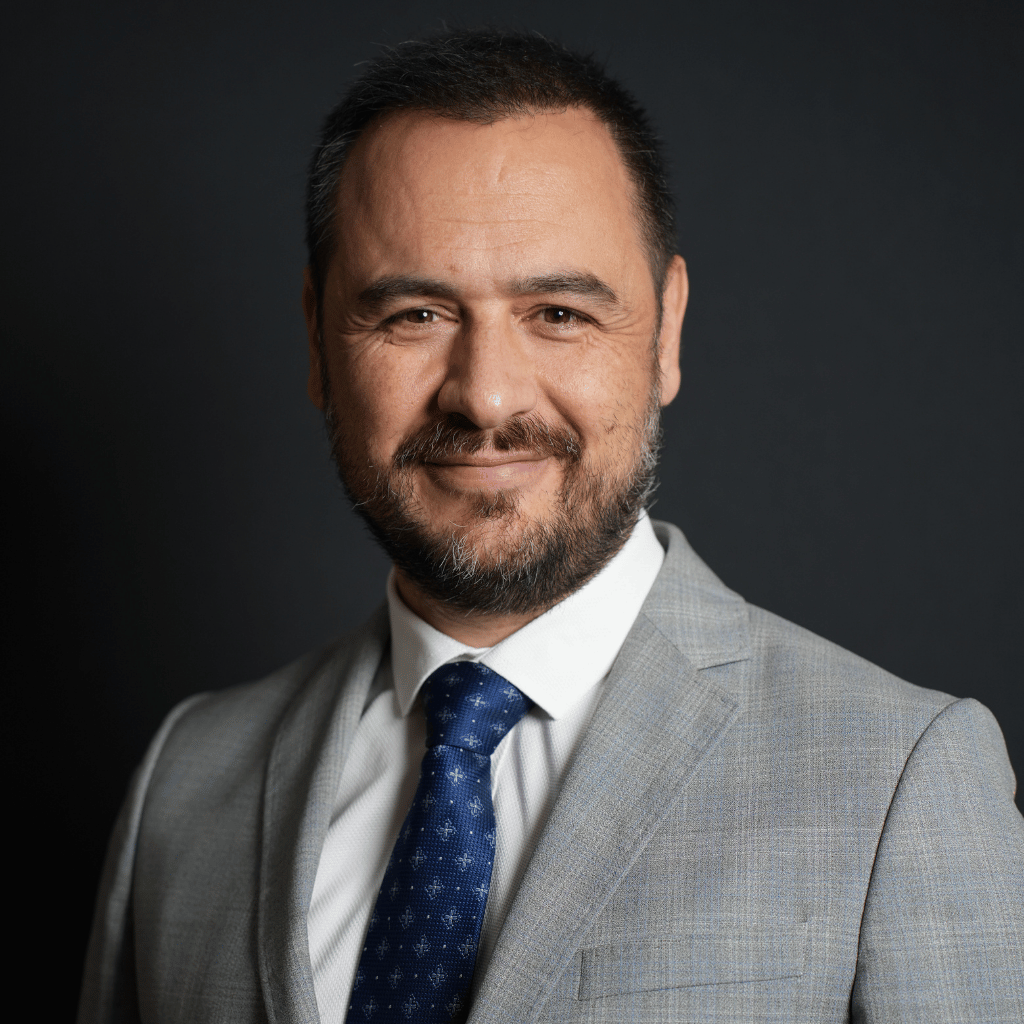
Dr. Mert Demirel
Dr. Mert Demirel is a European Board Certified Plastic, Reconstructive and Aesthetic Surgeon based in Istanbul, with over 20 years of medical experience and a strong focus on natural, balanced outcomes.
He approaches aesthetic surgery as a medically guided decision process, prioritizing anatomical suitability, long-term safety, and individualized treatment planning for each patient.