Most articles about accessory breast tissue focus on how to remove it. This one is about the opposite question: when is removing it not the right answer? This is a question I take seriously, because the easiest decision in plastic surgery is to operate. The harder — and often more honest — decision is to …

Most articles about accessory breast tissue focus on how to remove it. This one is about the opposite question: when is removing it not the right answer?
This is a question I take seriously, because the easiest decision in plastic surgery is to operate. The harder — and often more honest — decision is to recommend doing less, waiting, or doing nothing at all. Patients rarely arrive at the consultation expecting that conversation. Many have already decided in their mind that surgery is the next step. My role is not to confirm that decision automatically. My role is to evaluate whether surgery is actually justified by the anatomy and by the expectations behind the request.
The honest answer is simple: surgery is not always the right answer, even when the underarm fullness is real. Whether or not to operate depends on the size of the concern, the size of the surgical footprint, the stability of the patient, the quality of the expectations, and the willingness to accept trade-offs that surgery cannot remove.
When the concern is mild and the surgical footprint is large
The first situation where I become cautious is when the concern is mild but the operation required to address it is not.
If the fullness is small, soft, and only visible in certain clothing or arm positions, an excisional procedure with a visible scar is often disproportionate. The patient may genuinely dislike the bulge, but the surgery needed to remove it can leave a permanent mark that is more visible than the original concern.
This is one of the most common imbalances I see. The fullness is real, but it is not large enough to justify the scar that excision would create. A small underarm bulge can be camouflaged by clothing, posture, and time. A poorly justified scar in the axilla cannot.
In these cases, the responsible plan is often to step back. We can revisit the discussion later if the bulge changes, if the discomfort grows, or if the patient’s priorities change. Surgery is not the only valid response to a real but minor concern.
When the patient is in a changing phase
The second reason to slow down is biological. The axilla is sensitive to weight, hormones, and life events.
If the patient is in the middle of significant weight loss or weight gain, the underarm contour will continue to change. Operating during that phase reduces predictability. The result that looks good at the time of surgery may not look the same six months later, because the surrounding tissue will continue to evolve.
The same principle applies to women planning pregnancy in the near future. Pregnancy and breastfeeding can enlarge accessory breast tissue, change skin elasticity, and shift the contour. Operating immediately before such a change is not always wrong, but it should be a conscious decision, not an oversight.
Hormonal fluctuation, recent weight changes after bariatric surgery or GLP-1 medications, and unstable lifestyle phases all reduce predictability. Surgery is most reliable when it is performed on a stable canvas. If the canvas is still moving, the more mature option is often to wait.
When the expectation is unrealistic
The third reason to pause is the quality of the expectation.
If the request is essentially "remove it completely, with no scar, and make both sides perfectly symmetric," the plan should slow down. None of the three parts of that request can be guaranteed.
Complete removal in the underarm is rarely possible without leaving a contour change. Scar-free surgery does not exist; we can plan a discreet scar, not an absent one. Perfect symmetry between two sides of a moving, dynamic area is not a realistic goal, because the human body is naturally asymmetric, and the axilla amplifies small differences due to movement and lighting.
This does not mean surgery is impossible for these patients. It means the conversation has to change before surgery is offered. If the expectation cannot be adjusted, surgery should not be performed. A patient who agrees to the operation but disagrees with reality will rarely be satisfied with the result, regardless of how well the surgery is executed.
When skin redundancy is the main issue and the patient is scar-intolerant
The fourth scenario is one of the most difficult conversations in this category.
If the underarm fullness is mainly caused by loose or stretched skin — for example after major weight loss — the only way to address it surgically is with skin removal. Skin removal requires a longer incision, and that incision will leave a visible scar in the axilla.
If the same patient is scar-intolerant — meaning they cannot psychologically accept a visible underarm scar — there may be no honest surgical pathway that matches the expectation. Liposuction alone will not fix loose skin. Excision will fix the contour but at the cost of a scar the patient does not want.
In these situations, surgery should not be forced into the gap between the patient’s wish and the patient’s anatomy. The mature recommendation is often to do less, do nothing, or revisit the discussion only if the patient changes how they think about the scar trade-off.
When the diagnosis is not yet clear
Sometimes the right answer is not surgery, but better evaluation first.
If the fullness is asymmetric, recently changed, painful in an unusual way, or contains a discrete firm mass that does not match the typical pattern of accessory breast tissue, aesthetic surgery should not be the next step. The next step is medical evaluation — examination, imaging, or referral if needed.
Aesthetic surgery should never replace a relevant medical assessment. The axilla is not just a contour zone. It is also an anatomical region where lymph nodes, breast extensions, and other structures live. Treating it like a purely cosmetic area without ruling out medical concerns is not acceptable, regardless of how confident the patient is about the diagnosis.
When the patient is not ready, only urgent
There is a difference between a patient who is ready for surgery and a patient who is in a hurry.
A patient who is ready has thought about the contour benefit, the scar trade-off, the recovery, and the realistic range of healing. They understand what surgery can and cannot do. They are calm about the decision.
A patient who is in a hurry usually has an external trigger — a wedding, a holiday, a relationship change, a social event, a recent comment from someone else. Surgery driven primarily by urgency tends to produce regret, not satisfaction. The bulge has often existed for years; the rush is rarely about the bulge itself.
In these situations, I prefer to discuss the timeline calmly. If the patient is genuinely ready, the timeline can be reasonable. If the timeline is the main reason for the request, that is usually a sign to wait.
When the cost–benefit balance does not work
Every surgery is an exchange. The patient gives up something — a scar, recovery time, a small set of risks — in return for an improvement.
Surgery is the right answer when the improvement is meaningful and the trade-offs are acceptable. Surgery is the wrong answer when the improvement would be small but the trade-offs would be permanent. The mistake is to focus only on the bulge and ignore what surgery costs the patient in scar, time, discomfort, and limitation.
If a patient says, "I would only do this if there was no scar and no recovery," they are describing a procedure that does not exist. That is useful information. It tells me they are not actually ready to accept the trade-offs. The honest response is not to negotiate the trade-offs down to nothing. The honest response is to explain that surgery is not the right tool for that particular wish.
What I evaluate before saying "not now" or "not at all"
Before recommending against surgery — or against surgery for now — I usually consider:
- Whether the visible concern is large enough to justify the surgical footprint.
- Whether the patient’s weight and hormonal status are stable.
- Whether life events such as pregnancy plans should reasonably delay the operation.
- Whether the expectations match what surgery can realistically deliver.
- Whether skin redundancy makes a visible scar unavoidable.
- Whether the patient can psychologically accept that scar.
- Whether the diagnosis is fully clear, or whether further evaluation is needed first.
- Whether the patient is ready or simply urgent.
- Whether the cost–benefit exchange is genuinely balanced for this individual.
- Whether non-surgical alternatives — weight stability, time, observation, clothing strategies — have been considered.
This list is not designed to discourage surgery. It is designed to make sure the surgery I do recommend is the right surgery for the right person at the right time.
Common misconceptions about "saying no"
"If you say I am not a candidate, it means surgery doesn’t work." Not true. It means surgery does not work for this specific situation. Many patients are excellent candidates for the same operation. The procedure is not the issue; the matching is.
"A good surgeon always finds a way to operate." A good surgeon finds the right answer, which sometimes is to operate, and sometimes is not. A surgeon who never says no is not a careful surgeon.
"Waiting means giving up." Waiting can be the most active decision in a treatment plan. Stable weight, clear expectations, and a defined diagnosis turn a difficult case into a straightforward one. Time is sometimes a clinical tool.
"If I do not do it now, the result will be worse later." In most cases, the underarm will not become surgically impossible if the patient waits. There may be tissue changes, but a properly evaluated patient at the right time produces a better result than a rushed patient at the wrong time.
What "doing less" can look like
Doing less does not always mean doing nothing. Depending on the case, the responsible plan may be:
- Observation, with a follow-up in several months once weight or hormones stabilize.
- Liposuction only, when excision is not yet justified.
- Limited excision, when full excision would create a disproportionate scar.
- Postponement until after a planned pregnancy or weight goal.
- Postponement until the patient has had time to think about the scar trade-off without urgency.
- Referral for medical evaluation when something does not fit the typical pattern.
These options are not failures of surgical planning. They are surgical planning. Choosing the smaller intervention or no intervention at the right time is part of the work, not the absence of it.
What to expect from a careful consultation
A careful consultation about accessory breast tissue should not feel like a sales conversation. It should feel like a clinical conversation. You should expect:
- A clear examination of the area in different arm positions.
- An honest description of how mild or significant the issue actually is.
- A discussion of the trade-offs involved in the most appropriate technique.
- A direct answer if surgery is not the right step right now, with the reasons explained.
- Time to think, without pressure.
- A willingness from the surgeon to revisit the conversation later, if circumstances change.
If a consultation moves quickly toward booking without addressing whether surgery is genuinely the right answer for you, that is a warning sign — regardless of who is offering it.
The realistic answer
So, when is accessory breast tissue removal not the right answer?
It is not the right answer when the concern is mild and the surgical footprint is large. It is not the right answer when the patient is in a changing phase that reduces predictability. It is not the right answer when expectations cannot match reality. It is not the right answer when skin redundancy demands a scar that the patient cannot accept. It is not the right answer when the diagnosis is not yet clear. It is not the right answer when the request is driven mainly by urgency rather than readiness. And it is not the right answer when the cost–benefit exchange does not honestly work for this individual.
In my practice, the goal is not to perform every possible surgery. The goal is to perform the right surgery for the right person, at the right time, for the right reasons.
A good treatment plan should answer three questions clearly: What is the tissue? What is the least invasive method that can treat it properly? And what trade-off — scar, recovery, contour change, or limitation — does the patient need to accept?
Sometimes the most accurate answer to those three questions is: not now, or not at all. Saying that clearly is not a failure of treatment. It is treatment.
Op. Dr. Mert Demirel
European Board Certified Plastic Surgeon (EBOPRAS)
ISAPS & ASPS Member
Istanbul, Turkey
Sent via Notion Automations
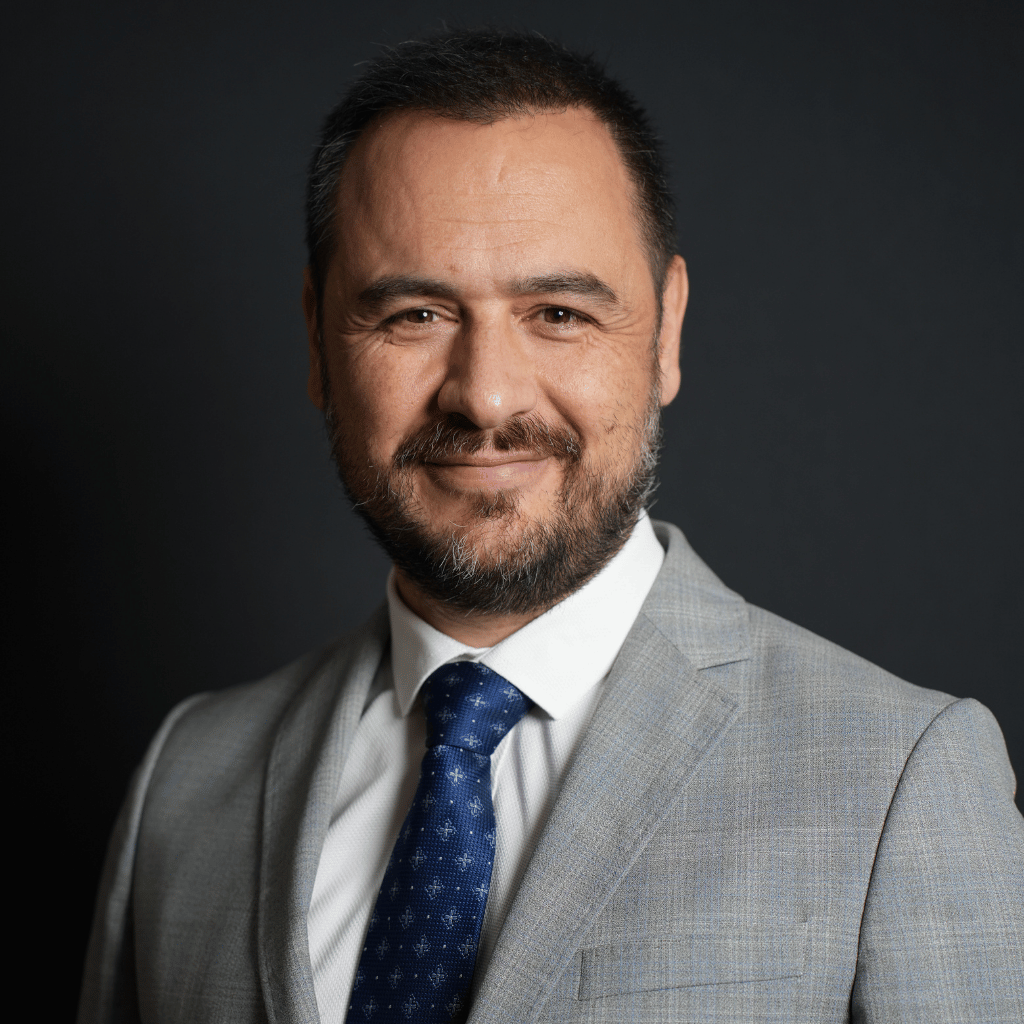
Dr. Mert Demirel
Dr. Mert Demirel is a European Board Certified Plastic, Reconstructive and Aesthetic Surgeon based in Istanbul, with over 20 years of medical experience and a strong focus on natural, balanced outcomes.
He approaches aesthetic surgery as a medically guided decision process, prioritizing anatomical suitability, long-term safety, and individualized treatment planning for each patient.