The honest answer is: sometimes. A circumferential correction after previous liposuction is often possible — but it is a different conversation from a first-time procedure. Revision is not simply “doing it again.” It is operating on tissue that has already been changed, and that changes the rules. Many people come to me hoping a second …
The honest answer is: sometimes. A circumferential correction after previous liposuction is often possible — but it is a different conversation from a first-time procedure. Revision is not simply “doing it again.” It is operating on tissue that has already been changed, and that changes the rules.
Many people come to me hoping a second procedure will be a straightforward finishing touch on a result that fell short the first time. I understand that hope, and sometimes it is realistic. But revision deserves a more careful, more conservative kind of planning, because previously treated tissue does not behave like untouched tissue.
Let me explain why — and how I think through whether a correction is worthwhile.
Treated tissue is not a blank slate
The most important thing to understand is that previously treated tissue can develop scar planes beneath the skin. Once an area has been suctioned, the layer under the surface is no longer smooth and uniform; it can heal with internal scarring that tethers and stiffens the tissue in ways you cannot always see from the outside.
Those scar planes have two consequences:
- They make the surface less predictable, because the skin no longer glides and redrapes over a clean, even layer.
- They reduce the safe range of correction, because working through scarred tissue is less forgiving and the margin for refinement is narrower.
In other words, the canvas has changed. A plan that ignores that and treats the area as if it were untouched is the fastest way to create new irregularities on top of old ones.
The torso has a kind of memory
There is a second phenomenon worth naming. In revision, the torso can behave as if it has tissue memory — a tendency to heal back toward patterns it has already learned.
This means that even a well-planned correction is working against an established healing behavior. Tissue that has scarred or contracted in a particular way may want to return to that pattern, which is exactly why over-ambitious revision so often disappoints. You are not painting on a fresh surface; you are negotiating with one that has habits.
Respecting that memory — rather than fighting it with intensity — is central to a sensible revision plan.
Defining the mechanism before touching anything
Because the stakes are higher, I do not start a revision by deciding what to remove. I start by defining the mechanism precisely. The real question is: what is actually causing the appearance the patient dislikes? Usually it is one of three things:
- Residual volume — there is genuinely some fat left that can be safely refined,
- A transition problem — the issue is a border or step-off between zones rather than excess volume, and the fix is blending, not removal,
- Skin behavior — the limitation is the skin itself (recoil or redundancy), in which case more suction will not help and may make things worse.
Each of these calls for a completely different response. Misreading a skin problem as a volume problem, or a transition problem as residual fat, is precisely how revisions go wrong. Defining the mechanism is most of the work.
Setting clearer ceilings
In primary surgery there is usually room to work. In revision, I deliberately set clearer ceilings — firmer limits on how much can safely and intelligently be done. The scar planes, the reduced predictability, and the tissue memory all narrow the safe window, and a good revision plan stays well inside it rather than pushing the edge.
This is not pessimism. It is the discipline that protects you from trading one irregularity for a worse one.
When revision is — and is not — the right move
So where does this leave the decision? Revision can be genuinely worthwhile when the problem is specific and stable — a clearly defined issue, in a settled body, with a realistic mechanism behind it. In those cases, a measured correction can deliver a meaningful improvement.
But I am equally clear about the other side: a circumferential correction is not a guaranteed finishing step. It is not a routine “phase two” that automatically polishes a first result. Sometimes improvement is realistic and worth pursuing. And sometimes — when the tissue is too scarred, the problem too diffuse, or the gain too small for the risk — escalation is not intelligent, and the better recommendation is to leave well enough alone.
In revision surgery, restraint matters even more than in a first procedure. The goal is a specific, achievable improvement — not another full attempt at a perfect result the tissue may no longer allow.
So, can you still have a circumferential correction after previous liposuction? Often, yes — but only after an honest assessment of what your tissue has become, a precise diagnosis of the actual mechanism, and a conservative plan with sensible limits. When those conditions are met, revision can be a real improvement. When they are not, the most valuable advice I can give is to recognize when not to push further.
This article is intended for general education and does not replace an individual consultation. Whether revision is appropriate for you can only be determined through a personal evaluation of your anatomy, prior treatment, health history, and goals.
Take the next step
If you have had liposuction before and want an honest assessment of whether a correction can help — and how much is realistically achievable — the best place to start is a personal evaluation. In an online consultation we can review your prior treatment, your current tissue, and your goals together, and decide on a conservative, well-defined plan.
Book your online consultation to discuss your previous procedure and get a candid view of what a revision can realistically offer.
Op. Dr. Mert Demirel
European Board Certified Plastic Surgeon (EBOPRAS)
ISAPS & ASPS Member
Istanbul, Turkey
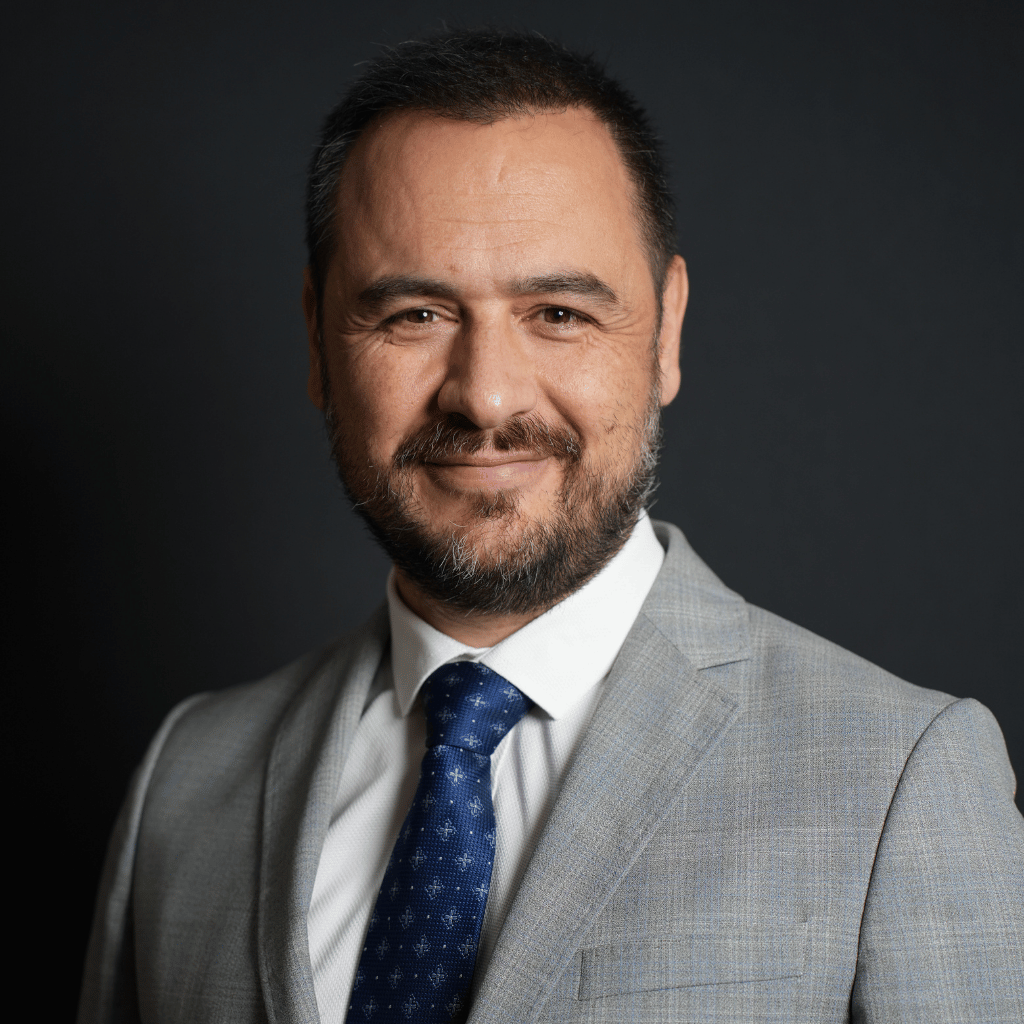
Dr. Mert Demirel
Dr. Mert Demirel is a European Board Certified Plastic, Reconstructive and Aesthetic Surgeon based in Istanbul, with over 20 years of medical experience and a strong focus on natural, balanced outcomes.
He approaches aesthetic surgery as a medically guided decision process, prioritizing anatomical suitability, long-term safety, and individualized treatment planning for each patient.