Underarm fullness is a common concern, but it is not always the same problem in every patient. Some patients have mostly fat in this area. Some have accessory breast tissue, which means breast-type glandular tissue located outside the usual breast boundary. Many patients have a mixed pattern. The difference matters, because the treatment plan changes …

Underarm fullness is a common concern, but it is not always the same problem in every patient. Some patients have mostly fat in this area. Some have accessory breast tissue, which means breast-type glandular tissue located outside the usual breast boundary. Many patients have a mixed pattern. The difference matters, because the treatment plan changes completely depending on what the tissue actually is.
The honest answer is that you cannot reliably diagnose this from one photograph, one short message, or the simple fact that the area “looks full.” The axilla is a complex transition zone. It includes the breast tail, the lateral chest wall, the upper arm, lymphatic and soft tissue structures, skin quality, and the natural fold of the underarm. A fullness that appears obvious in one arm position may look very different when the arm is relaxed, lifted, or pulled backward.
This is why I do not begin by agreeing with the patient’s label. I begin by defining the problem.
Fat, glandular tissue, or mixed fullness
Fatty fullness is usually softer and more diffuse. It tends to blend into the surrounding chest wall or upper arm. When the patient gains weight, it may become more visible; when weight is lost, it may improve. It is often more about contour and volume than a distinct, separate lump.
Glandular accessory breast tissue often feels firmer. It may be more localized, more resistant to weight loss, and sometimes more sensitive during hormonal changes. Patients may describe it as a separate fullness in the underarm rather than general fat. However, this is not absolute. Some glandular tissue can feel relatively soft, and some fatty areas can feel firmer than expected because of fibrosis, skin thickness, or previous inflammation.
Mixed fullness is very common. There may be a fatty layer around or above a glandular component. This is the pattern where treatment decisions become more nuanced. If only the fat is treated, the gland may remain. If only the gland is removed without contouring the surrounding transition, the result may look abrupt. A good plan must respect both the tissue type and the shape of the area.
Why self-diagnosis is difficult
Many patients try to understand the difference by touching the area at home. This can offer some clues, but it is not a diagnosis. The underarm is not an easy region to examine on yourself. Arm position changes the tension of the skin and the shape of the fold. The breast tail can move toward the axilla. The lateral chest wall can create a natural convexity. Even posture and shoulder position can make the area appear more or less prominent.
Photos can also be misleading. A photo with the arm pressed against the body may exaggerate underarm fullness. A photo with the arm lifted may stretch the skin and hide the true volume. Lighting, angle, bra position, clothing, and camera distance can all change the appearance.
This is why a treatment plan based only on a picture can be risky. A photograph may show the contour problem, but it does not always explain what creates that contour.
Clues that suggest a fatty pattern
A predominantly fatty pattern is more likely when the fullness is soft, broad, and diffuse. It may feel similar to the surrounding tissue rather than like a separate mass. It may increase with general weight gain and improve with weight loss. The contour may be more noticeable in tight clothing, sports bras, or sleeveless outfits, but there is usually no clear firm structure underneath.
In this pattern, liposuction may be a reasonable option if the skin quality is good and the main goal is contour reduction. The purpose is not to aggressively hollow the axilla. The purpose is to soften the transition so the area looks quieter in daily movement and clothing.
But even when the issue is mostly fat, there are limits. If the skin is loose, if the fold is deep, or if the fullness is caused by the natural breast tail rather than isolated fat, liposuction alone may not create the result the patient imagines. In some cases, the bulge a patient identifies as “fat” is actually a normal anatomical extension of the breast that should not be aggressively suctioned.
Clues that suggest accessory breast tissue
Accessory breast tissue is more likely when the fullness feels firmer, more localized, or more resistant to weight changes. Some patients notice that it becomes more sensitive, swollen, or visibly larger during menstrual cycles, pregnancy, or breastfeeding. This hormonal behaviour can suggest a glandular component, because breast-type tissue can respond to hormonal changes in the same way the breast itself does.
However, this clue is helpful but not definitive. Not every patient with accessory breast tissue has hormonal symptoms. Not every patient with cyclical discomfort has a large glandular component. The history supports the diagnosis; it does not replace examination.
When a meaningful glandular component exists, liposuction alone is usually not enough. Suction is excellent for fat, but it is not designed to remove dense glandular tissue reliably. If glandular tissue is treated as if it were only fat, the patient may see some reduction but still feel that the main problem remains. This is one of the most common reasons patients say a previous procedure “did not work.”
The role of skin
Skin is often underestimated in underarm fullness. Patients usually focus on the bulge, but the skin envelope determines how the area will look after volume is reduced.
If the skin is firm and elastic, it may contract well after fat reduction. If the skin is loose, stretched, or folded — for example after significant weight loss, after pregnancy, or with age — removing volume alone may leave laxity behind. In some patients, the issue is not only “what is inside,” but also how much skin must be managed.
This is one reason the same operation cannot be offered to everyone. A young patient with soft fatty fullness and good skin needs a different plan from a patient with glandular tissue and skin redundancy. Both may describe the problem as “underarm fat,” but surgically they are not the same case.
How history and lifestyle help
The story of the fullness often gives more information than the photo.
I usually want to understand:
- When did you first notice it?
- Has it changed with weight gain or weight loss?
- Does it become more obvious before menstruation?
- Did it appear or worsen during pregnancy or breastfeeding?
- Is it tender, painful, or only visible?
- Does it bother you only in certain clothes or all the time?
- Has it grown over the years, or has it stayed stable?
A fullness that is stable, soft, and lifestyle-related behaves differently from a fullness that grows with hormonal events, becomes tender, or feels firm to the touch. These patterns help me decide whether the conversation should focus on contouring or on tissue removal.
Why imaging is sometimes useful
In selected cases, imaging can be helpful — particularly when there is a discrete firm mass, when the fullness is asymmetric, or when there are symptoms that need to be evaluated before any aesthetic decision. Ultrasound, for example, can help distinguish fatty tissue from glandular tissue and identify whether there is anything that requires medical attention before surgery.
I do not order imaging for every patient with underarm fullness. But I do not avoid it when the examination raises any clinical question. Aesthetic surgery should never be performed at the cost of skipping a relevant medical evaluation.
Why the diagnosis changes the operation
The diagnosis matters because each tissue type responds to a different method.
If the fullness is mostly fat, liposuction may be enough. If the fullness is mostly glandular tissue, direct excision may be necessary. If the pattern is mixed, a combined approach may be more logical. If loose skin is part of the problem, the scar discussion becomes even more important, because skin cannot be removed without an incision.
This is where unrealistic expectations often begin. Patients naturally prefer the smallest scar and the easiest recovery. That is understandable. But the smallest operation is not always the most appropriate operation. If the chosen technique does not match the anatomy, the result may be incomplete, irregular, or disappointing — and a second operation in the same area is rarely as clean as a correctly planned first one.
A conservative plan does not mean avoiding the necessary step. It means doing only what the anatomy justifies, and not more.
What I evaluate during consultation
In consultation, I look at the underarm both as tissue and as a moving contour. I want to understand not only what is present, but also how it behaves.
I usually assess:
- Whether the fullness feels soft, firm, or mixed.
- Whether there is a discrete glandular component.
- Whether the fullness changes with arm position.
- How the breast tail blends into the axilla.
- Whether the lateral chest wall contributes to the appearance.
- Whether the skin is elastic or loose.
- Whether there are symptoms such as tenderness, swelling, friction, or discomfort.
- Whether the patient’s concern is mainly aesthetic, functional, or both.
- Whether the expected improvement is realistic for the amount of tissue present.
- Whether the scar trade-off is acceptable if excision is required.
This process is not about making the surgery more complicated. It is about choosing the correct level of treatment.
Why “just fat” can be an oversimplification
Many patients use the phrase “underarm fat” because that is the language they see online. But the label can be misleading. One patient may call it fat because it is visible as a soft bulge. Another patient may call it accessory breast tissue because they have read about the condition. Neither label is enough on its own.
The real question is anatomical: What tissue is creating the contour, and what must be done to correct it safely?
If the answer is fat, the plan can be simpler. If the answer is glandular tissue, the plan must include a discussion about excision and scarring. If the answer is mixed, the plan must balance removal, contouring, scar placement, and the natural movement of the underarm.
Common misconceptions
A few ideas appear repeatedly in patient conversations, and they are worth correcting calmly.
“If liposuction did not work, surgery cannot help.” This is not accurate. In many cases, liposuction did not work because the tissue was not mainly fat. A correctly planned excision can still improve the contour.
“If it is glandular, it must be cancerous or dangerous.” Accessory breast tissue is generally a normal variant. It is not automatically dangerous. But because it is breast-type tissue, any unusual change should be evaluated, just as it would be in the breast itself.
“The smaller the scar, the better the result.” A smaller scar is preferable when the anatomy allows it. But a scar that is too short for the tissue being removed can produce bunching, irregularity, or incomplete correction. A well-placed, slightly longer scar can produce a calmer final contour.
“It will come back if you do not remove everything.” Aggressive removal does not protect against recurrence in the way patients sometimes assume. Hormonal influence, weight changes, and natural anatomical variation matter more than how aggressively the area was treated. Over-removal often creates a new problem instead of preventing the old one.
What to expect from a careful consultation
A careful consultation is rarely a quick yes or no. It usually includes:
- A focused history of the fullness.
- A physical examination with the arm in different positions.
- An honest conversation about whether the problem is mainly fat, mainly glandular, or mixed.
- A discussion of what each technique can and cannot achieve in your specific case.
- A clear explanation of scar placement and the realistic range of healing.
- An explanation of the recovery period, including movement restrictions and aftercare.
- A discussion of whether the contour benefit is worth the trade-off in your daily life and clothing choices.
If a consultation skips most of these steps and offers a single technique to every patient, that is a warning sign. Underarm fullness is too variable to be treated with one fixed answer.
The realistic answer
So, how do you know if your underarm fullness is accessory breast tissue or just fat?
You can look for clues: softness, firmness, weight-change behaviour, hormonal sensitivity, skin quality, and whether the fullness feels diffuse or separate. These clues can guide the conversation. But they do not replace proper examination.
In my practice, I prefer to define the tissue before recommending the operation. Treating glandular tissue like fat is one of the common reasons liposuction disappoints in this area. Treating a mainly fatty contour with unnecessary excision can also create a scar the patient did not need. Both errors come from the same root cause: starting with a technique instead of starting with the anatomy.
The goal is not to name the problem quickly. The goal is to understand it accurately.
A good treatment plan should answer three questions clearly: What is the tissue? What is the least invasive method that can treat it properly? And what trade-off — scar, recovery, contour change, or limitation — does the patient need to accept?
That is how underarm fullness should be evaluated: not with a promise, not with a shortcut, but with a careful anatomical decision and a realistic conversation about what surgery can and cannot do.
Op. Dr. Mert Demirel
European Board Certified Plastic Surgeon (EBOPRAS)
ISAPS & ASPS Member
Istanbul, Turkey
Sent via Notion Automations
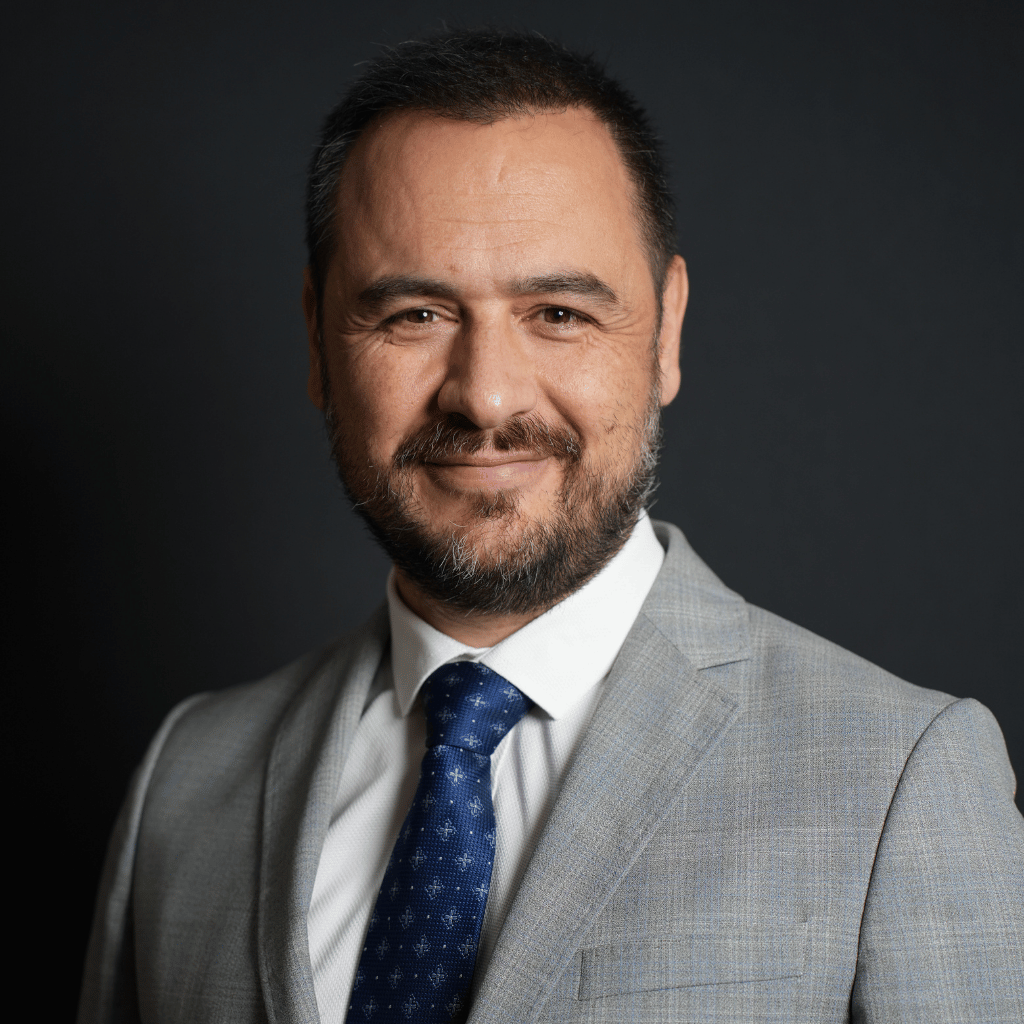
Dr. Mert Demirel
Dr. Mert Demirel is a European Board Certified Plastic, Reconstructive and Aesthetic Surgeon based in Istanbul, with over 20 years of medical experience and a strong focus on natural, balanced outcomes.
He approaches aesthetic surgery as a medically guided decision process, prioritizing anatomical suitability, long-term safety, and individualized treatment planning for each patient.