Who is a reasonable candidate for accessory breast tissue removal? Many patients walk into this consultation having already made up their minds. What they are looking for, often without realising it, is not a technical answer about whether the operation is feasible — it almost always is — but a far more personal one: is …

Who is a reasonable candidate for accessory breast tissue removal?
Many patients walk into this consultation having already made up their minds. What they are looking for, often without realising it, is not a technical answer about whether the operation is feasible — it almost always is — but a far more personal one: is this the right operation for me, in this body, at this stage of my life? Those two questions sound similar, but they lead to very different conversations. Only the second one is a conversation about candidacy.
A persistent fullness under the arm has a way of feeling permanent in the mirror, but candidacy is not measured by how the area looks in a photograph. It is measured by what the tissue is, how the body around it behaves, and what the patient hopes to gain when weighed against what surgery realistically offers. The right question is rarely whether surgery is possible; it is whether surgery is proportionate.
This article explains how candidacy is actually assessed: the anatomical drivers that make an operation indicated, the trade‑offs between different patient profiles, and the expectations that separate a patient who will be glad they had surgery from one who will not. It is written for the patient who wants to know, honestly, whether they are the right person for this procedure — not for the patient looking for permission.
Define the problem before the procedure
What “a candidate” actually means
Candidacy is not a single threshold; it is a set of overlapping conditions that, taken together, predict whether surgery will produce a result the patient values. In this region, three drivers carry most of the weight.
- Nature of the tissue – A reasonable candidate has a persistent under‑arm fullness that behaves differently from ordinary weight fluctuation. It does not disappear when the patient is at their lowest stable weight. It does not respond meaningfully to exercise. It has a recognisable composition — glandular, fibrofatty, or a true ectopic breast — that surgery can actually address. A bulge that fluctuates entirely with weight is usually a different problem, with a different answer.
-
Skin envelope – Even with the right tissue, candidacy depends on what the skin will do once the underlying volume is reduced. A patient with good skin recoil can tolerate a volume‑only approach without leaving a fold. A patient with redundant or stretched skin needs a plan that includes the envelope; otherwise, removing volume simply exposes laxity that was not visible before. Skin behaviour is not a footnote in candidacy — it often is the candidacy.
-
Symptom and expectation profile – Some patients are primarily bothered by the contour in sleeveless clothing. Others have functional issues: friction, tenderness, cyclical swelling, or limitations with bras and sportswear. Both indications are legitimate, but they shape candidacy differently. A purely aesthetic complaint must be weighed against scar reality with extra honesty, because the operation is being asked to deliver an appearance, not to resolve a symptom.
The dominant driver of candidacy is rarely a single factor. It is the alignment of tissue, envelope, and intent.
Options (and trade‑offs)
Where different patient profiles land
Once the three drivers are clear, candidacy resolves into a small number of patterns, each with its own trade‑offs.
- Straightforward candidate – Clearly defined fullness, predominantly fatty or fibrofatty tissue, good skin recoil, stable weight, and realistic expectations about a refined — not perfect — contour. A contouring‑led approach with hidden access points is often appropriate; the trade‑off is mostly time: a settling curve measured in months rather than weeks.
-
Glandular‑dominant candidate – Identifiable breast‑type tissue, often with cyclical tenderness or swelling, and willingness to accept a small, well‑placed scar in exchange for a result that does not relapse with weight. Trade‑off: a scar justified by meaningful gain in contour and symptom relief.
-
Envelope‑limited candidate – Redundant skin from prior weight change, pregnancy, or aging. Volume‑only plan is rarely appropriate. Trade‑off: longer scar for better long‑term shape; the most honest plan usually addresses the envelope rather than hoping the skin will retract.
-
Borderline candidate – Indication is real but small; surgery would be technically possible but not clearly proportionate. Doing nothing is often the best plan, at least for now. Not every fullness is a surgical problem.
Before committing to a plan, I work through a short clinical checklist with the patient:
- Driver: Is the dominant tissue glandular, fatty, envelope, or a combination — and does the proposed operation actually address it?
- Skin envelope: Will the skin recoil after volume is removed, or is excision the only honest way to avoid a fold in motion?
- Trade‑off: If a scar is required to deliver the desired contour, is that trade‑off acceptable to the patient as they actually live, not as they imagine themselves?
- Timeline: Are expectations refinement‑based, with months of settling, rather than image‑based with a fixed deadline?
When those four answers are clear, candidacy stops being a label and becomes a plan.
Time‑course realism
What a good outcome looks like, and when
Candidacy is partly a question of patience. A patient who is anatomically suitable but expects a perfectly flat axilla, no scar, and a final result by week three is not a good candidate — not because the anatomy is wrong, but because the expectation does not match how this region heals.
- First weeks – Swelling, firmness, and uneven appearance are the rule, not the exception. The contour during this window is provisional; early judgment is premature. Early is not final.
-
Three months – Most swelling has resolved, the scar (if present) has entered its maturation phase, and the contour begins to look like itself.
-
Six to twelve months – The result can reasonably be judged as final, with small refinements possible beyond that point in selected cases.
General health, smoking status, and weight stability quietly shape this timeline more than patients expect. A candidate who smokes or has unstable weight is not necessarily disqualified, but the conversation must acknowledge that healing quality and long‑term stability are partly within the patient’s control, not only the surgeon’s. In practice, the patients who do best are the ones who treat candidacy as a shared responsibility: they bring stable habits, realistic expectations, and a willingness to let the body finish the work surgery began.
Closing
The governing variable in candidacy is proportion. The procedure should follow the diagnosis, not the other way around — and the diagnosis includes the patient’s life, not only their anatomy. A good candidate is someone for whom a careful operation will produce a meaningful, durable improvement that they will value years later. Anyone outside that description is better served by waiting, by gathering more information, or by deciding that surgery is not the right tool for what they are trying to change.
If you are weighing this operation, an unhurried evaluation is the most useful next step. It is also entirely reasonable to wait, to revisit the question in a different season of life, or to decide that the answer is no. A consultation is for evaluation; declining surgery, when chosen with clear eyes, is a valid plan.
Op. Dr. Mert DemirelEuropean Board Certified Plastic Surgeon (EBOPRAS) ISAPS & ASPS MemberIstanbul, Turkey
Sent via Notion Automations
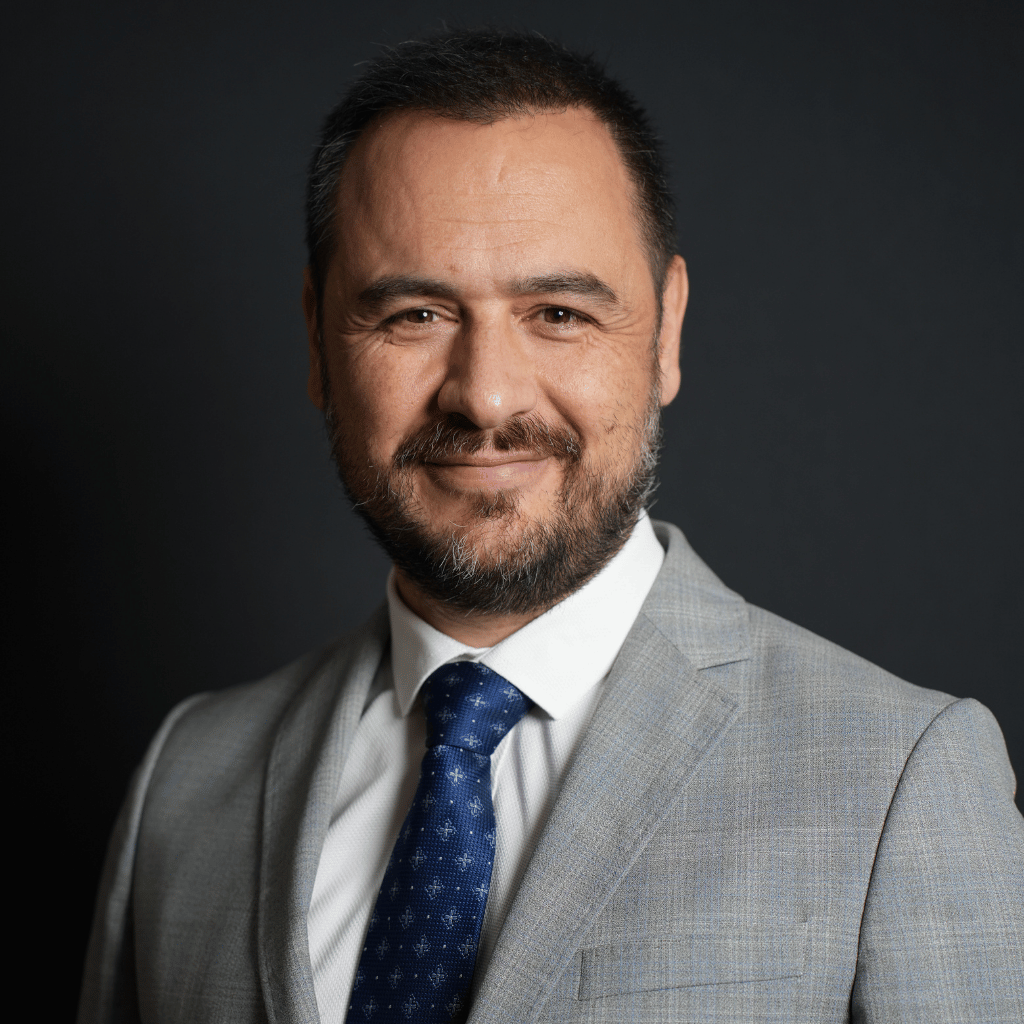
Dr. Mert Demirel
Dr. Mert Demirel is a European Board Certified Plastic, Reconstructive and Aesthetic Surgeon based in Istanbul, with over 20 years of medical experience and a strong focus on natural, balanced outcomes.
He approaches aesthetic surgery as a medically guided decision process, prioritizing anatomical suitability, long-term safety, and individualized treatment planning for each patient.