The honest answer to whether alar base reduction leaves scars is yes. Any operation that involves cutting and suturing skin leaves a scar. The more useful question — and the one that usually underlies the patient's concern — is what kind of scar, in what location, and whether it will be visible at conversational distance …
The honest answer to whether alar base reduction leaves scars is yes. Any operation that involves cutting and suturing skin leaves a scar. The more useful question — and the one that usually underlies the patient’s concern — is what kind of scar, in what location, and whether it will be visible at conversational distance a year from now. Those three questions have much better answers than the blunt one.
This is an article about what the scar actually looks like, why its location matters more than its existence, and what separates a scar that disappears into the face from one that does not.
Where the incision is placed
The defining characteristic of a well-planned alar base reduction is that the scar sits inside a natural feature of the face: the alar crease. This is the small, curved groove where the nostril meets the cheek. It is a feature everyone has, at varying depth, and it has two properties that make it the ideal hiding place for a scar:
- It casts a shadow. Even in bright, diffuse light, the alar crease produces a small shadow line. A scar placed precisely at the bottom of that shadow is visually absorbed into it.
- It is a line the eye already expects to see. The visual system reads the alar crease as normal anatomy. A scar in the exact location of that crease is interpreted as an anatomical feature rather than as a surgical line.
When the incision is placed correctly — tracing the curve of the alar crease and staying within it — the scar matures into something that is visible only on close inspection, and often not even then. This is why incision placement is the single most important technical decision in the operation.
Scar location varies with technique
Alar base reduction is not a single operation; it is a family of techniques, each with a different incision pattern. The choice depends on what part of the base needs reducing.
- Alar crease incision (external flare reduction). Used when the outer lateral flare of the nostril is the dominant concern. The scar sits precisely in the curve where the nostril meets the cheek. When healed, it is typically the best-camouflaged option.
- Sill incision (internal nostril base reduction). Used when the nostril floor, not the lateral flare, is the main issue. The scar lies at the transition between the nostril floor and the upper lip, partially hidden in the natural shadow beneath the nose.
- Combined technique. Used when both flare and base width need addressing. Scars are placed in both the alar crease and the sill, each contributing to the overall narrowing.
- Internal (vestibular) incision. In very selected patients with specific geometry, some of the tissue can be addressed through an incision inside the nostril. This is not always possible and depends on the anatomy. When it is an option, part of the scar is hidden inside the nasal vestibule where it is invisible externally.
Each technique has trade-offs. The surgeon’s job is to choose the incision pattern that fits the specific anatomy — not the one that sounds most appealing in theory, and not the one that avoids external scars at the cost of an under-powered result.
What the scar looks like over time
A well-placed alar reduction scar passes through a predictable maturation process. Patients often misjudge an early scar as the final scar, and that misjudgement is the most common source of unnecessary worry during healing.
- Weeks 0–2. Pink or slightly red, mildly raised, occasionally with small crusts along the suture line. The scar looks like a recent incision because that is what it is.
- Weeks 2–8. Sutures out, colour still pink but gradually softening. The scar may occasionally feel firm to the touch. This is normal.
- Months 2–6. Colour fades progressively. The line begins to flatten and integrate with the surrounding skin. Many patients report that they stop noticing the scar somewhere in this window.
- Months 6–12. Final stages of colour normalisation. The scar matches surrounding skin tone more closely. For most patients with unremarkable skin biology, the scar is by this point well-camouflaged in the alar crease.
- Year 1 and beyond. Final maturity. Patients often describe having to search for the scar to find it.
This timeline holds for most patients. The variables that change it are skin type, scarring history, and aftercare.
Why some scars are more visible than others
Not every alar reduction scar ends up invisible at a year. The factors that make a scar more noticeable, in decreasing order of importance:
- Incision placed outside the natural alar crease. The single biggest determinant of visible scarring. Even a millimetre or two outside the crease places the scar on unshadowed skin where it has nothing to hide in.
- Skin type predisposed to hypertrophic or keloid scarring. Some patients scar more visibly regardless of where the incision is placed. A personal or family history of problematic scarring in face or neck locations is an important consultation point.
- Darker skin types. Post-inflammatory hyperpigmentation can make the scar appear darker than surrounding skin for months to over a year. This is a normal feature of certain skin types rather than a complication, but it extends the timeline of visibility.
- Excessive tension on the wound. An over-aggressive reduction can close the skin under more tension than it should carry, leading to a scar that widens or becomes thicker as it heals.
- Sun exposure during healing. UV light accelerates pigmentation in fresh scars. Patients who expose fresh scars to the sun — even incidentally — can end up with scars that take a year longer to fade.
- Infection or wound dehiscence. Uncommon, but occasional. Any healing complication in the first weeks can produce a scar that is wider or more irregular than it should be.
- Smoking. Impairs healing at every step. Patients who continue to smoke during the healing window have measurably worse scars.
Almost all of these factors are either identifiable before surgery (skin type, scar history, smoking status) or controllable after surgery (sun exposure, aftercare). That makes scar outcome far more predictable than patients often assume.
What can be done to support healing
A short, honest list of practices that genuinely help. Things that reliably improve scar outcome:
- Sun protection for at least three months. Physical sunblock applied consistently. This is the single most effective thing a patient can do, and the one most commonly skipped.
- Silicone gel or sheets in the first few months. Particularly helpful for patients with thicker skin or a family history of problematic scarring. Evidence-based and low-effort.
- Gentle, careful cleansing during early healing. Keep the incision clean without harsh products, aggressive scrubbing, or exfoliants.
- Avoid mechanical trauma. No picking, no repeatedly touching the scar, no unnecessary manipulation.
- Address active acne or rosacea at the alar crease before surgery if possible. Healing skin does not do its best work while simultaneously managing an active skin condition.
- Follow the post-operative instructions as written. This is unglamorous advice, but the patients who follow it carefully do better than those who improvise.
Things that sound helpful but usually are not:
- Starting elaborate skincare routines on a fresh scar. More is not better. Basic cleansing plus sun protection outperforms complicated regimens.
- Over-the-counter "scar" creams with unclear evidence. Some have their place; most are decorative.
- Massaging a scar before it is fully sealed. Can delay healing rather than support it.
- Applying heat or certain home remedies to fresh incisions. Occasionally seen on social media; not recommended.
Managing a scar that is not healing as hoped
If a scar is hypertrophic, pigmented, widened, or persistently visible at three to six months, there are options. I usually wait until around the six-month mark before deciding to intervene, because many scars that look problematic at three months settle on their own by six.
When intervention is genuinely needed, the tools are well-established:
- Intralesional steroid injections. Useful for hypertrophic scars that are thickening rather than fading. Administered in small, careful doses.
- Laser treatments. Particularly for persistent redness or pigmentation. Several sessions, spaced out over months.
- Pressure therapy or silicone. Helpful for scars that are still maturing and responding to biomechanical support.
- Surgical revision as a last resort. Reserved for scars that have failed conservative management and where a second surgical intervention is likely to produce a better result than the original healed scar. Not commonly needed after a well-planned primary alar reduction.
Most scars that give patients concern at two or three months do not need any of this. They need time. The honest conversation during follow-up is to distinguish between scars that are in a normal phase of healing and ones that are genuinely off-trajectory.
A grounded summary
Alar base reduction does leave a scar, and pretending otherwise is not a favour to the patient. The scar sits, when the surgery is well-planned, inside the natural alar crease, where it has a shadow to hide in and an anatomical line to disguise it as. Over the first year, the scar fades through a predictable sequence into something that is typically imperceptible at conversational distance.
The scar’s final appearance is determined by where it was placed, how the patient’s skin heals, and whether sensible aftercare was followed. Surgeons control the first of those directly and influence the third by giving clear instructions. Patients, by respecting the aftercare and by not judging early scars as final, do more than they realise to shape the outcome they end up with. A year after a conservatively planned alar reduction, most patients have to stop and hunt for the scar before they can show it to someone. That is the outcome to aim for, and it is the outcome that honest planning tends to deliver.
Op. Dr. Mert Demirel
European Board Certified Plastic Surgeon (EBOPRAS)
ISAPS & ASPS Member
Istanbul, Turkey
Sent via Notion Automations
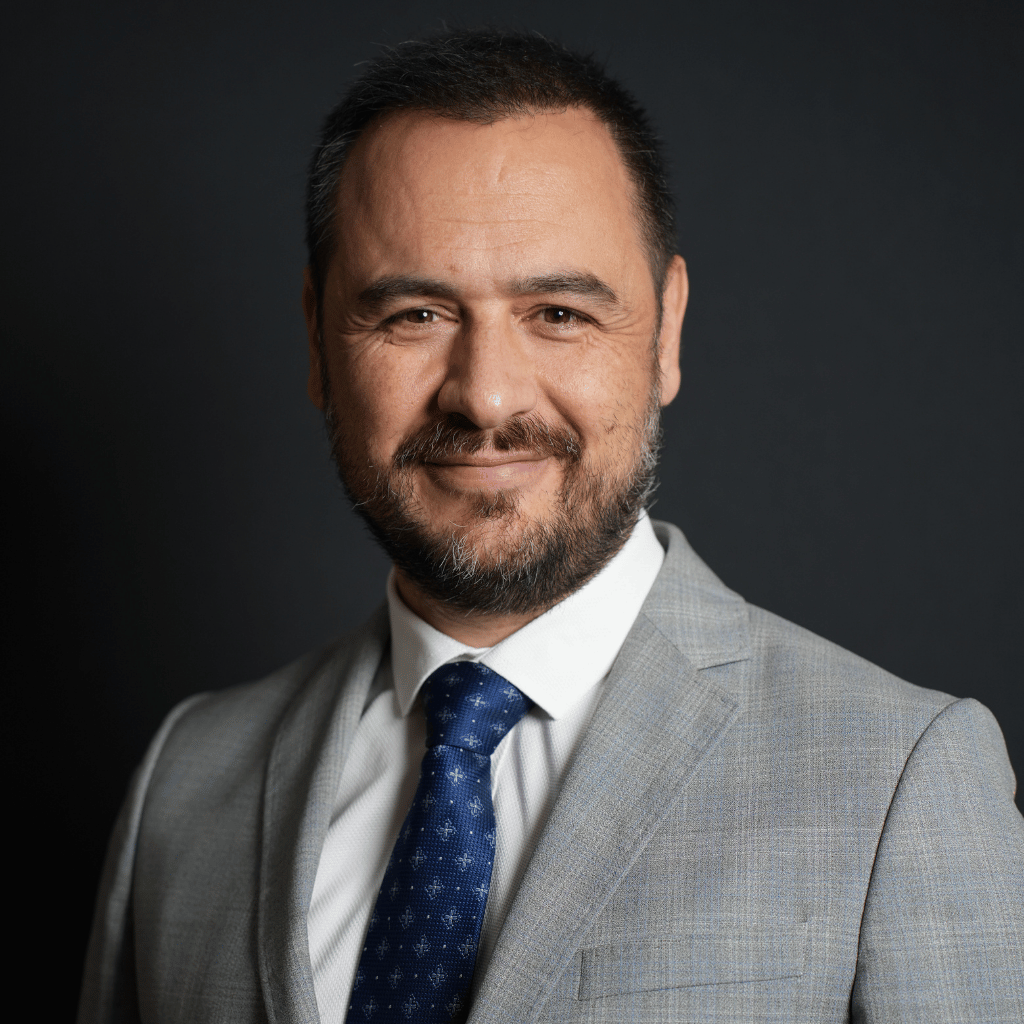
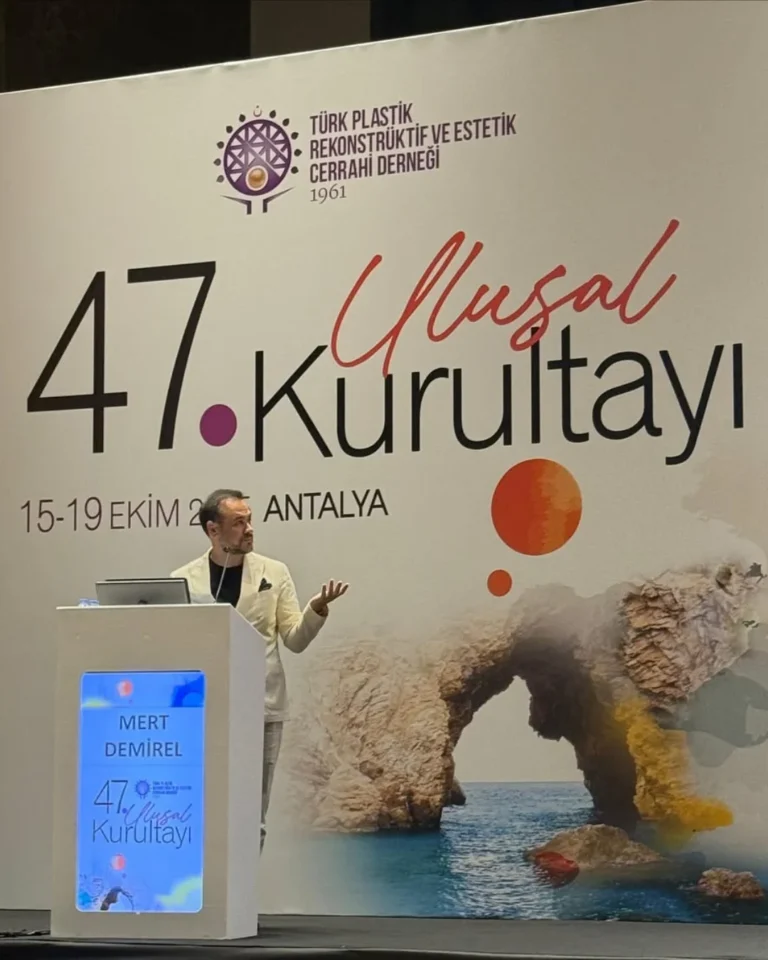
Dr. Mert Demirel
Dr. Mert Demirel is a European Board Certified Plastic, Reconstructive and Aesthetic Surgeon based in Istanbul, with over 20 years of medical experience and a strong focus on natural, balanced outcomes.
He approaches aesthetic surgery as a medically guided decision process, prioritizing anatomical suitability, long-term safety, and individualized treatment planning for each patient.