Every surgeon keeps a private mental file of operations they declined and never regretted declining. For me, alar base reduction occupies a surprisingly prominent place in that file. It is a small procedure, technically simple in the right hands, and the patients who ask for it are usually polite, motivated, and specific about what they …

Every surgeon keeps a private mental file of operations they declined and never regretted declining. For me, alar base reduction occupies a surprisingly prominent place in that file. It is a small procedure, technically simple in the right hands, and the patients who ask for it are usually polite, motivated, and specific about what they want. That makes it easy to say yes. Learning when to say no — and meaning it — takes longer.
This is not an article about complications of the operation. It is an article about a subtler mistake: operating on the wrong patient, on the right operation, for reasons that seemed reasonable in the consultation.
The diagnostic question that drives the decision
The central question I sit with before agreeing to any alar base reduction is not "is this technically possible?" but "will reducing the alar base solve the thing that bothers this specific patient?" Those two questions look similar. They are not. A technically perfect operation on the wrong diagnosis produces a disappointed patient and an unaltered complaint.
Below are the patterns in which the honest answer to that second question is no — or at least, not yet.
When the complaint lives somewhere other than the base
The most common reason I decline is that the patient has localised a concern to the alar base that actually originates elsewhere. A few versions:
- The tip is the driver. The patient perceives wide nostrils, but a careful look shows a bulbous or poorly defined tip sitting above them. Narrowing the base while leaving the tip untouched produces a mismatched nose that often looks worse than the starting point. The correct conversation here is about tip refinement, not base reduction. If the patient does not want tip surgery, the correct answer is frequently no surgery at all.
- The dorsum is wide or low. A flat or broad dorsum can make the base look wider than it is. Reducing the base without addressing the upper nose leaves a narrowed bottom on a broad top — visually uneasy rather than improved.
- The nose is deviated. Asymmetric nostrils often reflect a deviated septum and asymmetric tip cartilages, not genuinely wide alae. Operating on the alar base in a deviated nose reveals and sometimes exaggerates the deviation rather than correcting it.
- The problem is the upper lip, not the nose. A short upper lip, a prominent columella, or a visible nasal sill can make the base look more prominent than it actually is. The correct intervention may not be on the nose at all.
None of these patients have bad noses. They have noses whose dominant concern is not the alar base. They deserve a plan that matches the anatomy.
When the anatomy is already within a reasonable range
A second category: patients whose alar base is objectively within normal proportions, but who perceive it as wide. This perception can come from any number of legitimate sources — photographs taken in unflattering angles, comparisons to edited images, ethnic or cultural self-consciousness, a single feature anchored during a period of general dissatisfaction. These patients are not irrational. They are misreading their own anatomy.
The honest recommendation is usually to not operate. Reducing a base that is already proportional produces a nose that looks too narrow for the face — a specific and recognisable cosmetic problem that is harder to reverse than the original perceived width.
I have found that patients in this category are best served by a careful examination that involves showing them measurements on their own photographs. Seeing the intercanthal line and their own alar width side by side often changes the conversation more effectively than my opinion alone. A surprising proportion of these patients leave the consultation having decided, on their own, that no surgery is needed.
When the underlying expectations are misaligned
There is a category of patient who arrives at an alar base reduction consultation having already decided it is the answer to a broader unhappiness. They may feel their face looks tired, that their photographs do not look like them, that their appearance has changed in ways they do not like. The alar base has become the focus of that broader feeling, but it is not the source of it.
These patients are, in most cases, not surgical candidates for a small operation. The complaint is bigger than the intervention being proposed. After surgery, the broader feeling returns, and sometimes attaches itself to a new feature. I have learned to be gentle but firm about declining these operations. The patient is not asking for what a small alar reduction can deliver, even if they are using that language.
The right response is usually a longer conversation, occasionally a referral to a different specialty, and sometimes a slow return to the topic months later with a clearer head.
When the surgical margin is too narrow for the specific patient
Some patients are technically possible to operate on but have anatomical features that make a good result unusually hard to deliver reliably. Examples:
- Very thick, sebaceous skin. Heals with pronounced scarring and is harder to camouflage at the alar crease. The trade-off for a modest width reduction may be a scar that draws more attention than the original width did.
- A history of hypertrophic or keloid scarring. Particularly at the face or neck. Any incision at the alar crease in these patients is a legitimate risk. The correct conversation is about what scar outcome is realistic, and whether the anticipated cosmetic gain justifies the scar risk.
- Previously compromised alar vascular supply. From prior surgery, prior injury, or occasional systemic conditions. Aggressive reduction in these patients risks tissue that cannot afford additional insult.
- Active dermatological conditions at the site. Acne, rosacea, or inflammatory skin disease at the alar crease can interfere with healing and extend or compromise scar maturation.
In most of these patients, the operation is still technically performable. The honest question is whether it should be performed. For some, the answer is yes with specific precautions. For others, the answer is to defer or decline.
When the patient has not had enough time since a prior procedure
Secondary alar base reductions in patients who have had recent rhinoplasty or other nasal surgery are another category where "not yet" is usually a better answer than "no." Tissue that is still maturing is tissue I do not want to disturb. Operating into fresh scar, on swelling that has not fully resolved, or on a result that has not yet settled to its final shape, is a recipe for a second procedure that does not produce what either the patient or the surgeon was hoping for.
For most secondary cases, twelve months between procedures is a reasonable minimum. In some, considerably longer. The time is not wasted; it is part of what makes the second operation predictable.
When the conversation itself is a warning
Some consultations go subtly wrong before any clinical decision is made. A few of the patterns I have learned to pay attention to:
- The complaint shifts between appointments. A patient who described one concern in the first consultation and a different one in the second may not yet know what they are asking for.
- The reference images are highly idealised or clearly edited. A patient showing me a nose that cannot exist in three-dimensional anatomy is telling me something about the target they are chasing.
- A sense that one operation is being positioned as the solution to a broader feeling. This is usually the most important signal to slow down.
- External pressure. A partner, parent, or social circle pressing for a procedure the patient is not fully committed to. The operation that follows almost never makes anyone happier.
None of these are absolute contraindications. They are reasons to spend more time in the consultation before committing to an operation.
Why declining is a form of care
Patients sometimes experience a refusal to operate as a rejection, or as an over-cautious response. I understand the feeling, but I have come to believe that the willingness to decline the wrong operation is among the more important things a surgeon offers. A patient who is declined from an inappropriate alar reduction keeps open every option that a poorly planned operation would close. A patient who is operated on inappropriately often ends up facing revision surgery that is harder than the original would have been — sometimes considerably harder.
Declining is not the same as dismissing. A good consultation that ends without surgery should leave the patient clearer about what is actually going on with their nose, what realistic options might exist later, and what alternative approaches — including the option of no surgery — deserve consideration.
A grounded summary
Alar base reduction is not always the right answer. It is the right answer when the complaint genuinely lives at the base, the anatomy genuinely shows widening beyond proportional limits, the skin and general health support predictable healing, and the patient’s expectations match what a small, precise operation can deliver.
When any of those conditions are absent, the honest recommendation is usually a different plan — different surgery, no surgery, or the same surgery at a different time. A patient who is told "not yet" or "not this operation" has been offered something more valuable than a technically available procedure. They have been offered a diagnosis that matches what their nose is actually doing, and a plan that respects it.
Op. Dr. Mert Demirel
European Board Certified Plastic Surgeon (EBOPRAS)
ISAPS & ASPS Member
Istanbul, Turkey
Sent via Notion Automations
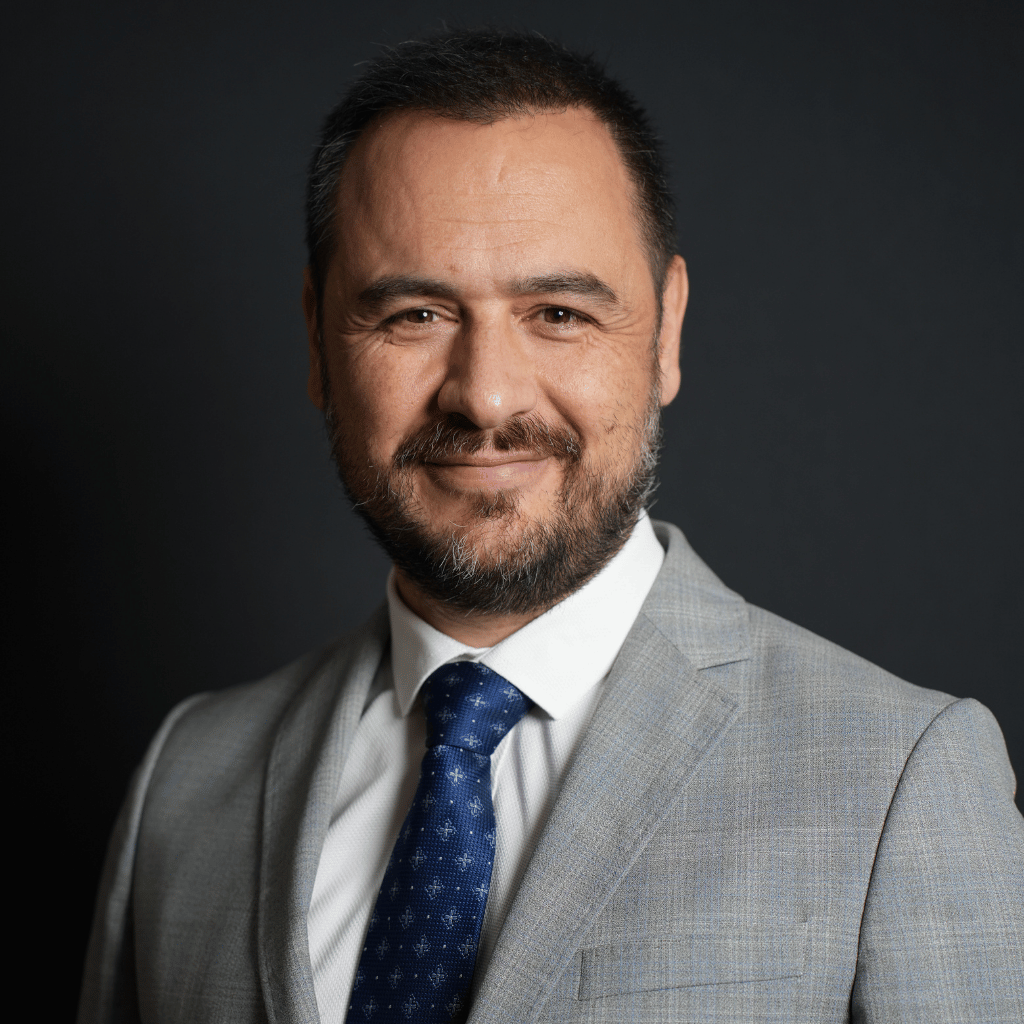
Dr. Mert Demirel
Dr. Mert Demirel is a European Board Certified Plastic, Reconstructive and Aesthetic Surgeon based in Istanbul, with over 20 years of medical experience and a strong focus on natural, balanced outcomes.
He approaches aesthetic surgery as a medically guided decision process, prioritizing anatomical suitability, long-term safety, and individualized treatment planning for each patient.