A surprising number of patients who come in asking for ankle liposuction do not actually have an ankle fat problem. They have an ankle architecture problem — and the architecture of an ankle is not made of fat. It is made of bone, tendon, ligament, and joint. None of those structures respond to a cannula. …

A surprising number of patients who come in asking for ankle liposuction do not actually have an ankle fat problem. They have an ankle architecture problem — and the architecture of an ankle is not made of fat. It is made of bone, tendon, ligament, and joint. None of those structures respond to a cannula.
This is the category of consultation I find most important to handle carefully, because the patient has usually spent years assuming their ankle is thick because of a substance that can be removed. When the examination shows that the substance in question is bone or tendon, the conversation has to pivot — kindly, but clearly — toward what is actually there.
The anatomy the skin is sitting on
To understand why some ankles look thick without being fat, it helps to know what is under the skin at that level. A few anatomical features contribute real volume and are commonly mistaken for soft tissue:
- The medial malleolus. The bony prominence on the inside of the ankle, formed by the lower end of the tibia. It is visible as a rounded bulge in most people, and can be notably prominent in slender, small-framed patients.
- The lateral malleolus. The bony prominence on the outside of the ankle, formed by the lower end of the fibula. Usually a little lower and more posterior than the medial malleolus.
- The Achilles tendon. A thick, rope-like structure running down the back of the ankle to the heel. Its insertion region is wide in some patients and narrow in others. A wide Achilles insertion reads on the silhouette as a thicker-looking ankle from certain angles.
- Anterior tendons. The tendons travelling down the front of the ankle to the top of the foot. They become visible on flexion and contribute to the architecture the eye reads as “ankle width.”
- The joint capsule itself. The ankle is a relatively superficial joint, and the soft tissue above it is thin. The joint’s own width is part of what the silhouette shows.
None of these are fat. None of them respond to liposuction. And yet they collectively shape what a patient sees when they look down at their ankle in the mirror.
How I sort fat from architecture in the exam
This is often a surprisingly quick part of the consultation, because the hands tell the story fast:
- Pinch and fold. A fat-dominant ankle pinches into a defined fold between the fingers. A bone- or tendon-dominant ankle does not. The skin slides over a firm structure underneath with very little material in between.
- Feel the landmarks. I walk my fingers along the inside and outside of the ankle, palpating the malleoli. Patients are often able to feel, for the first time consciously, that what they have been calling “fullness” is actually the bone they have always had.
- Test the Achilles. I ask the patient to push their foot downward gently, and I palpate the tendon as it tightens. A prominent Achilles insertion becomes obvious.
- Compare to the foot. If the ankle looks thick but the foot above the heel area is slim, the fat distribution is mild and the apparent thickness is likely architectural. If both the foot and the ankle carry a genuine soft-tissue layer, a fat component is more plausible.
- Look at silhouette from multiple angles. Some architectural thickness shows only in profile; some shows only head-on. Taking time with the visual inspection often explains what the examination was already suggesting.
I make a point of letting the patient feel their own landmarks during this part of the consultation. Recognising that the structure under their skin is bone, not fat, is often what ends the surgical conversation most gracefully.
Why liposuction does not change architecture
The question that follows almost inevitably: “but can you remove a little to make the bone look less prominent?”
The answer is rarely as helpful as patients hope. The layer of fat over the malleoli is already thin in most people. Removing it tends to make the bone look more prominent, not less, because the contour that was softening it is reduced. Thinning a small soft-tissue cushion over a firm underlying structure typically reveals that structure more, not less.
Similarly, a prominent Achilles tendon is not camouflaged by liposuction of the surrounding area. The tendon itself is unchanged, and thinning the soft tissue around it makes its prominence more visible, not less.
This is one of the counter-intuitive realities of ankle surgery: in patients whose main contributor is architecture, liposuction can move the appearance in the wrong direction.
What is not surgery for these patients
A patient whose ankle shape is driven by bone or tendon anatomy is not a candidate I send to a different surgeon. They are a candidate I usually send home without any operation at all, with a few honest observations:
- The shape is anatomy, not failure. The ankle they have is the ankle their skeleton has given them. It is not something that went wrong.
- Clothing and shoe choice change perception. Footwear and trouser length genuinely affect how proportionate the ankle reads. This is not a trick; it is how silhouette works.
- Calf proportion often matters more. In many of these patients, the calf above the ankle is what would most change the overall lower-leg impression. That conversation has its own anatomy, and it is a different one.
- Time and photography play tricks. Patients often arrive with a specific photograph that set their perception. A careful mirror comparison in real life frequently shows an ankle closer to normal than the patient has been assuming.
Some patients accept this quickly. Others take time to integrate it. Both responses are reasonable.
When the architecture is unusually prominent
Occasionally, a patient really does have an anatomically prominent malleolus or an unusually wide Achilles insertion. In those rare cases, the honest options are not cosmetic liposuction. They involve orthopaedic evaluation, and the decisions there are serious — this is not the territory of minor cosmetic surgery. Patients in that category deserve a careful referral, not a cannula.
A grounded summary
Not every thick ankle has extra fat. Some of them are bone. Some of them are tendon. Some of them are simply the normal architecture of that patient’s lower limb.
The job of a responsible consultation is not to say yes or no to the operation the patient asked for. It is to identify what is actually there, what is responsible for the appearance, and what an operation can or cannot change. When the answer is architecture, the honest response is: this is not a fat problem, and fat surgery will not help. That sentence, said clearly, saves the patient a disappointing result.
Op. Dr. Mert Demirel
European Board Certified Plastic Surgeon (EBOPRAS)
ISAPS & ASPS Member
Istanbul, Turkey
Sent via Notion Automations
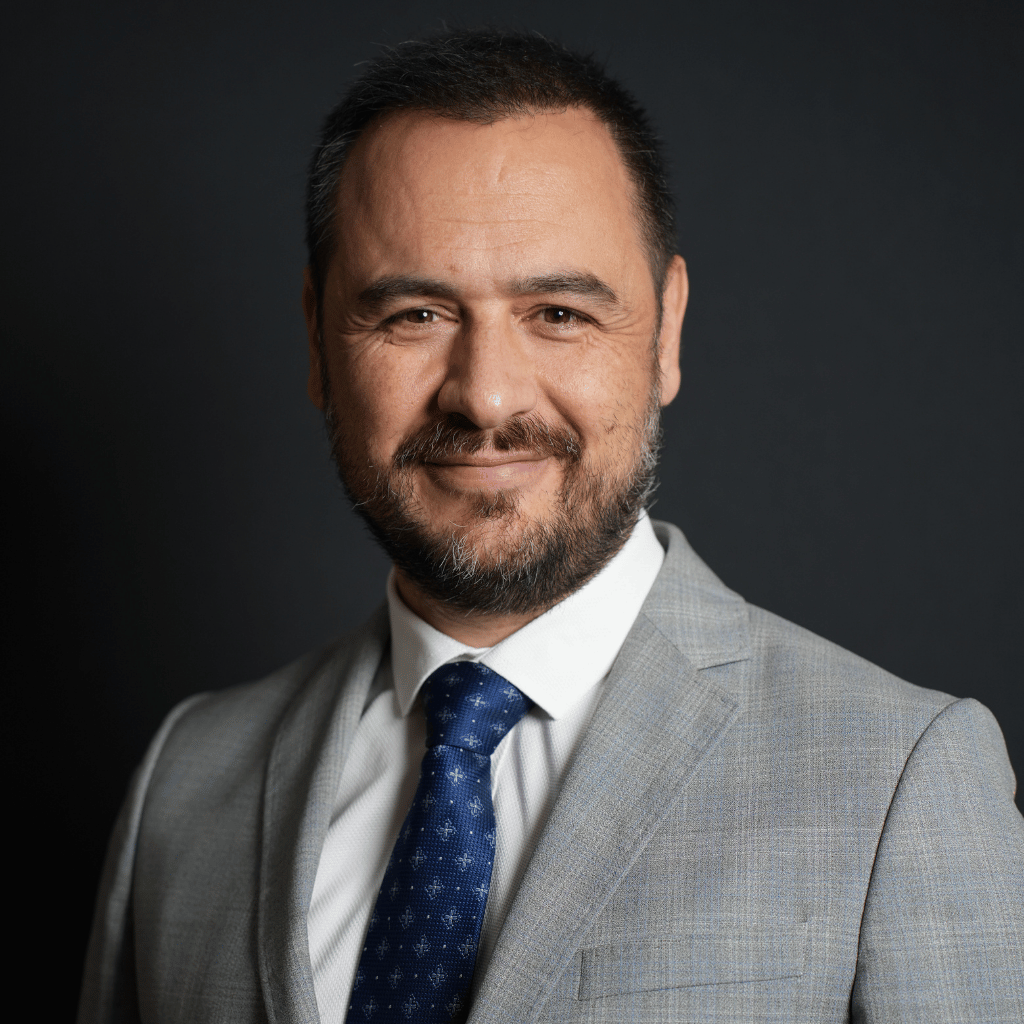
Dr. Mert Demirel
Dr. Mert Demirel is a European Board Certified Plastic, Reconstructive and Aesthetic Surgeon based in Istanbul, with over 20 years of medical experience and a strong focus on natural, balanced outcomes.
He approaches aesthetic surgery as a medically guided decision process, prioritizing anatomical suitability, long-term safety, and individualized treatment planning for each patient.