The patients who come to me after a previous ankle liposuction usually arrive with a version of the same sentence: “something is still not right.” They know the first operation did something — the ankles are usually thinner than they were — but the result is living somewhere between what they hoped for and what …

The patients who come to me after a previous ankle liposuction usually arrive with a version of the same sentence: “something is still not right.” They know the first operation did something — the ankles are usually thinner than they were — but the result is living somewhere between what they hoped for and what they started with. They want the missing improvement, and they assume a second operation will finish the job.
My role in that conversation is to slow it down. The ankle is not a forgiving area for a first liposuction, and it is a much less forgiving area for a second one. Many of the things a revision could in theory fix, a revision will in practice leave worse than it found them. The most valuable skill in a revision consultation is not choosing the right technique. It is choosing when not to operate.
What the patient is actually complaining about
Before a revision is discussed at all, the concern needs to be named precisely. “My ankles still look wrong” covers several very different problems, and each one has a different answer:
- A true residual fat pocket. A localised, pinchable area of fullness that did not respond to the first operation. This is the most revisable situation.
- A contour step or irregularity. A line, dip, or edge where the previously treated area meets untreated tissue. Revisable in skilled hands, but often requires adding volume, not removing more.
- Scar tethering. A point where the skin is fixed down to the deeper tissue from healing after the first operation. This feels hard, sometimes visible on movement. Rarely improved with more liposuction; often worsened.
- Skin that did not retract. The fat was removed but the skin envelope stayed loose. This is not a fat problem and cannot be corrected by taking more fat.
- Persistent swelling from the first operation. Especially in ankle surgery, this can last longer than patients expect. Sometimes what looks like a failed result at six months is simply an unfinished healing process.
The only one of these that is reliably helped by more liposuction is the first. Everything else deserves a different conversation, and occasionally a different specialist.
Why the ankle is biologically unforgiving on a second pass
The ankle is a thin-skinned, low-fat, gravity-dependent, lymphatically slow region. A first liposuction already places a demand on tissue that was not designed to be disturbed. The scar planes that form afterwards reduce the smooth glide between skin and deeper layers. They also change the way fluid drains from the area.
When I put a cannula into a previously operated ankle, the tissue feels different. It is firmer, more fibrotic, and more unpredictable. Small amounts of disturbance produce larger amounts of swelling than in a virgin field. The window between “improved” and “worse” is narrower. This is not a reason to never revise — it is a reason to revise only when the indication is clean and the expectation is calibrated.
When revision is reasonable
A well-chosen revision is a small operation aimed at a specific, well-defined target. The pattern I look for:
- A clearly localised area of residual fullness, not a general sense of dissatisfaction.
- Skin that is still relatively healthy, without heavy scarring or loss of elasticity.
- At least nine to twelve months since the primary procedure, so that swelling and soft tissue remodelling have truly finished.
- A patient who can describe what success would look like in concrete terms, and who accepts that the improvement will be smaller than the change they saw after the first operation.
When those conditions line up, a conservative revision can genuinely help.
When revision is the wrong answer
The consultations I send home without surgery tend to share features:
- The complaint is diffuse rather than localised (“I just want them thinner”).
- The dominant issue is contour irregularity or scar tethering, not a residual fat pocket.
- The skin envelope is loose and the patient expects more fat removal to tighten it.
- It has been less than nine months since the first procedure, and the tissue is still settling.
- The patient has a history of needing multiple revisions in other surgical areas without being satisfied.
In those situations, a second operation rarely delivers the missing improvement. More often, it adds scar on top of scar, introduces new irregularities, and confirms a pattern of dissatisfaction rather than resolving it.
The conversation I try to have
The most useful thing I can offer a revision patient is not a surgical plan. It is a careful description of what the first operation did, what the residual issue actually is, what a second operation can realistically change, and what it cannot. Patients who hear all of that usually make a better decision than patients who are promised a fix.
Sometimes the right decision is a small, targeted second operation. Sometimes it is a non-surgical plan — compression, time, manual therapy, reassurance. Sometimes it is no intervention at all, because the ankle at month twelve is quieter than the ankle at month six, and the improvement the patient is waiting for is still arriving.
A grounded summary
Revision in the ankle is not forbidden. It is, however, a small operation that should be reserved for a narrow indication, timed carefully, and discussed honestly. Improvement is the goal. Perfection is not. A second operation that aims for perfection in a region this unforgiving often leaves the patient further from what they wanted than the first one did.
The most respectful version of revision surgery is one that knows its own limits before it begins.
Op. Dr. Mert Demirel
European Board Certified Plastic Surgeon (EBOPRAS)
ISAPS & ASPS Member
Istanbul, Turkey
Sent via Notion Automations
Dr. Mert Demirel
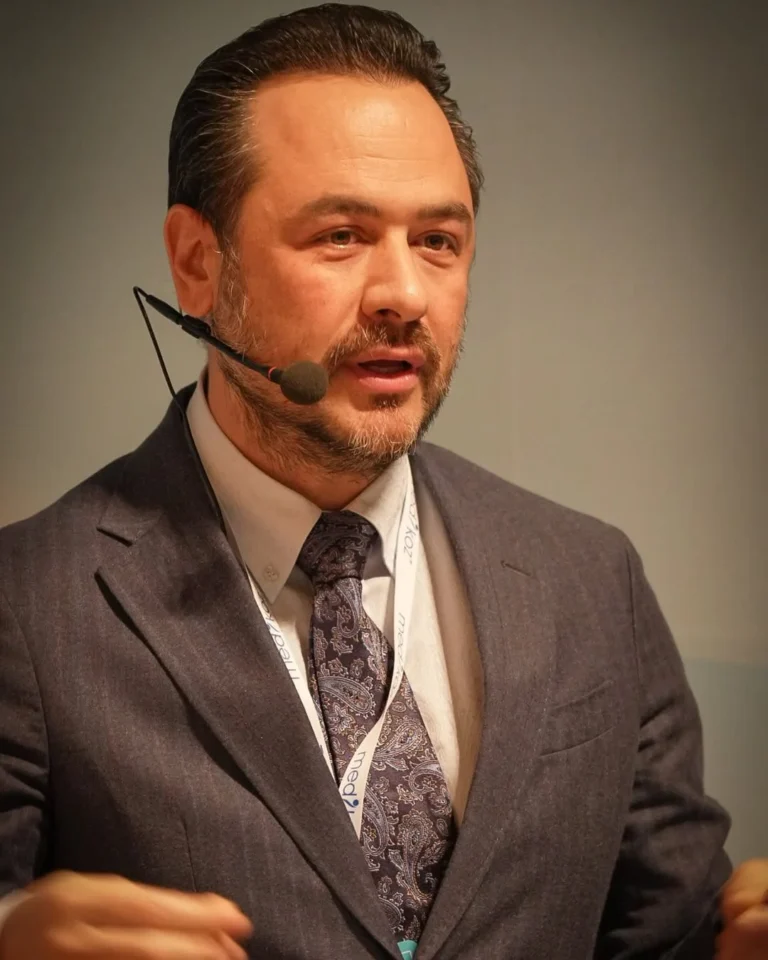
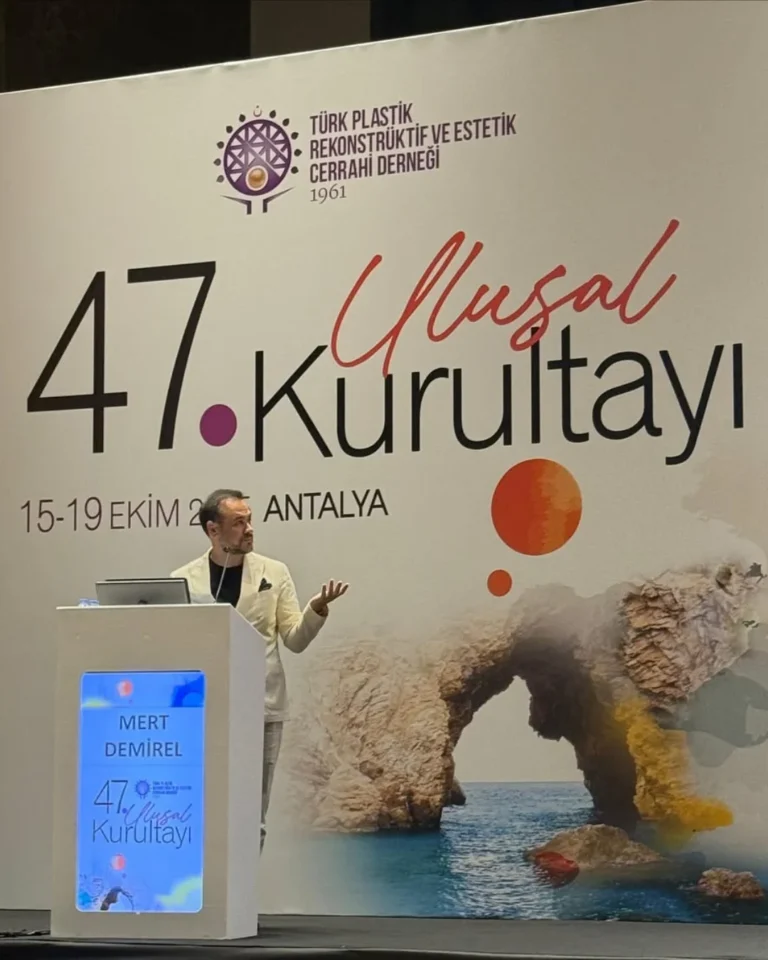
Dr. Mert Demirel is a European Board Certified Plastic, Reconstructive and Aesthetic Surgeon based in Istanbul, with over 20 years of medical experience and a strong focus on natural, balanced outcomes.
He approaches aesthetic surgery as a medically guided decision process, prioritizing anatomical suitability, long-term safety, and individualized treatment planning for each patient.