Most of the patients I see for this procedure have already answered the question in their own heads before walking into the consultation. They have looked in the mirror, they have compared, they have measured in some quiet way, and they have arrived with a decision that is almost made. My role is not to …

Most of the patients I see for this procedure have already answered the question in their own heads before walking into the consultation. They have looked in the mirror, they have compared, they have measured in some quiet way, and they have arrived with a decision that is almost made. My role is not to confirm or reject that decision. It is to test it against the anatomy and the biology in front of me, so the person leaving the room is making a choice rather than a guess.
There is no single scorecard for candidacy. There is, however, a set of honest questions — some anatomical, some practical, some emotional — that together separate a good candidate from a patient who would be better served by waiting, by a different procedure, or by no procedure at all.
The first question: is it really the areola that bothers you?
This sounds like a trivial question. It is not. Patients often arrive asking for areola reduction when the feature they actually dislike is something adjacent — a nipple that sits low on the breast, a lower pole that looks heavy, breasts that are uneven in volume, or skin that has stretched after weight change or pregnancy.
A useful self-test: cover the surrounding breast with your hands and look only at the pigmented circle. If the circle still bothers you, the areola may genuinely be the driver. If your attention keeps drifting back to the shape around it, the areola is probably not the actual problem. Operating on the wrong feature almost always disappoints.
The anatomical green lights
From a purely technical standpoint, the profile that tends to produce the cleanest result has several features in common:
- A pigmented areola that is clearly wider than what the patient wants, on an otherwise reasonably shaped breast.
- Skin that is healthy, elastic, and without signs of aggressive scarring from past injuries or operations.
- A nipple that sits at a position on the breast that the patient is already comfortable with.
- Stable body weight, with no major fluctuations planned in the near term.
- No active pregnancy or near-term pregnancy plan.
- General health that is compatible with a minor outpatient procedure.
These are not rigid gates. Each one can be nuanced. But when several of them line up, the probability of a straightforward, satisfying outcome rises meaningfully.
The anatomical yellow and red lights
There are patterns that make me slow the conversation down, or redirect it:
- Significant ptosis. If the breast is drooping and the nipple is pointing downward, the areola’s size is almost never the main story. A lift is usually the more honest conversation.
- A history of hypertrophic or keloid scarring. The areola is a visible border. A patient whose skin produces thick, widened scars elsewhere is likely to produce them here too.
- Skin that is already under visible tension. Pushing a tight areola smaller magnifies that tension.
- Active or near-term pregnancy plans. Pregnancy can meaningfully change what the surgery just adjusted.
- Recent, aggressive weight change. Tissue that is still moving is tissue that has not finished negotiating with gravity.
None of these is automatically disqualifying. But each one shifts the risk–benefit balance and deserves a frank conversation rather than a quick reassurance.
The practical side of candidacy
Anatomy is only one half of this question. The other half is life logistics.
- Recovery time. You can usually return to desk work quickly, but the first week needs protection. If the next three to six weeks are packed with international travel, heavy childcare, or physically demanding commitments, timing matters.
- Scar care consistency. Results during the first six to twelve months depend partly on disciplined scar management — sun protection, silicone where indicated, avoiding mechanical irritation. A patient who cannot realistically follow that routine is a patient whose result is being left to luck.
- Follow-up access. If surgery happens during a trip abroad, who is available to review an early concern at week two, week six, or month three? Medical tourism is entirely legitimate, but it requires a plan.
The emotional half of candidacy (the part that is rarely written about)
This is the part of the consultation I care about most, and it is usually the part that is covered least in online articles.
A good candidate is somebody who:
- Wants this for themselves, not because a partner or a photograph told them to.
- Understands that a scar will be present, even if it eventually becomes subtle.
- Can tolerate a range of outcomes, rather than needing a precise millimetre target.
- Is not in the middle of a life chapter where decisions feel heavier than usual — a recent loss, a recent relationship change, an active body-image crisis.
A less-suitable candidate is not a bad person or a lesser patient. They are somebody for whom the timing, or the underlying reason, is not lined up with what this particular operation can honestly deliver.
A small exercise before you book
Before any consultation, I often suggest patients sit with three quiet questions:
- If the areola changed exactly the way I am imagining, what do I expect to feel afterwards that I do not feel now?
- Am I comfortable with the idea of a visible, slowly-fading scar, or would that feel worse than the current shape?
- Am I making this decision on my own terms, in my own timing?
The answers do not need to be shared with anyone. They are for clarifying whether this procedure is a real match for the life around it.
Where that leaves the question
“Am I a good candidate?” is not a yes or no question. It is the overlap of three circles: anatomy, life logistics, and personal readiness. When all three circles overlap, the operation tends to deliver what it was asked to deliver. When only one or two do, the honest answer is often “not yet” — and that answer, when it is the right one, is a part of good care rather than a refusal of it.
Op. Dr. Mert Demirel
European Board Certified Plastic Surgeon (EBOPRAS)
ISAPS & ASPS Member
Istanbul, Turkey
Sent via Notion Automations

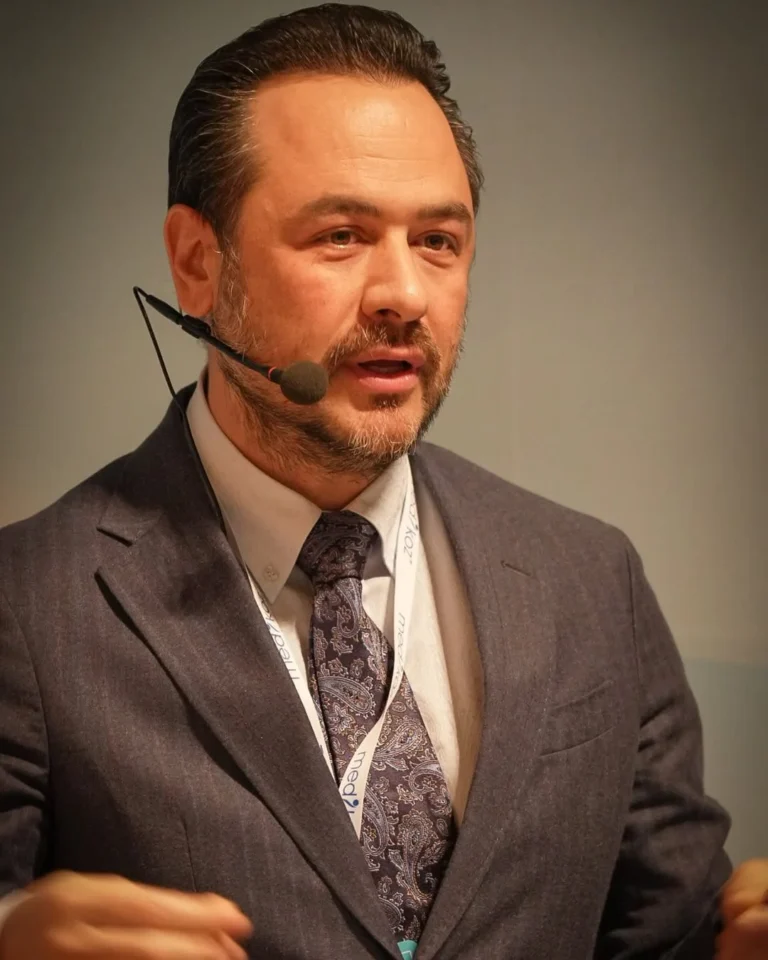
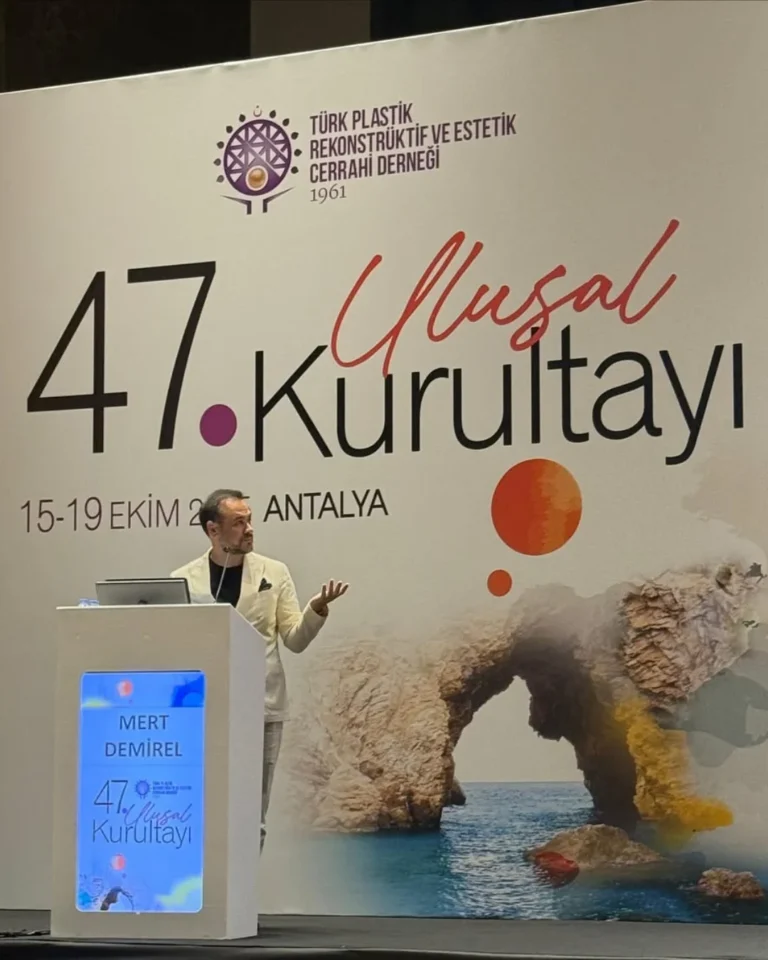
Dr. Mert Demirel
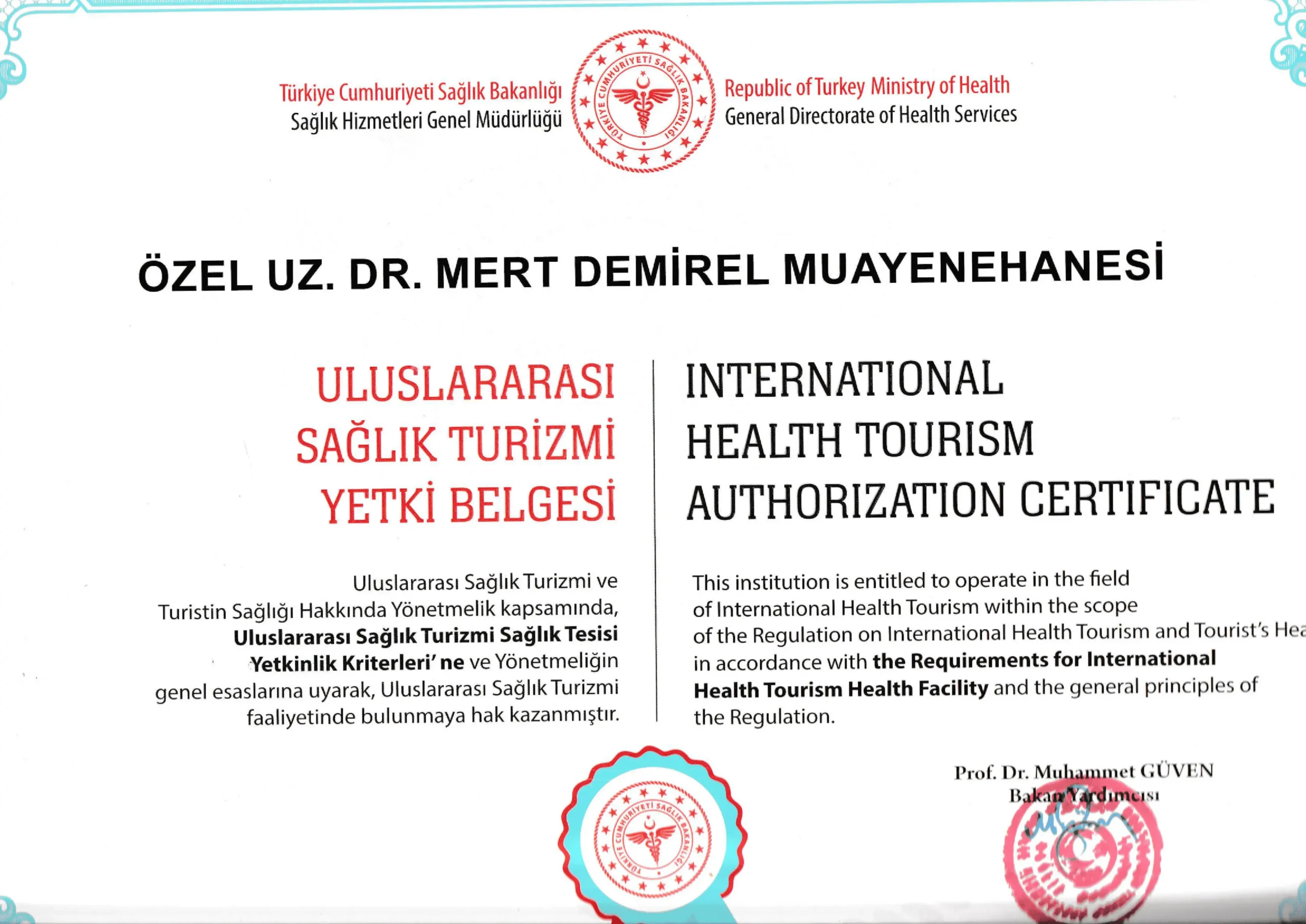
Dr. Mert Demirel is a European Board Certified Plastic, Reconstructive and Aesthetic Surgeon based in Istanbul, with over 20 years of medical experience and a strong focus on natural, balanced outcomes.
He approaches aesthetic surgery as a medically guided decision process, prioritizing anatomical suitability, long-term safety, and individualized treatment planning for each patient.