It is one of the most common opening sentences I hear in a consultation: “I would like my areolas smaller, but I don’t want a lift.” Patients who say this are usually very clear about what they do not want — a longer scar, a longer recovery, a bigger operation. They are much less clear …

It is one of the most common opening sentences I hear in a consultation: “I would like my areolas smaller, but I don’t want a lift.” Patients who say this are usually very clear about what they do not want — a longer scar, a longer recovery, a bigger operation. They are much less clear about what their anatomy is actually asking for.
The real conversation is rarely about which operation to perform. It is about which question the body is asking, and whether the answer a patient has already chosen matches that question. Sometimes it does, and a standalone areola reduction is the right plan. Sometimes it does not, and a smaller operation becomes a way of politely ignoring the real problem.
Two requests hiding inside one sentence
When a patient asks for “a smaller areola without a lift,” there are almost always two separate concerns tangled together:
- I dislike the pigmented circle itself — the diameter, the outline, the way it sits on the skin.
- I dislike how the breast looks overall — the height, the shape, the way the nipple points, the proportion between the areola and the rest of the breast.
Areola reduction only addresses the first of those. It changes the diameter of the pigmented circle. It does not move the nipple up. It does not tighten the skin envelope. It does not restore upper-pole fullness. It does not reshape the lower pole. When the patient’s underlying complaint is really about shape rather than about size, a smaller areola on the same breast often looks like a smaller circle — and the same dissatisfaction.
A simple diagnostic question I ask every patient
Before we talk about incisions at all, I ask the same thing: “If I could make your areola exactly the size you want, but the rest of the breast stayed exactly the way it is now, would you be satisfied?”
The answer to this question matters more than any measurement.
- If the answer is yes, the patient is genuinely asking about the areola. A standalone procedure is a legitimate conversation.
- If the answer is no, or “I’m not sure”, or “yes, but only if it also helped the shape”, the areola is not the real driver. A standalone reduction will almost certainly disappoint.
This single question saves patients from operations that are technically successful and personally unsatisfying.
Where standalone areola reduction really does work well
There is a specific, well-defined profile in which a standalone procedure is exactly the right choice:
- The breasts are reasonably shaped.
- The nipple sits at a position on the breast that the patient is already comfortable with.
- The skin around the breast is not markedly stretched or loose.
- There is no significant drooping — the nipple is not pointing downward below the fold of the breast.
- The only thing the patient wishes were different is the pigmented circle itself.
For this patient, adding a lift would be over-treating. A conservative areola reduction respects what is already working and adjusts only what is not.
Where standalone areola reduction quietly fails
The trouble starts when the underlying anatomy is doing more than the patient realises.
If the nipple sits low on the breast and points downward, the areola is not the main problem — the nipple position is. Reducing the areola in this setting produces a smaller circle that is still pointing in the wrong direction. The result can feel almost worse, because the attention that was previously distributed across “shape and size” now concentrates on a smaller, more prominent circle in a still-unchanged frame.
If the skin envelope is loose — after pregnancy, after significant weight loss, or due to genetics — the areola reduction scar has to hold tension it was not designed to hold. The line tends to widen over time, and the areola often stretches back toward its previous diameter. The patient then feels the operation “undid itself,” when in reality the skin around it was always going to win that argument.
In both situations, a breast lift (with or without areola reduction built into it) is the more honest operation. It is larger, its scar pattern is longer, and it asks more from the patient in terms of recovery. In return, it actually addresses the shape the patient was objecting to.
The honest trade-offs
A realistic comparison, said out loud:
- A standalone areola reduction is shorter, the incision is smaller, recovery is quicker, and the scar lives on a border where the body already camouflages it. But it cannot lift, reshape, tighten, or reposition.
- A breast lift is longer, the scar pattern is more extensive, and recovery takes more out of the patient. But it can actually change the silhouette of the breast, not just the size of a circle on top of it.
Neither operation is inherently better. They solve different problems. A patient who chooses the smaller operation when the bigger one was needed has not saved themselves anything — they have usually just postponed a conversation they will need to have again.
The response I try to give when a patient says “I don’t want a lift”
I do not push. The reluctance is almost always reasonable — people do not dream of having longer scars, and they should not be talked into operations they have not chosen freely.
Instead, the honest answer is usually one of three things:
- Your anatomy genuinely supports a standalone areola reduction. We can plan it conservatively and expect a good result.
- Your anatomy does not really support a standalone areola reduction. I can still perform it, but I want to be honest about what it will not change. Here is what you will likely feel afterwards.
- If the underlying shape is what is bothering you, the more appropriate operation is a lift — and it is worth at least understanding what that looks like before you decide against it.
A patient who hears all three of those options has the information they need to make an adult decision. A patient who only hears option one — because it is the one they asked for — has been accommodated, not advised.
A final way to think about it
The most useful way I can summarise this for patients is in one line: areola reduction changes the frame around a picture. A breast lift changes the picture itself. If the frame is the problem, change the frame. If the picture is the problem, changing the frame will never be enough.
The right operation is the one that answers the right question — not the one that sounds smaller.
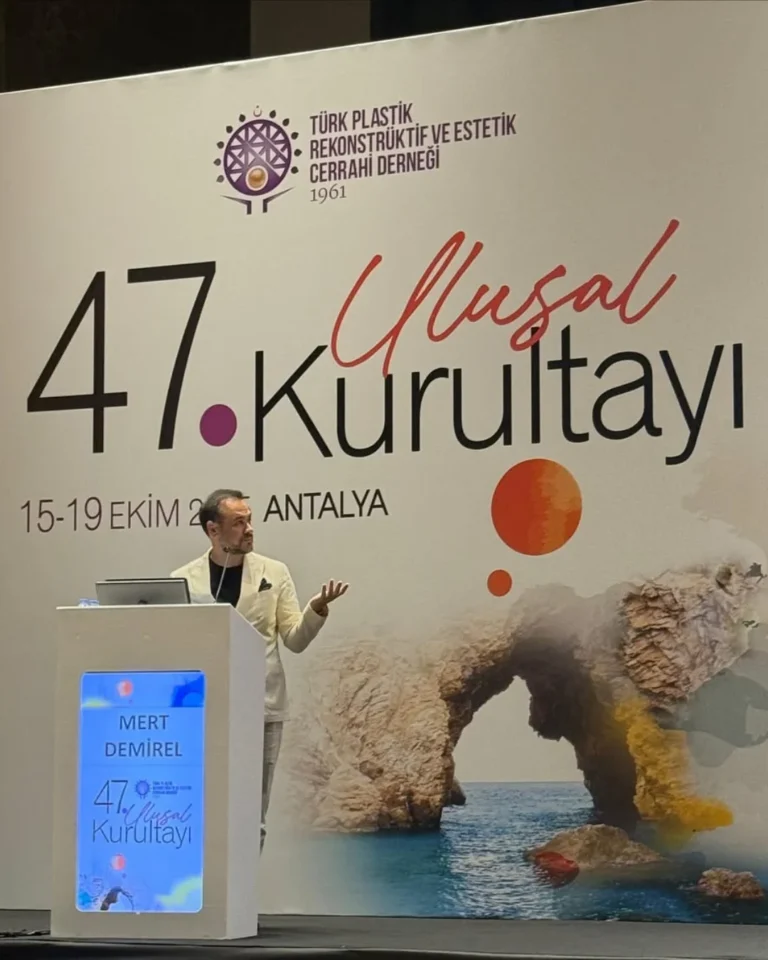
Op. Dr. Mert Demirel
European Board Certified Plastic Surgeon (EBOPRAS)
ISAPS & ASPS Member
Istanbul, Turkey
Sent via Notion Automations

Dr. Mert Demirel
Dr. Mert Demirel is a European Board Certified Plastic, Reconstructive and Aesthetic Surgeon based in Istanbul, with over 20 years of medical experience and a strong focus on natural, balanced outcomes.
He approaches aesthetic surgery as a medically guided decision process, prioritizing anatomical suitability, long-term safety, and individualized treatment planning for each patient.