Patients rarely ask this question casually. By the time they are sitting across from me and asking what size their areola will be after surgery, they have usually spent a long time staring at their own anatomy, comparing it to images they have seen, and trying to land on a number that feels right. The …

Patients rarely ask this question casually. By the time they are sitting across from me and asking what size their areola will be after surgery, they have usually spent a long time staring at their own anatomy, comparing it to images they have seen, and trying to land on a number that feels right. The number almost always arrives before the reasoning does.
So the conversation I try to have is not really about millimetres. It is about what those millimetres will actually look like on their breast, on their skin, after their healing — and whether the target they have in mind is the one that will genuinely make them happier a year from now.
Why there is no single “correct” number
There is a commonly cited range in the literature for what tends to look proportionate on an adult female breast — typically somewhere between 35 and 45 millimetres in diameter. That range is a reference, not a prescription. A 40 mm areola can look perfectly balanced on one patient and too small on another. The reason is simple: proportion is not measured against a textbook, it is measured against the rest of the breast.
A few examples of how this plays out in practice:
- On a larger breast with more projection, a mid-range diameter can read as small.
- On a petite breast, the same diameter can read as dominant.
- On a breast with fuller lower pole, the visual centre of gravity sits lower, and the eye reads areola size differently than it would on a higher-set breast.
- After weight loss, the skin–tissue ratio changes, and what looked balanced before may no longer look balanced now.
This is why I am cautious when a patient arrives with a precise number in mind. The number is not wrong. It is just incomplete without the context of their own breast shape.
What I actually do in the planning appointment
The working method is less mysterious than patients expect. Together, standing in front of a mirror:
- I measure the current areola diameter on each side.
- I note the breast footprint — width, height, projection — to understand the canvas.
- I mark a target diameter with a soft pen, usually at two or three different options.
- I ask the patient to step back, look at the markings, and tell me which one reads as “natural” to them before it reads as “small” or “large.”
This is not cosmetic theatre. It is a genuine test of how proportion behaves at a normal viewing distance, on that particular body, under that particular light. A number that looks correct on paper often does not look correct on skin.
What conservative, realistic targets look like
For most of my patients, a conservative target diameter lands in the 35–40 mm range, with small adjustments up or down depending on the breast size and the patient’s own preference. Smaller targets are possible. They are just not automatically better.
Reasons I tend to hold the line on conservative targets:
- Tension at closure. The smaller the final circle, the higher the tension across the new border. Tension is the enemy of scar quality.
- Scar migration over time. A very small areola at the operating table tends to relax a few millimetres in the months afterwards. Aiming too small means aiming for a final size even smaller than you actually want.
- Proportion at a distance. An areola that looks “just right” in a close-up mirror can look disproportionately small in clothing, in photographs, or in motion. Most people view their body from a standing distance, not a measuring one.
- Reversibility. Taking a few more millimetres in a small revision, if genuinely needed, is straightforward. Trying to restore lost diameter after over-resection is not.
The honest truth about precision
There is no surgical technique that guarantees the final number you measure at month twelve. What I can promise is a careful intent — a target chosen jointly, with full understanding — and a close approximation of that target, within the normal variability of healing.
Concretely, this means:
- Two sides may settle at slightly different final diameters.
- The final size may be two or three millimetres different from the intraoperative mark.
- The border may be slightly irregular on close inspection, because skin is not a printed circle.
If any of these realities is unacceptable, the conversation should happen before surgery, not afterwards.
How to tell if you are chasing the wrong number
A small set of warning signs often points to a target that is more emotional than anatomical:
- The number was chosen based on a specific photograph rather than self-observation.
- The number is significantly smaller than the average range, and the reasoning is aesthetic rather than anatomical.
- The patient struggles to describe what would make them satisfied — only what would make them less dissatisfied.
- The patient seems willing to accept a higher scar risk in exchange for a smaller number.
When I recognise this pattern, the operation is not automatically off the table, but the conversation shifts. We spend more time on expectations and less on technique, because the risk in these cases is not surgical failure — it is disappointment despite a technically successful result.
A grounded way to think about size
If a patient wants a simple framework to hold in their head, this is the one I usually offer:
- The right diameter is the one that disappears into the overall shape of the breast rather than standing out.
- “Smaller” is not the same as “better.”
- The number chosen with the breast in front of you is almost always wiser than the number chosen from an online reference.
- A good result, twelve months later, is one you no longer think about.
The operation does not produce a specific millimetre. It produces a proportion. Aim the planning at the proportion, and the millimetres tend to take care of themselves.
Op. Dr. Mert Demirel
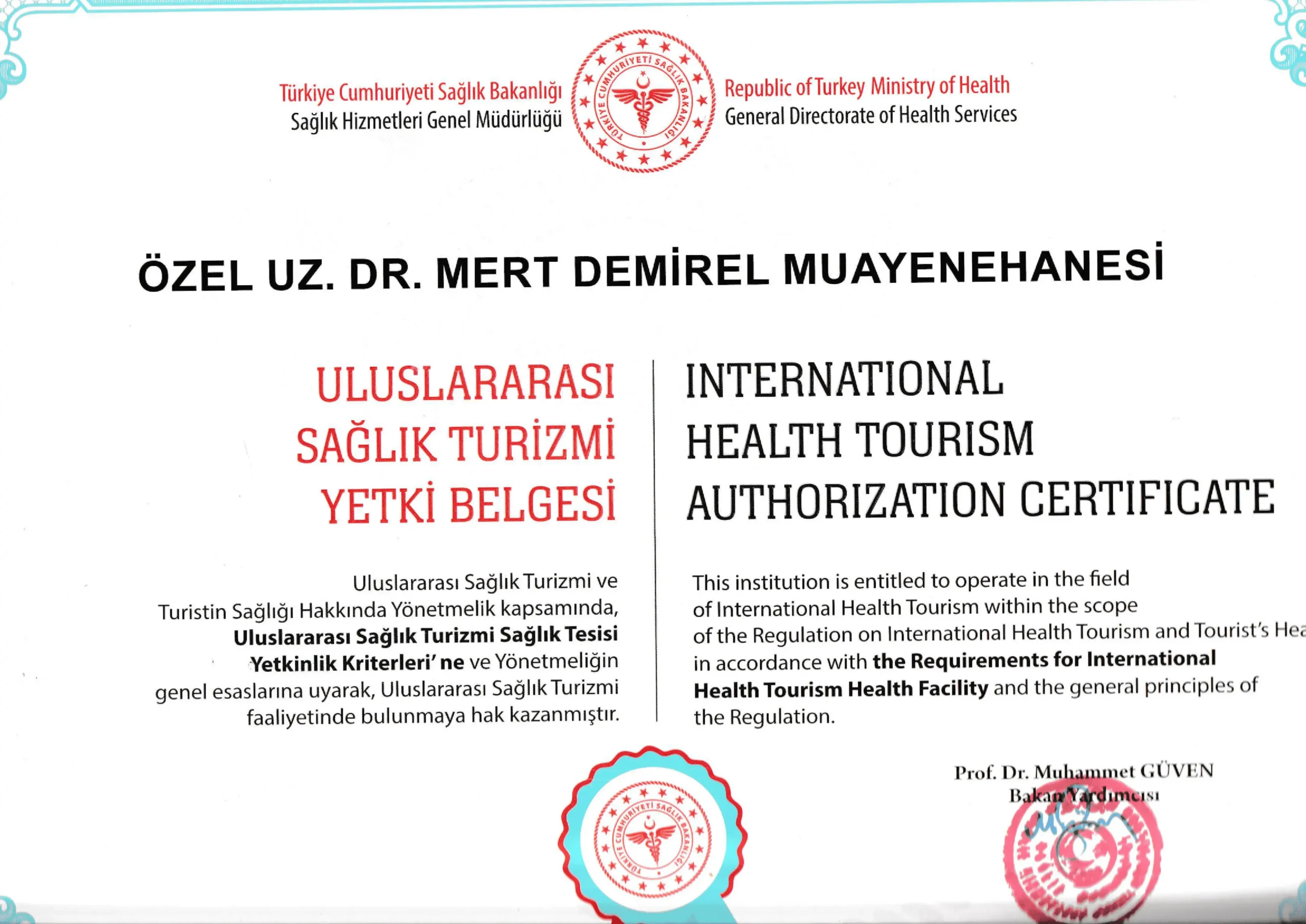
European Board Certified Plastic Surgeon (EBOPRAS)
ISAPS & ASPS Member
Istanbul, Turkey
Sent via Notion Automations
Dr. Mert Demirel
Dr. Mert Demirel is a European Board Certified Plastic, Reconstructive and Aesthetic Surgeon based in Istanbul, with over 20 years of medical experience and a strong focus on natural, balanced outcomes.
He approaches aesthetic surgery as a medically guided decision process, prioritizing anatomical suitability, long-term safety, and individualized treatment planning for each patient.