When is areola reduction not a good idea? Most of what shapes a good areola reduction result is decided long before the incision. It is decided in the consultation, in the honesty of the conversation, and—often—in the decision not to operate. A large part of my job is recognising the patients for whom this particular …

When is areola reduction not a good idea?
Most of what shapes a good areola reduction result is decided long before the incision. It is decided in the consultation, in the honesty of the conversation, and—often—in the decision not to operate. A large part of my job is recognising the patients for whom this particular procedure is the wrong answer, even when it is the one they walked in asking for.
There is a pattern I see often: a patient has identified the areola as the source of their discomfort, when the actual driver of the image they dislike is something else entirely. Operating on the areola in that situation produces a smaller circle and the same dissatisfaction.
Below are the situations in which I either decline to operate, or ask the patient to pause and reconsider.
When the breast itself is the real story
If a patient’s concern is a breast that has lost projection, a nipple that points downward, or a lower pole that no longer fills the bra the way it used to, the areola is rarely the primary problem. A reduction of the pigmented circle does not raise the nipple, does not tighten the skin envelope, and does not return volume to a deflated upper pole.
In these patients, the conversation I actually need to have is about ptosis—whether a lift is the procedure that fits the anatomy—or whether no surgery is a reasonable choice for now. Offering only areola reduction in this scenario is intellectually dishonest, because it addresses the smallest component of a larger question.
When the skin is telling me to be careful
Some skin types carry a genuinely elevated risk of widened, thickened, or hypertrophic scars. Darker skin tones with a family history of keloids are the clearest example, but they are not the only one. I also slow down with patients who have noticeably raised scars from previous surgery, ear piercings, or minor injuries, and with patients whose skin tension around the areola is already at the upper edge of what it can tolerate.
Areola reduction places a scar directly on one of the most visually exposed borders of the body. A patient whose skin is likely to produce a visible scar needs to hear that, in plain language, before a decision is made. Sometimes that information is enough for them to decline, and their decision deserves respect.
When expectations and biology are not in the same room
The most difficult consultations are not the ones with unusual anatomy. They are the ones where a patient has brought in a reference photograph—often an image whose lighting, filter, and posture have as much to do with the appearance as the anatomy itself—and is asking for that exact result.
I am honest about what the procedure cannot promise:
- A specific millimetre target that will survive healing unchanged.
- A perfectly symmetrical outcome measured against the other side.
- An invisible scar.
- A result that looks final at week six, month three, or even month six.
If a patient needs any of these to be true in order to be satisfied, the operation is not what they need. No surgical technique converts expectation into biology.
When life is about to change the body
A patient who plans to become pregnant in the near future is usually someone I ask to wait. Pregnancy and breastfeeding can change both areola diameter and skin envelope substantially, and a result that was carefully tuned before pregnancy may no longer be the result afterwards. Operating early does not harm the future pregnancy in most cases, but it does risk making the whole effort a preliminary step rather than a final one.
The same principle applies, in a softer way, to patients in the middle of significant weight change—either loss or gain. Tissue that is still moving is tissue that has not finished negotiating with gravity, and planning an aesthetic result on a body that has not settled is planning on sand.
When the reason behind the request is not aesthetic
Occasionally, a patient’s concern about their areola is embedded in something deeper—body image distress, a relationship dynamic, or an idea about normality that was shaped elsewhere, not by a mirror. A reasonable consultation can usually distinguish between “I would like this more proportional for myself” and “I believe this procedure will fix a feeling.”
Areola reduction does not repair feelings. It adjusts an anatomical border. When I sense the weight of the request is on the first of those, I slow the conversation down, because operating on the wrong problem is never a kindness.
When the honest answer is “do less, or do nothing”
Not every anatomical variation needs surgery. An areola that is a few millimetres larger than the patient expected, on skin that is otherwise healthy, on a body that feels well—sometimes the most careful recommendation I can offer is to observe it, to live with it for another year, and to come back only if the concern is still meaningful.
That recommendation is not a refusal of care. It is a part of care. A thoughtful plastic surgeon is not measured only by the operations they perform, but also by the operations they decline to perform when the body in front of them does not need them.
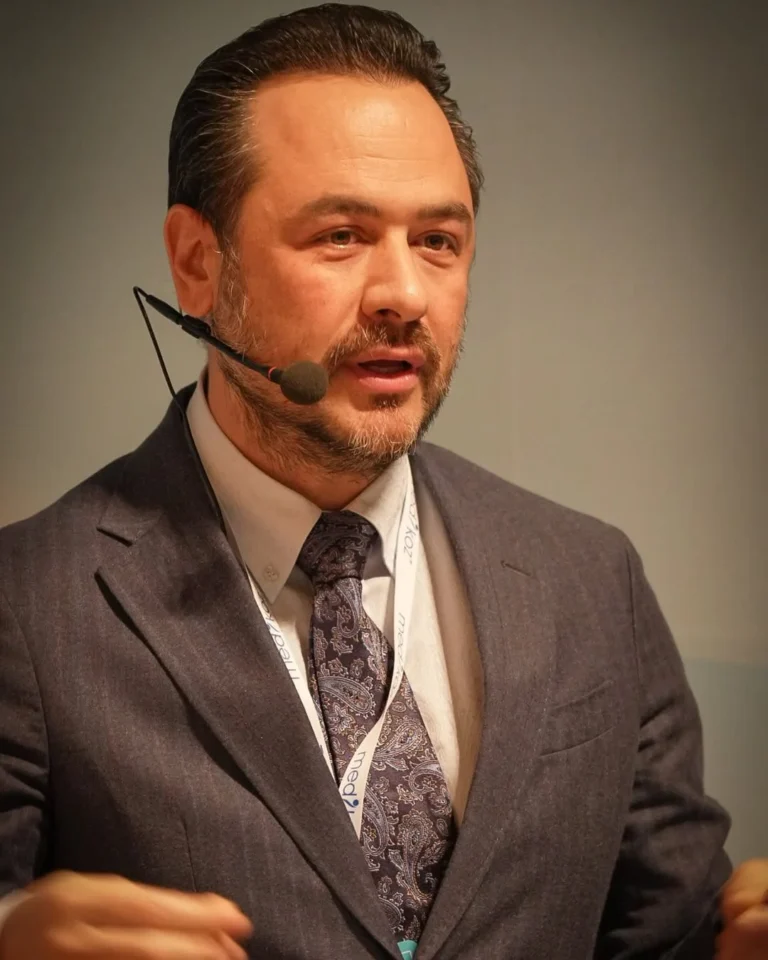
Op. Dr. Mert DemirelEuropean Board Certified Plastic Surgeon (EBOPRAS)ISAPS & ASPS MemberIstanbul, Turkey
Sent via Notion Automations

Dr. Mert Demirel
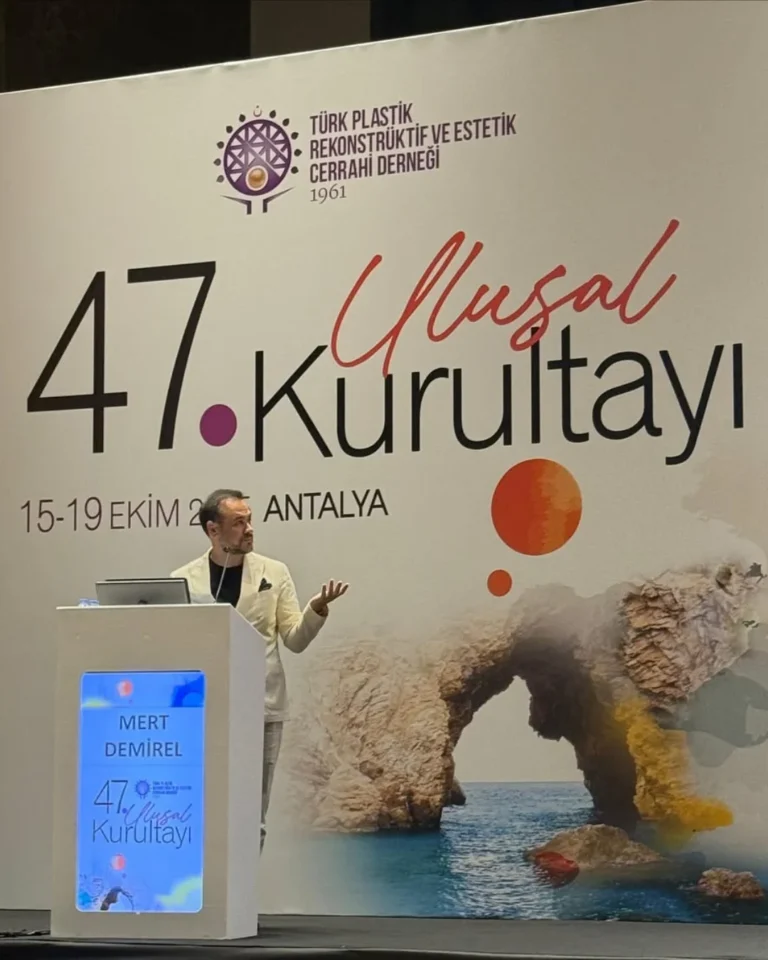
Dr. Mert Demirel is a European Board Certified Plastic, Reconstructive and Aesthetic Surgeon based in Istanbul, with over 20 years of medical experience and a strong focus on natural, balanced outcomes.
He approaches aesthetic surgery as a medically guided decision process, prioritizing anatomical suitability, long-term safety, and individualized treatment planning for each patient.